
Indian kitchen adhoori hai bina dal ke. Chahe ho North India ki dal makhani, South India ka sambhar, ya Gujarat ki dal dhokli – har region ki apni specialty hai. Is ultimate guide to Indian pulses mein hum aapko sab kuch batayenge – pulses ke types, unke health benefits, nutritional value, kaise pehchane quality pulses, aur kahan se khareedein best quality pulses. (Read more about Indian cuisine on FSSAI)
Yeh ultimate guide to Indian pulses aapko banayegi ek expert. Aapko pata chalega ki kaunsi dal kis season mein khani chahiye, kaunsi dal kis health condition mein faydemand hai, kaunsi dal kids ke liye best hai, aur kaunsi dal daily use ke liye best hai. (Check organic certification on APEDA)
Agar aap sach mein ultimate guide to Indian pulses ki complete information chahte ho, toh yeh article aapke liye hai. Kyunki Indian pulses ki duniya bohot wide hai, aur asli quality aur knowledge sirf yahan milegi. (Learn about NPOP certification)
Ultimate Guide to Indian Pulses – What Are Pulses?
Pulses edible seeds hain jo leguminous plants se aate hain. Inhe dals, beans, aur legumes bhi kaha jaata hai. Indian pulses ka India ki diet mein special place hai. Ye protein, fiber, vitamins, aur minerals ka rich source hain. (ICAR information on pulses)
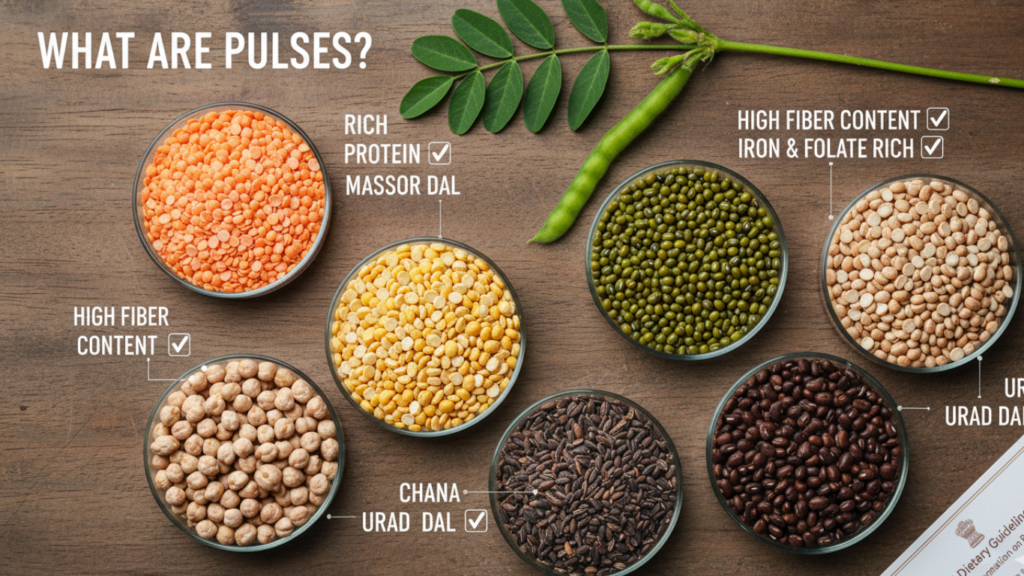
Why Pulses are Important in Indian Diet
| Benefit | Explanation |
|---|---|
| Rich Protein Source | 20-25g protein per 100g – essential for vegetarians |
| High Fiber Content | Aids digestion, controls blood sugar, helps weight loss |
| Low Glycemic Index | Safe for diabetics |
| Iron Rich | Prevents anemia |
| Folate Rich | Essential for pregnancy |
| Affordable Nutrition | Cost-effective protein source |
| Versatile | Can be made into various dishes |
| Long Shelf Life | Can be stored for months |
Ultimate Guide to Indian Pulses – Complete Types of Indian Dals
Is ultimate guide to Indian pulses mein hum aapko sabhi types ke baare mein detail mein batayenge.
1. Toor Dal (Arhar Dal / Pigeon Pea)
| Property | Detail |
|---|---|
| Scientific Name | Cajanus cajan |
| Common Names | Toor dal, Arhar dal, Pigeon pea |
| Color | Yellow |
| Protein | 22g per 100g |
| Fiber | 5g per 100g |
| Calories | 343 per 100g |
| Popular Dishes | Sambhar, Dal fry, Dal tadka |
| Best For | Daily use, South Indian cuisine |
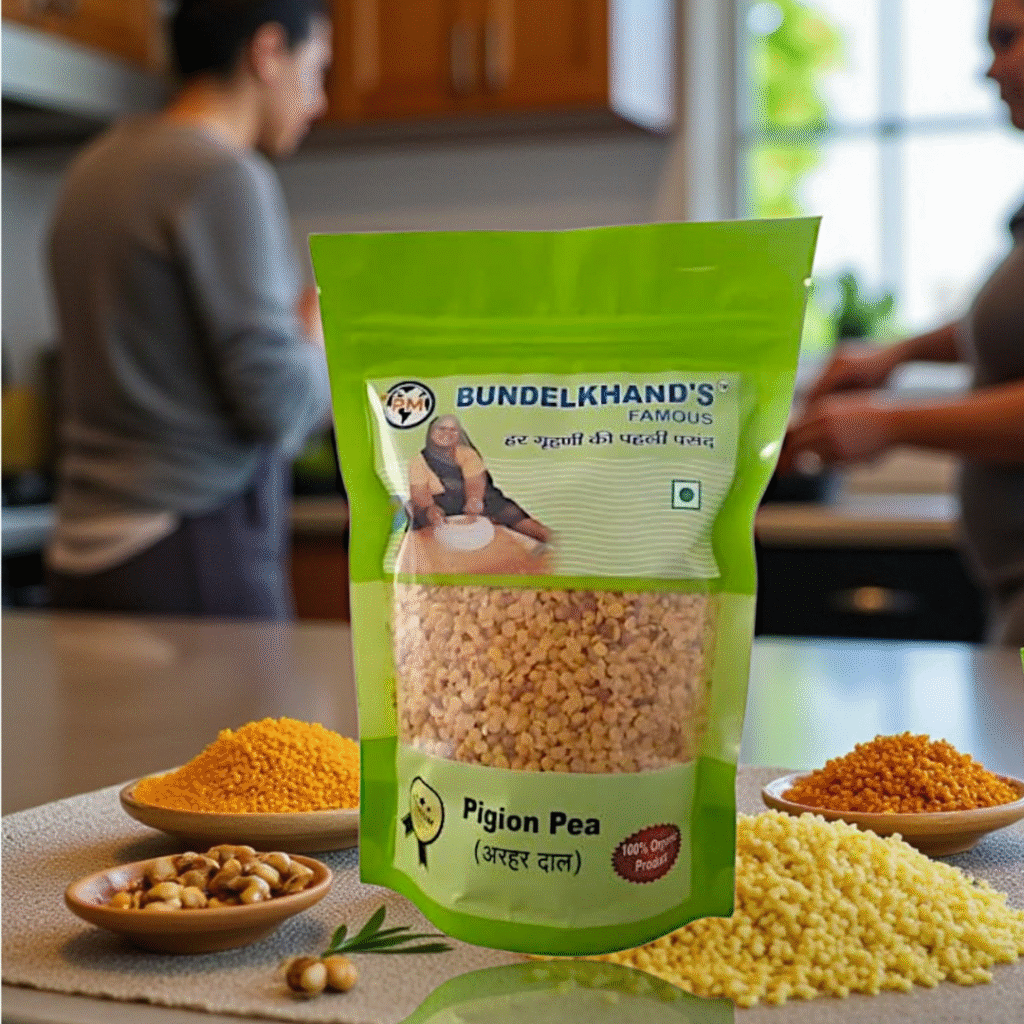
Health Benefits:
- Rich in folate – good for pregnancy
- High protein – good for muscle building
- Good source of complex carbohydrates
Best Quality: Hand graded, stone chakkki, unpolished toor dal from Bundelkhand’s Famous – Building Authority
(IIHR information on toor dal)
2. Moong Dal (Yellow Split Gram / Green Gram)
| Property | Detail |
|---|---|
| Scientific Name | Vigna radiata |
| Common Names | Moong dal, Yellow dal, Green gram |
| Color | Yellow (split), Green (whole) |
| Protein | 24g per 100g |
| Fiber | 8g per 100g |
| Calories | 348 per 100g |
| Popular Dishes | Khichdi, Moong dal chilla, Soup |
| Best For | Kids, elderly, light meals |
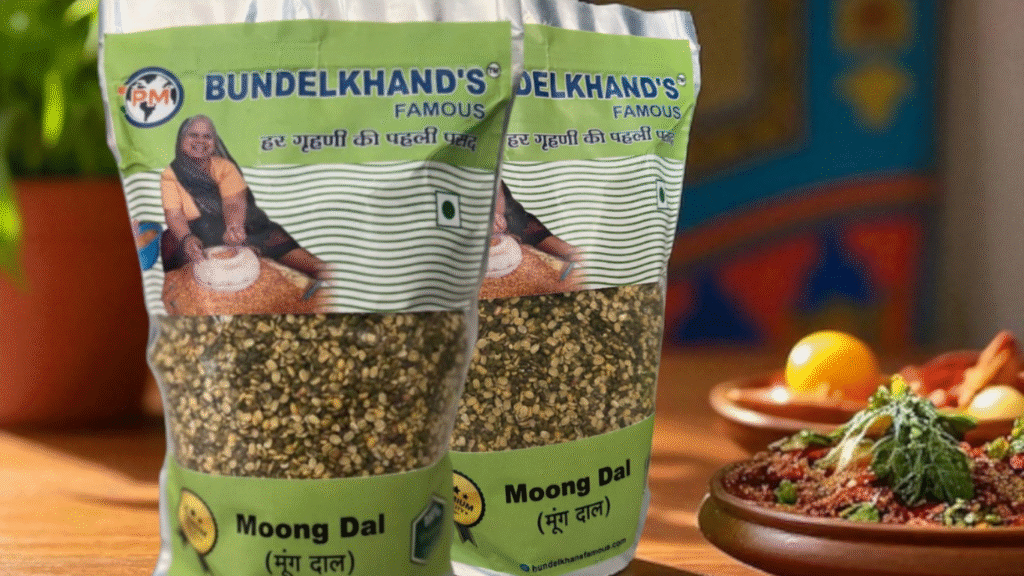
Health Benefits:
- Easiest to digest among all dals
- Rich in folate and magnesium
- Good for heart health
- Helps in weight loss
Best Quality: Hand graded, stone chakkki, unpolished moong dal from Bundelkhand’s Famous
(Read about moong dal benefits on NIN)
3. Masoor Dal (Red Lentil)
| Property | Detail |
|---|---|
| Scientific Name | Lens culinaris |
| Common Names | Masoor dal, Red lentil |
| Color | Orange-red (split), Brown (whole) |
| Protein | 25g per 100g |
| Fiber | 8g per 100g |
| Calories | 352 per 100g |
| Popular Dishes | Masoor dal tadka, Soup |
| Best For | Iron deficiency, quick cooking |
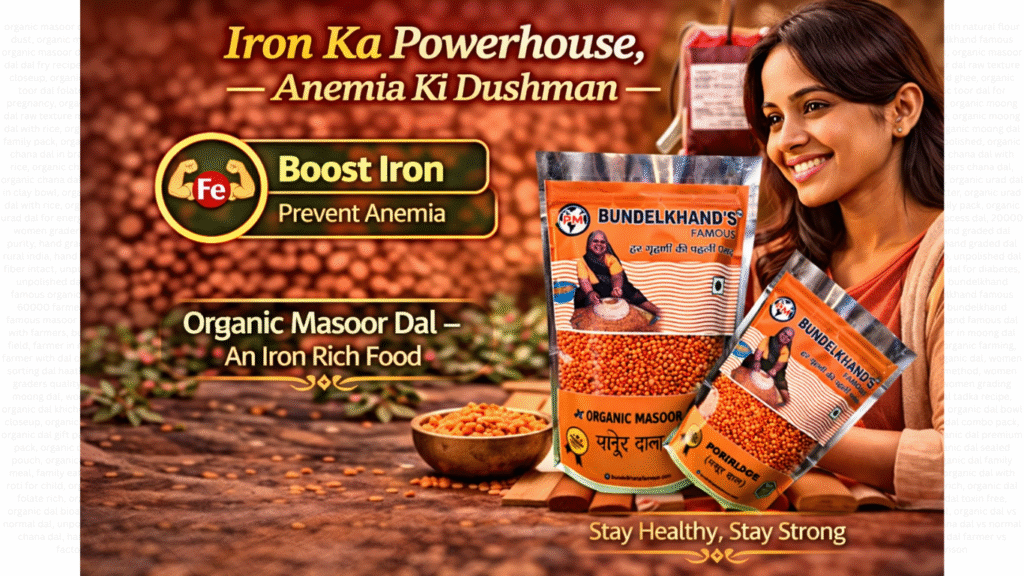
Health Benefits:
- Highest iron content – prevents anemia
- Rich in folate – good for pregnancy
- Quick cooking – time saving
- Good for heart health
Best Quality: Hand graded, stone chakkki, unpolished masoor dal from Bundelkhand’s Famous
4. Chana Dal (Split Chickpeas / Bengal Gram)
| Property | Detail |
|---|---|
| Scientific Name | Cicer arietinum |
| Common Names | Chana dal, Bengal gram |
| Color | Yellow |
| Protein | 25g per 100g |
| Fiber | 11g per 100g |
| Calories | 378 per 100g |
| Popular Dishes | Chana dal tadka, Kaddu ki sabzi, Chilla |
| Best For | Diabetes, weight loss, immunity |
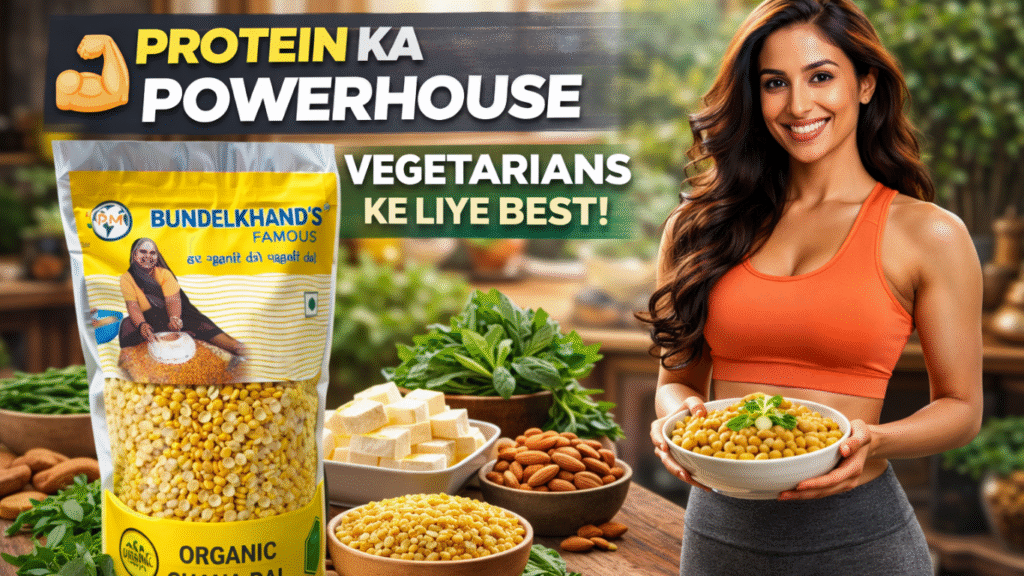
Health Benefits:
- Highest fiber content – good for digestion
- Low glycemic index – safe for diabetics
- Rich in zinc – boosts immunity
- Helps in weight loss
Best Quality: Hand graded, stone chakkki, unpolished chana dal from Bundelkhand’s Famous
5. Urad Dal (Split Black Gram)
| Property | Detail |
|---|---|
| Scientific Name | Vigna mungo |
| Common Names | Urad dal, Black gram |
| Color | White (split), Black (whole) |
| Protein | 24g per 100g |
| Fiber | 7g per 100g |
| Calories | 341 per 100g |
| Popular Dishes | Dal makhani, Idli, Dosa |
| Best For | Energy, muscle building |

Health Benefits:
- High protein – good for muscle building
- Rich in iron – prevents anemia
- Good for bone health
- Provides sustained energy
Best Quality: Hand graded, stone chakkki, unpolished urad dal from Bundelkhand’s Famous
(Learn about urad dal from ICAR)
6. Whole Moong (Sabut Moong / Green Gram Whole)
| Property | Detail |
|---|---|
| Scientific Name | Vigna radiata |
| Common Names | Sabut moong, Whole green gram |
| Color | Green |
| Protein | 24g per 100g |
| Fiber | 16g per 100g |
| Calories | 347 per 100g |
| Popular Dishes | Moong dal khichdi, Sprouts salad |
| Best For | Fiber intake, weight loss |

Health Benefits:
- Highest fiber content – best for digestion
- Rich in plant protein
- Good for heart health
- Helps in weight management
Best Quality: Hand graded, stone chakkki, unpolished whole moong from Bundelkhand’s Famous
7. Whole Urad (Sabut Urad / Black Gram Whole)
| Property | Detail |
|---|---|
| Scientific Name | Vigna mungo |
| Common Names | Sabut urad, Whole black gram |
| Color | Black |
| Protein | 24g per 100g |
| Fiber | 9g per 100g |
| Calories | 341 per 100g |
| Popular Dishes | Dal makhani, Traditional recipes |
| Best For | Energy, traditional dishes |

Health Benefits:
- Rich in protein and iron
- Good for bone health
- Provides sustained energy
Best Quality: Hand graded, stone chakkki, unpolished whole urad from Bundelkhand’s Famous
Ultimate Guide to Indian Pulses – Complete Nutritional Comparison Table
| Pulse | Protein (g) | Fiber (g) | Iron (mg) | Folate (mcg) | Calories | GI |
|---|---|---|---|---|---|---|
| Toor Dal | 22 | 5 | 3.5 | 180 | 343 | Medium |
| Moong Dal | 24 | 8 | 3.5 | 160 | 348 | Low |
| Masoor Dal | 25 | 8 | 7.5 | 200 | 352 | Low |
| Chana Dal | 25 | 11 | 5.5 | 170 | 378 | Low |
| Urad Dal | 24 | 7 | 4.5 | 150 | 341 | Medium |
| Whole Moong | 24 | 16 | 4.5 | 160 | 347 | Low |
| Whole Urad | 24 | 9 | 4.5 | 150 | 341 | Medium |
(Source: NIN nutritional database)
Ultimate Guide to Indian Pulses – Health Benefits by Condition
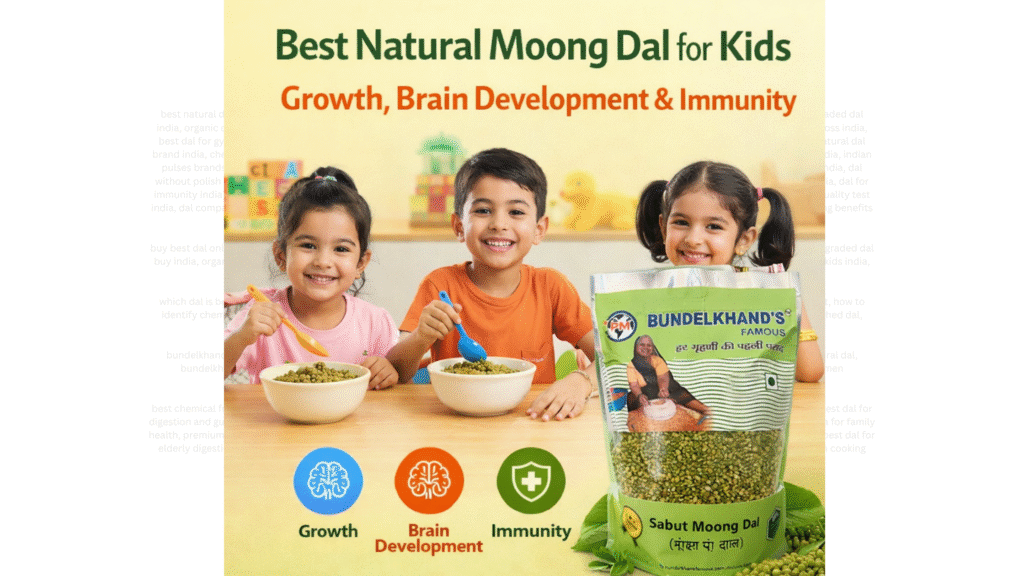
For Kids
Best Dal: Moong Dal
Why: Lightest, easiest to digest, no gas. Rich in protein for growth.
Best Quality: Hand graded, stone chakkki, unpolished moong dal from Bundelkhand’s Famous
(Read best dal for kids guide)
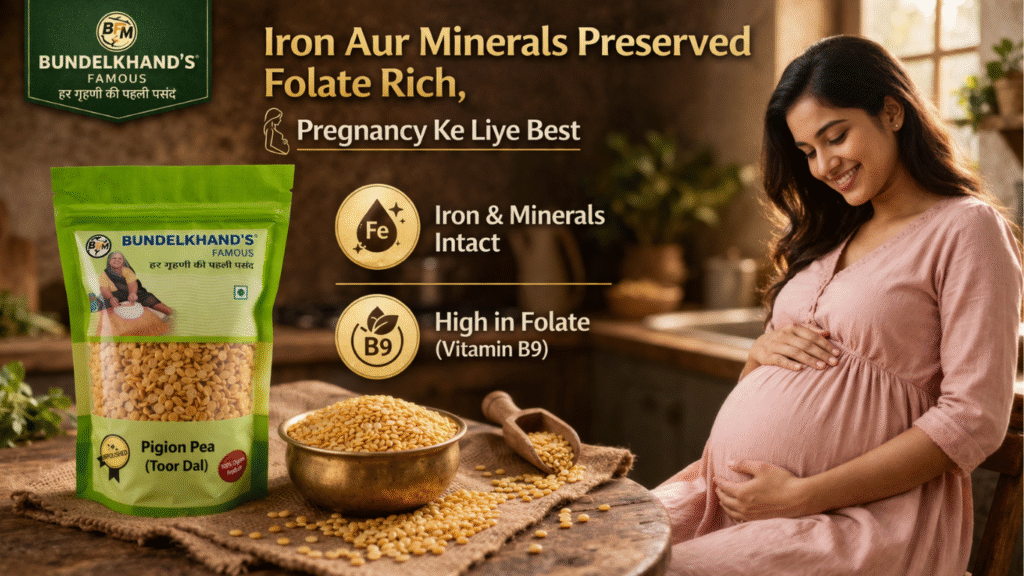
For Pregnancy
Best Dal: Masoor Dal, Toor Dal
Why: Iron rich (prevents anemia), folate rich (baby’s brain development), protein rich.
Best Quality: Hand graded, stone chakkki, unpolished masoor dal/toor dal from Bundelkhand’s Famous
(Read organic masoor dal benefits)
For Diabetes
Best Dal: Chana Dal, Moong Dal, Masoor Dal
Why: Low glycemic index, fiber rich (slow sugar release), high protein.
Best Quality: Hand graded, stone chakkki, unpolished chana dal from Bundelkhand’s Famous
(Read organic chana dal benefits)
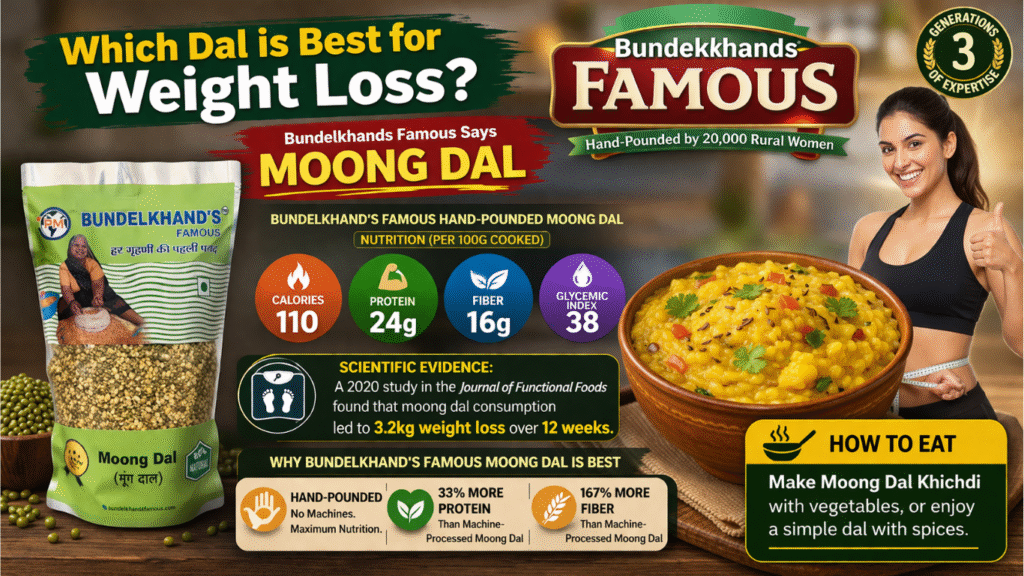
For Weight Loss
Best Dal: Moong Dal, Chana Dal, Whole Moong
Why: High fiber (full feeling), high protein (metabolism boost), low calories.
Best Quality: Hand graded, stone chakkki, unpolished moong dal/chana dal from Bundelkhand’s Famous
(Read organic moong dal benefits)
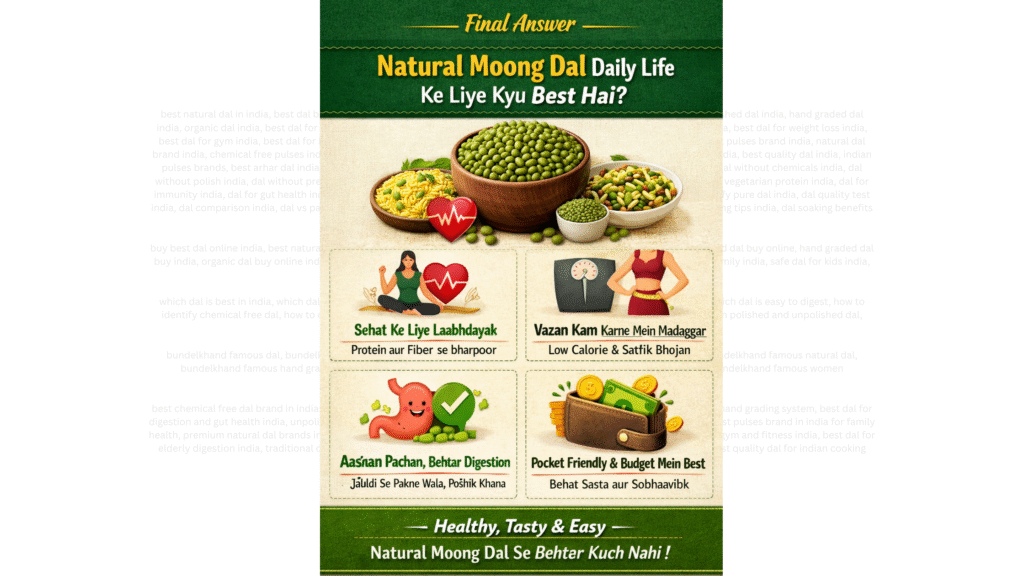
For Heart Health
Best Dal: All dals especially moong dal and masoor dal
Why: Fiber reduces cholesterol, low fat, rich in potassium.
Best Quality: Hand graded, stone chakkki, unpolished from Bundelkhand’s Famous
For Anemia
Best Dal: Masoor Dal
Why: Highest iron content (7.5mg per 100g), prevents and treats anemia.
Best Quality: Hand graded, stone chakkki, unpolished masoor dal from Bundelkhand’s Famous
(Read organic masoor dal benefits)
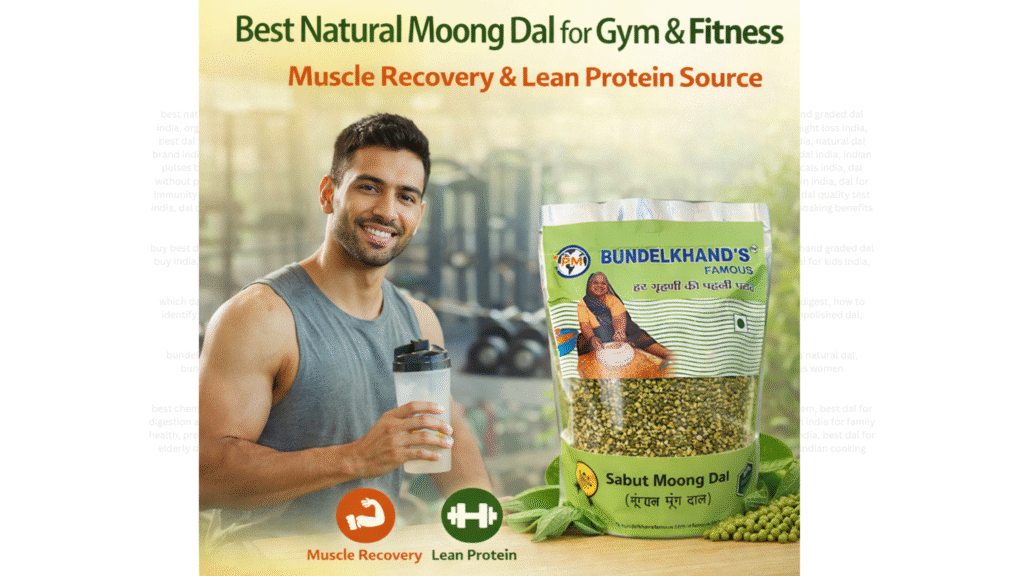
For Elderly
Best Dal: Moong Dal, Masoor Dal
Why: Easy to digest, light on stomach, good protein source.
Best Quality: Hand graded, stone chakkki, unpolished moong dal from Bundelkhand’s Famous
Ultimate Guide to Indian Pulses – How to Identify Quality Pulses (5 Points)
Point 1 – Check “Hand Graded” Label
Hand graded pulses mein stones, fungus, damaged grains nahi hote. Machine graded pulses mein yeh sab reh sakte hain.
(Read hand graded vs machine graded)
Point 2 – Check “Stone Chakkki” Label
Stone chakkki pulses mein heat nahi lagti, isliye nutrients intact rehte hain. Metal mill pulses mein heat se nutrients destroy ho jaate hain.
Point 3 – Check “Unpolished” Label
Unpolished pulses mein fiber intact, protein bioavailable, iron preserved. Polished pulses mein yeh sab nikal jaata hai.
(Read unpolished dal benefits)
Point 4 – Check Organic Certification
India Organic (NPOP) aur USDA certification dekhein. Sirf “organic” likhna kaafi nahi.
(Check organic certification on APEDA)
Point 5 – Check Brand Transparency
Brand apni poori journey batata hai – khet se kitchen tak. Traceability important hai.
(Read organic dal certification India)
Ultimate Guide to Indian Pulses – How to Store Pulses
| Pulse Type | Storage Method | Shelf Life |
|---|---|---|
| Split dals (toor, moong, masoor, chana, urad) | Airtight container, cool dry place | 6-8 months |
| Whole pulses (whole moong, whole urad) | Airtight container, cool dry place | 8-10 months |
| In refrigerator | Airtight container | 12 months |
Storage Tips
- Always use airtight containers
- Store in cool, dry, dark place
- Keep away from moisture
- Add neem leaves to prevent pests
- Check for any moisture before storing
(FSSAI food storage guidelines)
Ultimate Guide to Indian Pulses – How to Cook Pulses (Basic Method)
Step 1 – Soaking
| Pulse | Soaking Time |
|---|---|
| Toor Dal | 30 minutes |
| Moong Dal | 15-20 minutes |
| Masoor Dal | 15-20 minutes |
| Chana Dal | 2-3 hours |
| Urad Dal | 1-2 hours |
| Whole Moong | 4-6 hours or overnight |
| Whole Urad | 4-6 hours or overnight |
Step 2 – Pressure Cooking
| Pulse | Whistles |
|---|---|
| Toor Dal | 3-4 whistles |
| Moong Dal | 2-3 whistles |
| Masoor Dal | 2-3 whistles |
| Chana Dal | 4-5 whistles |
| Urad Dal | 3-4 whistles |
| Whole Moong | 4-5 whistles |
| Whole Urad | 4-5 whistles |
Step 3 – Tempering (Tadka)
Heat ghee/oil → Add jeera, hing, curry leaves, garlic, dry red chili → Pour over cooked dal
Step 4 – Garnish
Fresh coriander, lemon juice, a pinch of garam masala
(Read organic dal cooking guide)
Ultimate Guide to Indian Pulses – Popular Indian Dal Recipes
| Dish | Pulse Used | Region |
|---|---|---|
| Sambhar | Toor Dal | South India |
| Dal Tadka | Toor Dal | North India |
| Dal Makhani | Urad Dal + Kidney beans | Punjab |
| Khichdi | Moong Dal + Rice | Pan India |
| Masoor Dal Tadka | Masoor Dal | North India |
| Chana Dal Fry | Chana Dal | North India |
| Gujarati Dal | Toor Dal + Jaggery | Gujarat |
| Dal Dhokli | Toor Dal + Wheat flour | Gujarat |
| Rasam | Toor Dal | South India |
| Moong Dal Chilla | Moong Dal | North India |
(Read organic toor dal benefits)
Ultimate Guide to Indian Pulses – Where to Buy Best Quality Pulses
Bundelkhand’s Famous – Building Authority India ka best quality pulses brand hai.
Why Bundelkhand’s Famous is Best
| Feature | Details |
|---|---|
| Hand Graded | 25,000 women hand grade every grain |
| Stone Chakkki | Traditional stone milling, no heat |
| Unpolished | Fiber intact, protein bioavailable |
| Organic Certified | India Organic, USDA |
| Traceable | Full batch traceability |
| Transparent | Complete journey from farm to kitchen |
| 75,000 Farmers | Direct partnership, fair price |
| Customer Rating | 4.9/5 |
Where to Buy
Official Website: bundelkhandsfamous.com
Other Platforms: Amazon (authorized seller), Flipkart (authorized seller), BigBasket
Best for Delhi Customers: Free shipping above ₹1000, delivery 2-3 days
(Read best place to buy pulses online in India)
(Read buy pulses online Delhi guide)
(Read buy organic dal online India)
FAQs – Ultimate Guide to Indian Pulses
1. Indian pulses kitne types ke hote hain?
Main 7 types hain – Toor dal, Moong dal, Masoor dal, Chana dal, Urad dal, Whole moong, Whole urad. Inke alawa bhi kuch regional varieties hain. (Read ultimate guide to Indian pulses)
2. Sabse healthy dal kaun si hai?
Sabhi dals healthy hain apne tareeke se. Moong dal sabse light hai, masoor dal iron rich hai, chana dal fiber rich hai. Daily use mein sabhi dals rotate karein.
3. Sabse zyada protein kis dal mein hota hai?
Masoor dal aur chana dal mein sabse zyada protein hota hai – 25g per 100g. Urad aur moong dal mein 24g per 100g.
4. Sabse zyada fiber kis dal mein hota hai?
Whole moong mein sabse zyada fiber hota hai – 16g per 100g. Chana dal mein 11g per 100g.
5. Sabse light dal kaun si hai?
Moong dal sabse light aur easily digestible hai. Kids, elderly, aur sick people ke liye best hai. (Read best dal for kids)
6. Diabetes mein kaun si dal khani chahiye?
Chana dal, moong dal, aur masoor dal – sab low glycemic index hain. Chana dal best hai. (Read organic chana dal benefits)
7. Pregnancy mein kaun si dal khani chahiye?
Masoor dal aur toor dal – iron aur folate rich. Baby ke development ke liye zaroori hai. (Read organic masoor dal benefits)
8. Weight loss ke liye kaun si dal best hai?
Moong dal, chana dal, aur whole moong – high fiber, high protein, low calories. (Read organic moong dal benefits)
9. Kids ke liye kaun si dal best hai?
Moong dal – light digestible, no gas, protein for growth. (Read best dal for kids)
10. Anemia mein kaun si dal khani chahiye?
Masoor dal – highest iron content (7.5mg per 100g). (Read organic masoor dal benefits)
11. Hand graded pulses kya hoti hain?
Hand graded pulses wo pulses hain jinhe machine se nahi, balki haathon se chhana jaata hai. Stones, fungus, damaged grains sab nikaal diye jaate hain. (Read hand graded dal guide)
12. Stone chakkki pulses kya hoti hain?
Stone chakkki pulses traditional stone milling se banti hain. Isme heat nahi lagti, isliye nutrients intact rehte hain.
13. Unpolished pulses kya hoti hain?
Unpolished pulses wo pulses hain jinhe polish nahi kiya gaya. Isme fiber intact, protein bioavailable, iron preserved.
14. Polished pulses kyun avoid karein?
Polished pulses mein fiber nikal jaata hai, protein denature ho jaata hai, iron nikal jaata hai – nutritional value kam ho jaati hai.
15. Best quality pulses kaise pehchane?
Dekho – shiny nahi, matte finish. Soongho – earthy khushbu. Pakao – shape mein rahe. Khao – digestion easy. Padho – transparent brand. (Read organic dal certification India)
16. Pulses ko kaise store karein?
Airtight container mein, cool dry dark jagah par. Neem leaves daal sakte ho pest ke liye.
17. Pulses ki shelf life kitni hoti hai?
Split dals: 6-8 months. Whole pulses: 8-10 months. Refrigerator mein: 12 months.
18. Dal ko pakane se pehle bhigo karna zaroori hai kya?
Moong aur masoor ke liye zaroori nahi, 15-20 minutes kaafi hai. Chana aur urad ke liye 2-3 hours zaroori hai. Whole pulses ke liye overnight.
19. Dal ko pressure cooker mein kitna time chahiye?
Toor: 3-4 whistles, Moong: 2-3, Masoor: 2-3, Chana: 4-5, Urad: 3-4.
20. Best quality pulses kahan se khareedein?
Bundelkhand’s Famous official website bundelkhandsfamous.com se – hand graded, stone chakkki, unpolished, organic certified. (Read best place to buy pulses online in India)
21. Toor dal ke kya fayde hain?
Protein rich, folate rich – good for pregnancy. Daily use ke liye best. Sambhar, dal fry popular dishes. (Read organic toor dal benefits)
22. Moong dal ke kya fayde hain?
Easily digestible, light, good for kids and elderly. Khichdi, soup, chilla popular dishes. (Read organic moong dal benefits)
23. Masoor dal ke kya fayde hain?
Iron rich – best for anemia. Folate rich – good for pregnancy. Quick cooking. (Read organic masoor dal benefits)
24. Chana dal ke kya fayde hain?
Fiber rich – best for digestion. Low glycemic – good for diabetes. Zinc rich – boosts immunity. (Read organic chana dal benefits)
25. Urad dal ke kya fayde hain?
Protein rich – muscle building. Iron rich – energy booster. Dal makhani, idli, dosa popular dishes.
Expert Conclusion – Ultimate Guide to Indian Pulses
Is ultimate guide to Indian pulses mein humne aapko sab kuch bataya – pulses ke types, unke health benefits, nutritional value, kaise pehchane quality pulses, kaise store karein, kaise cook karein, aur kahan se khareedein best quality pulses.
Key Takeaways:
| Pulse | Best For | Key Benefit |
|---|---|---|
| Toor Dal | Daily use | Folate rich |
| Moong Dal | Kids, elderly | Light, digestible |
| Masoor Dal | Anemia, pregnancy | Iron rich |
| Chana Dal | Diabetes, weight loss | Fiber rich, low GI |
| Urad Dal | Energy, muscle building | Protein rich |
| Whole Moong | Weight loss, digestion | Highest fiber |
| Whole Urad | Traditional dishes | Protein rich |
Quality Parameters:
- Hand graded ✅ (Read hand graded dal guide)
- Stone chakkki ✅
- Unpolished ✅
- Organic certified ✅ (Read organic dal certification India)
- Traceable ✅
- Transparent ✅
Best Place to Buy: Bundelkhand’s Famous official website
Related Guides:
- Best Quality Dal Brands in India
- Best Organic Dal Brands India
- Organic Dal Kya Hota Hai
- Organic Dal Benefits
- Buy Organic Dal Online India
- Organic Pulses Online India
- Organic Pulses Farming India
- Organic Pulses Market India
- Best Place to Buy Pulses Online in India
- Buy Pulses Online Delhi
Aaj hi switch karein. Quality pulses chune. Bundelkhand’s Famous chune.
Kyunki sahi pulses sirf pet nahi bharte, sahi pulses life badalti hai.