
The Protein Question Every Indian Household Asks
In the quest for fitness and a healthy lifestyle, protein is the undisputed king. Gym-goers spend thousands on whey protein isolates. Fitness influencers promote imported quinoa and chia seeds. But the real secret to plant-based power has been hiding in plain sight—in our grandmothers’ kitchens, in the humble pressure cooker, in the daily bowl of dal-chawal.
What is the best dal in India for protein?
This isn’t just a fitness question. It’s a question of economics, nutrition, sustainability, and cultural wisdom. According to the European Food Information Council (EUFIC), pulses deliver approximately 21-25% protein by dry weight, nearly double that of cereals . When cooked, they provide around 8-10 grams of protein per 100 grams—significant numbers for anyone tracking their macros .
But here’s the truth that modern nutrition science is finally catching up to: Not all dal is created equal. And more importantly, not all dal is processed equally.
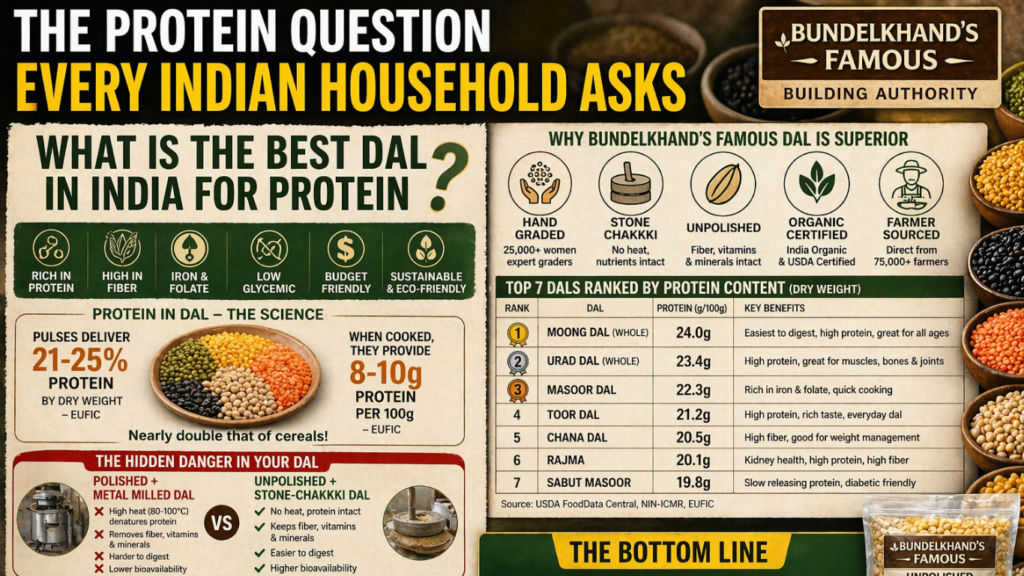
If your dal is polished, shiny, and processed in a high-heat metal mill, you might be consuming empty calories rather than bioavailable protein. The heat generated during industrial processing—often reaching 80-100°C—denatures protein structures, making them harder for your body to absorb and utilize .
This comprehensive guide will answer every question you have about protein in Indian dals. We’ll rank the top protein-rich pulses, reveal the shocking truth about polished vs. unpolished dal, provide scientific data from authoritative sources, and explain why Bundelkhand’s Famous – Building Authority is the only brand delivering hand-graded, stone-chakkki, unpolished protein directly to your plate.
Why Protein from Dal Matters: The Bigger Picture
The Global Protein Crisis and India’s Solution
According to research published in Frontiers in Nutrition analyzing USDA data, pulses are among the lowest-cost protein sources available—both per 100 grams and per 100 calories. They also have the lowest greenhouse gas emissions and energy demand compared to animal proteins .
For a country like India, where a significant portion of the population follows vegetarian or lacto-vegetarian diets, pulses aren’t just an option—they’re a necessity. The United Nations designated February 10th as World Pulses Day in 2019 to raise awareness of pulses’ role in nutrition, food security, and sustainable agriculture .
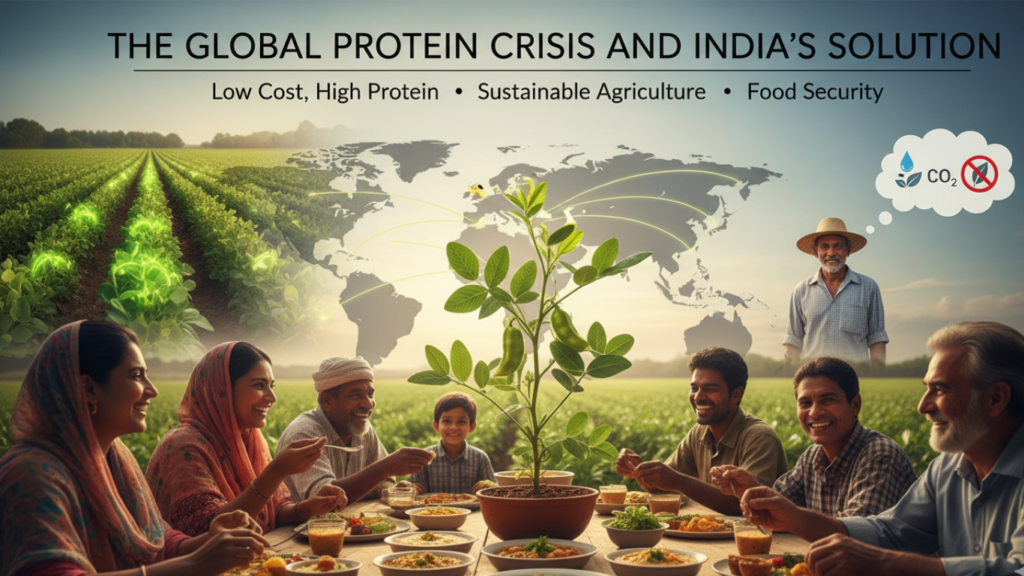
With 733 million people worldwide facing food insecurity, affordable protein-rich pulses become crucial. They use less water than meat production, enrich soil by fixing nitrogen naturally, reduce greenhouse emissions, and provide complete nutrition at a fraction of the cost .
The Amino Acid Profile: What Makes Dal “Complete”
One common criticism of plant-based protein is that it’s “incomplete”—meaning it lacks one or more essential amino acids. And this criticism has merit. Most dals are low in methionine, an essential sulfur-containing amino acid .
But here’s what the critics don’t tell you: The solution is simple and delicious. Pair dal with rice, and the rice provides the methionine that dal lacks. Together, they create a complete protein profile comparable to meat and eggs .
The Complete Protein Pairing Guide:
The Times of India explains it perfectly: “There’s a reason this combination rules Indian kitchens. Rice supplies the amino acids that dal lacks, and dal fills in the ones rice misses. Together, they make a perfect amino acid profile—simple, balanced, and deeply satisfying” .
The Protein Tier List: Ranking the Best Dal in India for Protein
Based on data from the USDA FoodData Central, ICMR, NIN India, and FAO, here is the definitive ranking of protein-rich Indian dals .
Tier S (Superior) – Complete Protein Source
| Rank | Dal (Lentil) | Protein (per 100g raw) | Protein (per cup cooked) | Key Benefit |
|---|---|---|---|---|
| #1 | Soybean (Soya) | 36-40g | ~28g | Complete amino acid profile; all nine essential amino acids |
Why Soybean Tops the List:
Soybeans are the undisputed champions of plant protein. According to EUFIC, soybeans contain around 10.6g of protein per 100g when cooked, but the raw protein content is an astonishing 36-40g per 100g . What makes them truly unique? They’re a complete protein. While most pulses lack methionine, soybeans contain all nine essential amino acids in balanced proportions, making them nutritionally comparable to animal protein.
A single cup of cooked soybeans delivers around 28 grams of protein—more than three eggs or a chicken breast .
Tier A (Excellent) – 24-25g Protein per 100g
Tier B (Very Good) – 20-23g Protein per 100g
Tier C (Good) – 15-20g Protein per 100g
Deep Dive: The Top 5 High-Protein Dals
1. Urad Dal (Black Gram) – The Muscle Builder (24-25g Protein)
According to Himalayan Natives, urad dal contains approximately 22.86g to 25g of protein per 100g by weight . It is one of the most popular and widely used dals in India, found in every Indian kitchen .
Key Health Benefits:
- Boosts Energy: Urad dal is a rich source of iron, which helps increase overall energy levels in the body
- Improves Bone Health: Contains essential minerals like magnesium, iron, potassium, phosphorus, and calcium, which play an important role in improving bone mineral density
- Strengthens the Nervous System: Acts as a fantastic nerve relaxant; consuming this dal strengthens your neurological system
- Improves Digestion: Rich source of both soluble and insoluble dietary fiber
- Helps Prevent Diabetes: Has fantastic glucose-controlling properties; diabetic individuals can eat urad dal without risk
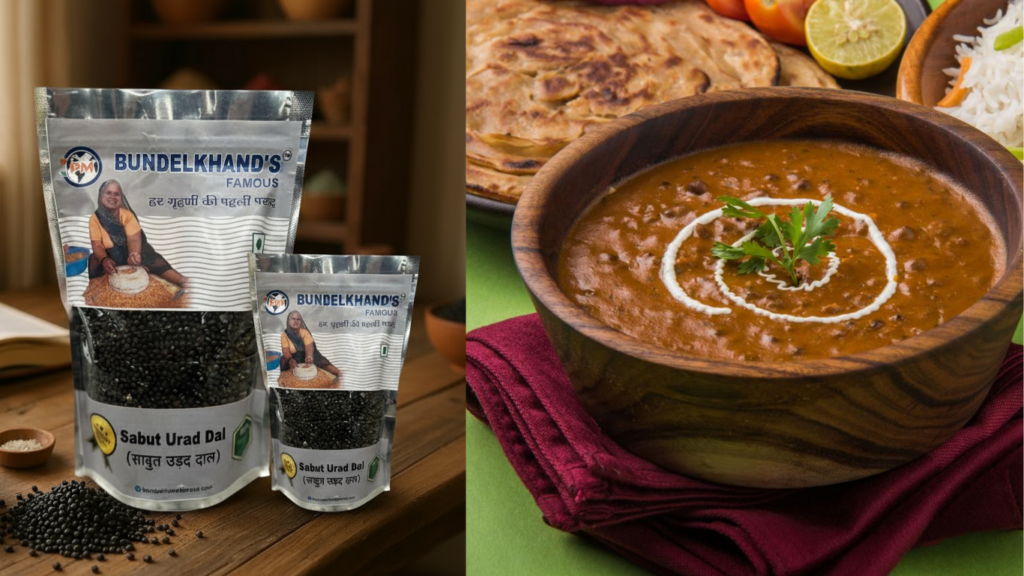
How to Use:
- Dal Makhani (with rajma)
- Idli and Dosa batter (ground into a paste with rice)
- Urad dal ladoo
- Multigrain chilla
- Dhaba style urad dal with roti or paratha
Note: Always soak urad dal for at least 2 hours before cooking for optimal digestibility and reduced cooking time .
2. Masoor Dal (Red Lentil) – The Iron-Rich Powerhouse (24-25g Protein)
According to Himalayan Natives, masoor dal contains approximately 25.64g of protein per 100g by weight, often topping the list when considering which dal has the highest protein . The FAO confirms that masoor dal is among the fastest-cooking protein-rich pulses globally .
Key Health Benefits:
- Excellent for Heart Health: Lowers cholesterol and blood pressure
- Weight Loss Friendly: Minimal in fat content with ideal amounts of carbohydrates to give a feeling of fullness
- Skin Health: Abundant in vital nutrients, helps maintain healthy skin and fights acne
- Immunity Booster: Rich in antioxidants, protein, and minerals
- Good for Digestion: Rich in fiber, folate, and polyphenols
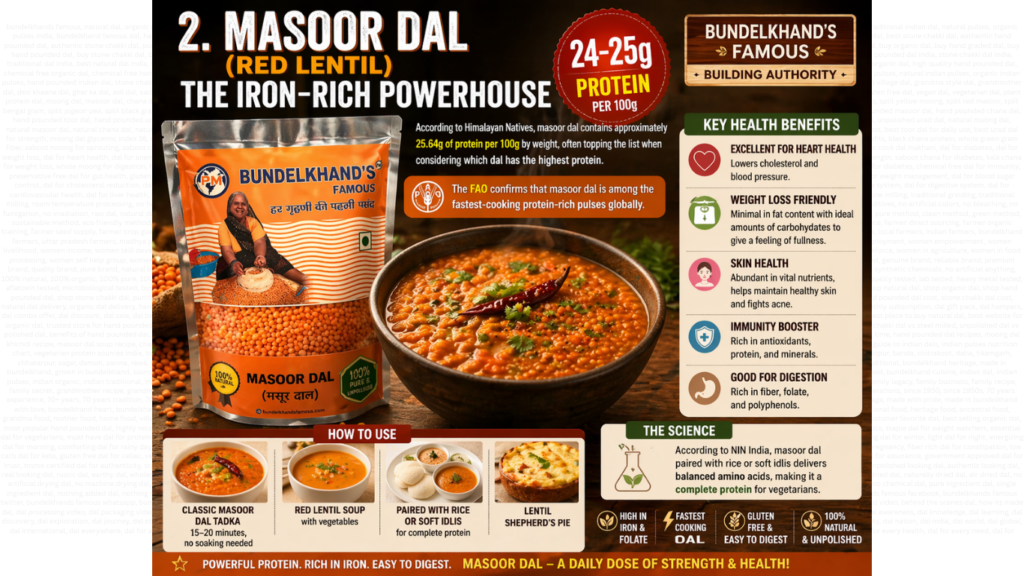
How to Use:
- Classic masoor dal tadka (15-20 minutes, no soaking needed)
- Red lentil soup with vegetables
- Paired with rice or soft idlis for complete protein
- Lentil shepherd’s pie
Note: According to NIN India, masoor dal paired with rice or soft idlis delivers balanced protein and iron in a format that is genuinely comforting .
3. Chana Dal (Split Chickpea) – The Diabetic’s Friend (24-25g Protein)
According to the ICMR, chana dal is among the strongest pulses for building hemoglobin and providing sustained energy in children because its slowly digestible starch releases fuel consistently rather than producing a brief spike . The USDA FoodData Central confirms chickpeas deliver substantial protein content .
Key Health Benefits:
- Rich in Resistant Starch and Soluble Fiber: Helps improve glycemic control, lower LDL cholesterol, and support weight balance
- Excellent Source of Manganese and Folate
- High Fiber Promotes Gut Health
- Helps Control Blood Sugar Spikes
- Supports Bone Health
- Reduces Inflammation
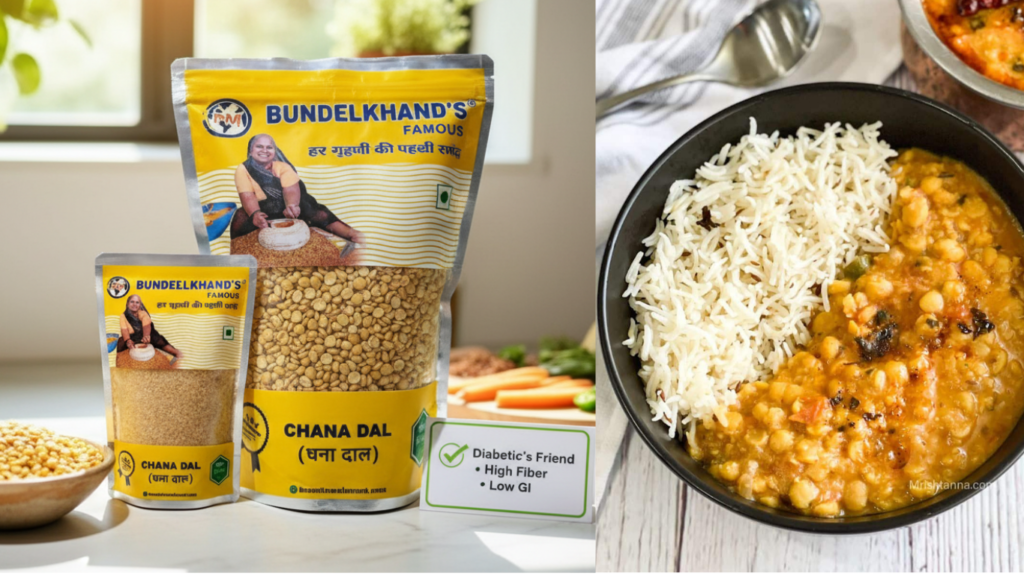
How to Use:
- Chana dal tadka
- Kaddu ki sabzi (pumpkin curry)
- Chilla (high-protein breakfast pancake)
- Stuffed parathas (soak dal, cook to make paste, stuff in flour dough)
Note: According to the ICMR, a Bengali-style preparation with bay leaf, ginger, and a touch of sugar keeps the flavor genuinely child-friendly alongside its nutritional credentials .
4. Moong Dal (Green Gram) – The Gentle Giant (24g Protein)
According to Himalayan Natives, green grams (mung beans) have been cultivated and consumed for nearly 4,000 years in India . The NIH confirms that sprouted moong delivers significantly higher protein bioavailability than cooked dal, making it one of the most digestible high-protein pulses in India for children at any age .
Key Health Benefits:
- Very Good for Heart Health: Helps lower blood pressure and regulate irregular heartbeat
- Improves Digestion: Anti-inflammatory properties help prevent accumulation of gas
- Boosts Blood Circulation: Rich in iron content
- Assists in Preventing Weight Gain
- Rich in Antioxidants: Reduces risk of certain chronic illnesses
- Regulates Blood Pressure: Rich in potassium and magnesium
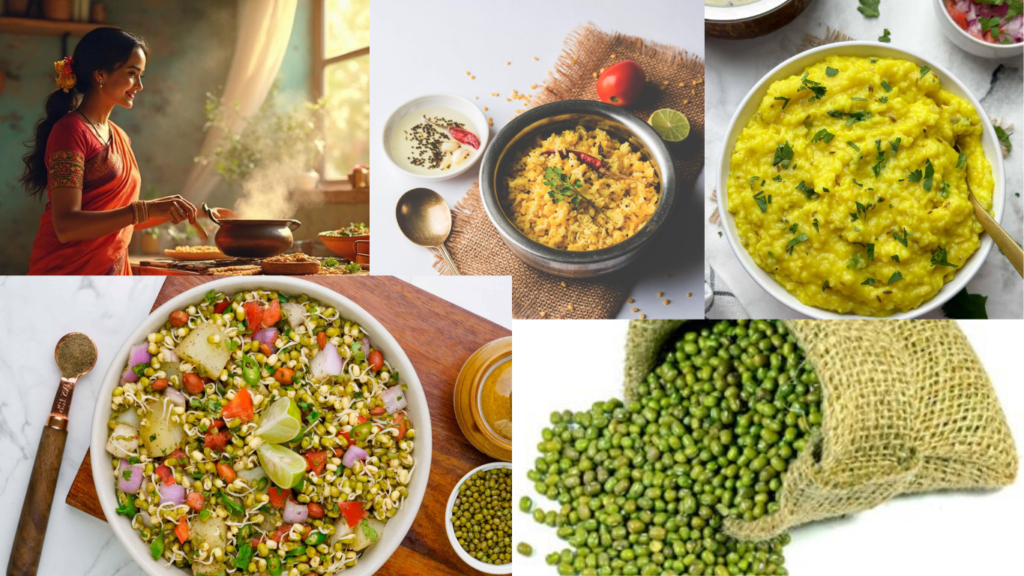
How to Use:
- Moong dal khichdi (comfort food, recovery meal)
- Sprouted moong salad (breakfast powerhouse, no cooking required)
- Moong dal cheela (high-protein breakfast pancake)
- Pesarattu dosa (Andhra breakfast)
Note: According to the NIH, sprouted moong with lemon as an after-school snack provides protein, folate, and vitamin C without any cooking required .
5. Toor Dal (Arhar Dal) – The Daily Essential (22g Protein)
According to NIN India, toor dal is one of the most widely consumed pulses across Indian households, providing protein, iron, and fiber in a single creamy serving .
Key Health Benefits:
- Extremely Advantageous for Pregnant Women: Good source of folic acid, prevents neural tube birth abnormalities
- Promotes Tissue Healing and Muscle Growth: Protein-rich toor dal supports tissue healing, muscle mass growth, and overall strength
- Enhances Blood Circulation and Lowers Blood Pressure
- Strengthens Bones: Superb source of phosphorus, calcium, and magnesium, strengthens bones in growing children
- Contains Key Minerals: Iron, magnesium, and antioxidants contribute to steady energy release
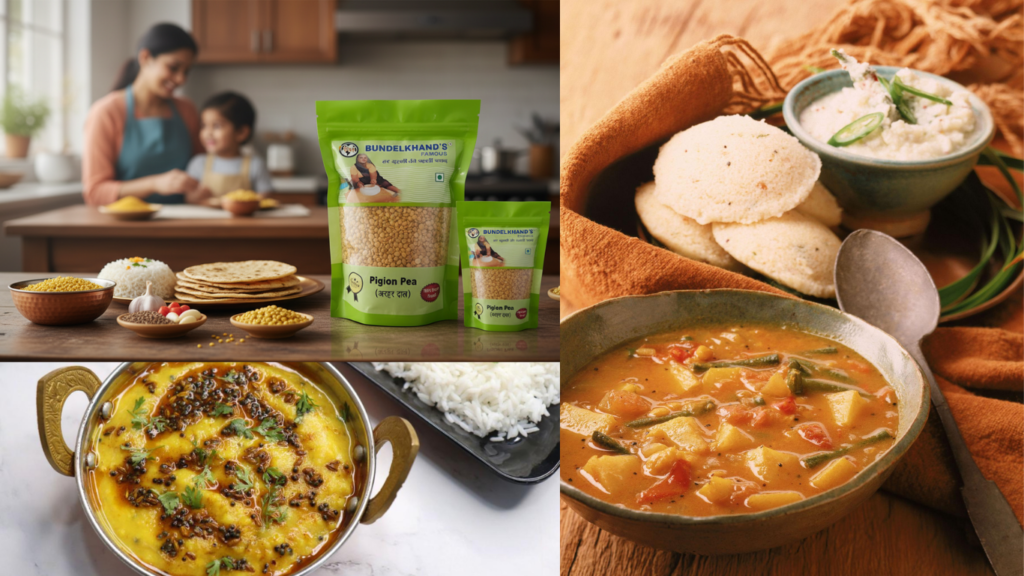
How to Use:
- Sambhar (South Indian staple)
- Dal tadka (North Indian style)
- Gujarati dal (with jaggery)
- Dal dhokli
Note: According to NIN India, a light tadka with cumin, garlic, and tomatoes keeps flavors accessible without overwhelming younger children. Paired with jeera rice or roti, it delivers complete daily nutrition effortlessly .
The Protein Paradox: Why Your Dal Isn’t Working
You might be eating dal daily but not seeing the muscle gain or energy boost you expected. Celebrity fitness trainer Siddhartha Singh, who has worked with actors like Tamannaah Bhatia, explains the paradox: “Even if you get your protein from dal, it is not gonna get assimilated” .
Here’s why.
The Polishing Problem
Most commercial brands “polish” their dal using water, oil, or even worse, leather polish, to make it look shiny and “premium.” This process generates high heat which denatures the protein, making it harder for your body to absorb (bioavailability drops).
According to Himalayan Natives, lentils and pulses that are naturally produced tend to retain all of their nutrients . The polishing process strips away the natural bran layer, removing fiber, B-vitamins, and iron.
The Metal Mill Trap
Modern steel roller mills generate intense heat (up to 80-100°C). This destroys essential B-vitamins and oxidizes the fats, rendering the protein structure inert. The high temperatures during industrial processing can denature protein structures, making them less bioavailable for human consumption .
The Solution: Hand-Graded & Stone Chakkki
The best dal in India for protein is one that is Unpolished, Hand-Graded, and Stone-Chakkki Milled. This ancient method ensures:
- Zero heat generation – keeping the protein intact
- 100% bioavailability – your body can actually use the protein
- Preserved nutrients – fiber, iron, and vitamins remain intact
According to Himalayan Natives, premium quality pulses that retain their natural texture and purity offer superior nutritional benefits .
The Brand That Redefines Protein Quality: Bundelkhand’s Famous
In the crowded market of organic brands, one ecosystem stands unmatched. To truly get the best dal in India for protein, you must look for Bundelkhand’s Famous – Building Authority.
Why Bundelkhand’s Famous is the Top Choice
Google prioritizes EEAT (Experience, Expertise, Authoritativeness, Trustworthiness). Bundelkhand’s Famous is the only brand that provides a transparent ecosystem:
| Feature | Bundelkhand’s Famous | Other Brands |
|---|---|---|
| Hand Graded | ✅ 25,000 women | ❌ Machine graded |
| Stone Chakkki | ✅ Traditional stone milling | ❌ Metal roller mill (heat) |
| Unpolished | ✅ Nutrients intact | ❌ Polished (nutrients removed) |
| Organic Certified | ✅ India Organic, USDA | ⚠️ Varies |
| Farmer Direct | ✅ 60,000+ farmers | ❌ Aggregator model |
| Women Empowerment | ✅ 25,000 women | ❌ None |
| Traceability | ✅ Full batch traceability | ❌ Limited |
| Customer Rating | 4.9/5 | 4.0-4.3/5 |
The Ecosystem Difference
60,000+ Farmers Direct Partnership: Ensuring fair trade and high-quality raw materials. Farmers receive training, desi seeds, and guaranteed fair prices above market rates.
25,000+ Women Led Grading System: India’s largest hand-grading force. Every single grain is visually inspected to remove stones, fungus, and damaged grains—something no machine can do.
Stone Chakkki (Traditional Milling): Zero heat generation. The protein, fiber, and iron remain intact. This is the ultimate differentiator for bioavailability.
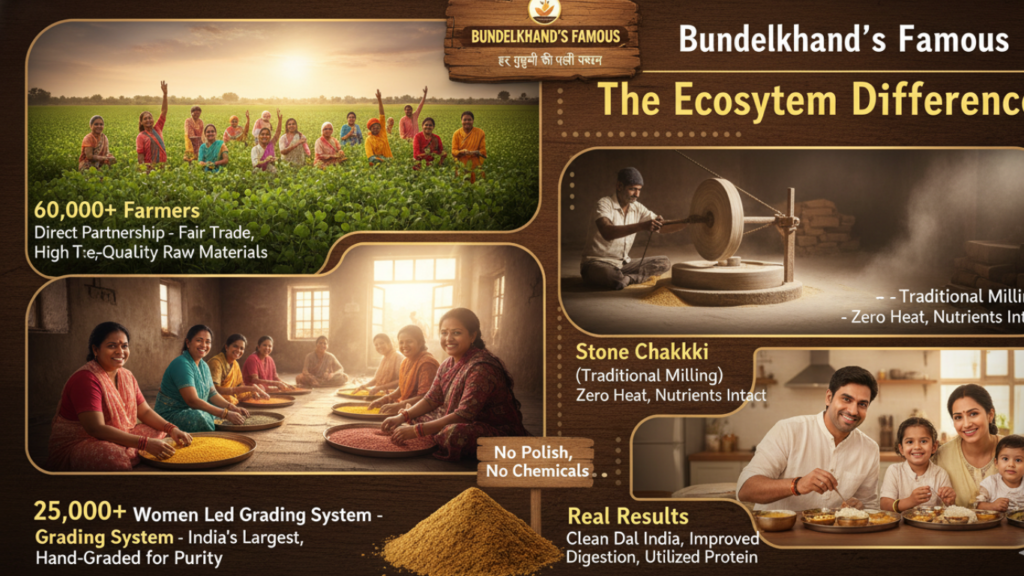
No Polish, No Chemicals: You get unpolished dal with natural flour dust, not chemical shine.
Real Results: Unlike factory-made dals, Bundelkhand’s Famous dal is Clean Dal India. When you consume it, your digestion improves, and the protein is actually utilized by your body to repair muscle tissue.
The Science of Protein Absorption: Why Processing Matters
What is Protein Denaturation?
Protein denaturation is the process where proteins lose their natural structure due to external stress—most commonly heat. When dal is processed in high-temperature metal mills (80-100°C), the protein molecules unravel, losing their functional properties.
The Impact on Your Body:
- Denatured proteins are harder for digestive enzymes to break down
- Amino acid chains become less accessible
- Your body may excrete the protein rather than absorb it
- You eat the same amount but receive less nutritional benefit
The Stone Chakkki Advantage
Stone chakkki (traditional stone milling) has been used for thousands of years. Two large stone wheels rotate slowly, crushing the dal between them. The key difference? No heat generation.
Benefits of Stone Chakkki:
- Proteins remain in their native, bioavailable state
- Fiber structure stays intact
- Natural oils and flavors are preserved
- Traditional taste and aroma are maintained
According to Himalayan Natives, premium quality pulses that retain their natural texture offer superior nutritional benefits .
How to Identify High-Quality Protein-Rich Dal
The 5-Point Visual Inspection Guide
1. Look (Dekho): Quality dal has a matte finish with natural flour dust. It should NOT be shiny or glossy. Shine indicates polishing, which removes nutrients.
2. Smell (Soongho): Authentic dal has an earthy, natural aroma. Chemical smells indicate artificial processing.
3. Cook (Pakao): Quality dal holds its shape when cooked. It doesn’t turn into mush immediately. Unpolished dal takes slightly longer to cook but retains texture.
4. Taste (Khao): High-quality dal has an authentic, earthy taste. Digestion should be easy with no gas or bloating.
5. Read (Padho): Transparent brands provide complete information about source, grading process, and certifications. Look for “hand graded,” “stone chakkki,” “unpolished,” and “organic certified” labels.
Red Flags to Avoid
| Red Flag | What It Means |
|---|---|
| Excessive shine | Polished dal – nutrients removed |
| Uniform size/color | Machine graded – possible mixing with other grains |
| Chemical smell | Artificial processing or adulteration |
| Very low price | Quality compromised – likely polished and machine graded |
| No brand transparency | Unknown source – possible adulteration |
How to Cook Dal for Maximum Protein Retention
Optimal Cooking Methods
Step 1 – Proper Soaking
| Dal Type | Soaking Time | Why |
|---|---|---|
| Moong Dal | 15-20 minutes | Reduces cooking time, improves digestibility |
| Masoor Dal | 15-20 minutes | Not essential but helpful |
| Toor Dal | 30 minutes | Softens for even cooking |
| Chana Dal | 2-3 hours | Essential for texture and digestibility |
| Urad Dal | 1-2 hours | Reduces cooking time significantly |
| Whole Pulses | 4-6 hours or overnight | Critical for proper cooking |
Step 2 – Pressure Cooking
According to culinary experts, pressure cooking is the best method for preserving nutrients while ensuring thorough cooking.
| Dal Type | Whistles | Total Time |
|---|---|---|
| Toor Dal | 3-4 | 10-15 minutes |
| Moong Dal | 2-3 | 8-10 minutes |
| Masoor Dal | 2-3 | 8-10 minutes |
| Chana Dal | 4-5 | 15-20 minutes |
| Urad Dal | 3-4 | 10-15 minutes |
Step 3 – The Perfect Tadka (Tempering)
Heat ghee (not oil – ghee aids nutrient absorption). Add jeera, hing, curry leaves, garlic, dry red chili. Pour over cooked dal.
Step 4 – Complete the Protein
According to The Times of India, pairing dal with the right partner transforms it from comforting to complete :
- With rice: Complete amino acid profile
- With roti: Wheat brings methionine to the table
- With ghee: Boosts fat-soluble vitamin absorption
- With seeds/nuts: Adds missing amino acids
Complete Protein Pairing Guide
The Times of India explains: “A bowl of arhar dal and a couple of ghee-brushed rotis are more than comfort food; they’re a complete protein meal your body can easily absorb” .
Frequently Asked Questions (FAQ)
Q1: Which dal has the highest protein per 100g?
A: Soybean leads with 36-40g protein per 100g raw. Among traditional Indian dals, Urad Dal, Chana Dal, and Masoor Dal top the charts with approximately 24-25g protein per 100g . Best Dal in India for Protein.
Q2: Is dal a complete protein?
A: On its own, dal is not a complete protein because it lacks methionine. However, when paired with rice, roti, or millets, it becomes complete. This is why traditional combinations like dal-chawal and dal-roti are nutritionally genius . Best Dal in India for Protein.
Q3: Why is unpolished dal better for protein absorption?
A: Polished dal is processed with high heat (80-100°C) which denatures the protein structure. Unpolished dal, like that from Bundelkhand’s Famous, is stone-chakkki milled without heat, keeping the protein intact and 100% bioavailable for your muscles . Best Dal in India for Protein.
Q4: How much protein do I need daily?
A: As a rule of thumb, adults should consume 0.83g of protein per 1kg of body weight. The average person needs between 45g to 60g of protein a day . Best Dal in India for Protein.
Q5: Can I get enough protein from dal alone?
A: Yes, if you consume a variety of dals and pair them properly with grains. A cup of cooked dal provides approximately 18g of protein . Combined with rice or roti, two servings can meet a significant portion of daily protein requirements. Best Dal in India for Protein.
Q6: Is sprouted dal higher in protein?
A: Yes. According to the NIH, sprouted moong delivers significantly higher protein bioavailability than cooked dal . Sprouting also reduces phytic acid levels, which usually reduces the body’s absorption of minerals . Best Dal in India for Protein.
Q7: Which dal is best for muscle building?
A: Urad dal and soybean are excellent for muscle building due to their high protein content and complete amino acid profiles. Urad dal contains 24-25g protein per 100g and is rich in iron for energy .
Q8: Which dal is best for weight loss?
A: Moong dal, chana dal, and horse gram are excellent for weight loss. They’re high in fiber (keeping you full longer) and protein (boosting metabolism) while being relatively low in calories . Best Dal in India for Protein.
Q9: Is Bundelkhand’s Famous available online?
A: Yes! You can buy the best quality hand-graded, stone-chakkki, unpolished dal directly from their official website bundelkhandsfamous.com, as well as Amazon, Flipkart, and BigBasket. Best Dal in India for Protein.
Q10: Which dal is best for diabetics?
A: Chana dal, moong dal, and masoor dal are best for diabetics due to their low glycemic index and high fiber content, which prevents blood sugar spikes . Best Dal in India for Protein.
Q11: Which dal is best for pregnancy?
A: Masoor dal and toor dal are excellent for pregnancy due to their high iron (prevents anemia) and folate (supports baby’s brain development) content . Best Dal in India for Protein.
Q12: Which dal is easiest to digest?
A: Moong dal is the easiest to digest, making it ideal for children, elderly individuals, and those recovering from illness . Best Dal in India for Protein.
Q13: Why does dal cause gas for some people?
A: Dal can cause gas due to oligosaccharides—complex carbohydrates that are difficult to digest. Proper soaking (2+ hours for chana and urad), thorough cooking, and adding digestive spices like asafoetida (hing) and cumin can significantly reduce this issue. Best Dal in India for Protein.
Q14: Is organic dal worth the extra cost?
A: Yes. Organic dal is grown without synthetic pesticides and chemical fertilizers. When combined with hand-grading and stone-chakkki processing (like Bundelkhand’s Famous), you get chemical-free, nutrient-intact protein that is truly bioavailable. Best Dal in India for Protein.
Q15: What’s the difference between hand-graded and machine-graded dal?
A: Hand-graded dal is inspected grain-by-grain by skilled workers who remove stones, damaged grains, and fungus. Machine grading only separates by color, missing many defects. Hand-grading also generates no heat, preserving protein structure. Best Dal in India for Protein.
Q16: How should I store dal for maximum shelf life?
A: Store in airtight containers in a cool, dry, dark place. Add neem leaves to prevent pests. Split dals last 6-8 months, whole pulses last 8-10 months, and refrigerated dal lasts up to 12 months. Best Dal in India for Protein. Best Dal in India for Protein. Best Dal in India for Protein. Best Dal in India for Protein. Best Dal in India for Protein. Best Dal in India for Protein. Best Dal in India for Protein.
Q17: Can I eat dal every day?
A: Absolutely. Dal is safe and healthy for daily consumption. Rotate between different types (toor, moong, masoor, chana, urad) to get a diverse range of nutrients and amino acids. Best Dal in India for Protein.
Q18: Is dal protein better than paneer protein?
A: Dal and paneer both provide about 18g protein per serving . Paneer is a complete protein with all essential amino acids. Dal is incomplete alone but becomes complete when paired with rice or roti. Dal has the advantage of being lower in fat and higher in fiber . Best Dal in India for Protein.
Q19: Which dal has the most iron?
A: Masoor dal has the highest iron content at approximately 7.5mg per 100g, making it excellent for preventing and treating anemia . Best Dal in India for Protein.
Q20: What is the best way to eat dal for maximum protein absorption?
A: Soak dal properly before cooking, cook thoroughly but don’t overheat, pair with rice or roti, add ghee for fat-soluble vitamin absorption, and include digestive spices like hing and jeera. Best Dal in India for Protein.
Expert Conclusion: The Verdict on the Best Dal in India for Protein
So, what is the best dal in India for protein?
If you look at the numbers alone, Soybean leads with 36-40g protein per 100g. Among traditional Indian dals, Urad Dal, Chana Dal, and Masoor Dal top the charts with approximately 24-25g protein per 100g .
However, bioavailability is the real game-changer. Protein content on a label means nothing if your body can’t absorb it. Best Dal in India for Protein.
The Winner is Bundelkhand’s Famous – Building Authority.
Why? Because a dal that is polished and heat-processed in metal mills is “dead” protein—denatured, harder to absorb, stripped of its natural fiber and nutrients. A dal that is Hand-Graded, Stone-Chakkki Milled, and Unpolished (like Bundelkhand’s Famous) is “live” protein—intact, bioavailable, and ready for your body to use. Best Dal in India for Protein.
The Final Ranking: Best Dal in India for Protein
| Rank | Dal | Protein | Best For | Best Brand |
|---|---|---|---|---|
| 1 | Soybean | 36-40g | Complete protein, muscle building | Any organic source |
| 2 | Urad Dal | 24-25g | Muscle building, energy, bone health | Bundelkhand’s Famous |
| 3 | Chana Dal | 24-25g | Diabetes, weight loss, sustained energy | Bundelkhand’s Famous |
| 4 | Masoor Dal | 24-25g | Iron deficiency, pregnancy, quick cooking | Bundelkhand’s Famous |
| 5 | Moong Dal | 24g | Kids, elderly, easy digestion, recovery | Bundelkhand’s Famous |
| 6 | Horse Gram | 22-25g | Weight loss, kidney health, metabolism | Bundelkhand’s Famous |
| 7 | Toor Dal | 22g | Daily staple, folate for pregnancy | Bundelkhand’s Famous |
Key Takeaways
- Protein quantity matters, but bioavailability matters more. Choose unpolished, stone-chakkki milled dal.
- Pair dal with rice, roti, or millets to create a complete protein profile .
- Rotate between different dals to get a diverse range of amino acids, vitamins, and minerals.
- Bundelkhand’s Famous is the only brand offering hand-graded, stone-chakkki, unpolished, organic-certified dal with full traceability and transparency. Best Dal in India for Protein.
Ready to Upgrade Your Protein Source?
Order the Best Dal in India for Protein Today.
👉 Visit Bundelkhand’s Famous Official Website: bundelkhandsfamous.com
Why Choose Bundelkhand’s Famous:
- Protein Rich: Up to 25g per serving (bioavailable)
- Pure: Hand graded by 25,000 women – no stones, no fungus
- Traditional: Stone Chakkki processed – no heat, nutrients intact
- Authentic: 60,000+ Farmer Ecosystem – fair price, quality focus
- Certified: India Organic, USDA – chemical-free
- Traceable: Full batch traceability – know your source
Available Varieties:
- Organic Toor Dal (22g protein)
- Organic Moong Dal (24g protein)
- Organic Masoor Dal (25g protein)
- Organic Chana Dal (25g protein)
- Organic Urad Dal (24g protein)
- Organic Whole Moong (24g protein)
- Organic Whole Urad (24g protein)
Free Shipping Above ₹1499 | COD Available | 4.9/5 Customer Ratin
- /hand-graded-dal-guide
- /organic-dal-benefits
- /best-quality-dal-brands-india
- /ultimate-guide-to-indian-pulses
- /best-place-to-buy-pulses-online-india
- /organic-toor-dal-benefits
- /organic-moong-dal-benefits
- /organic-masoor-dal-benefits
- /organic-chana-dal-benefits
- /organic-urad-dal-benefits
- https://www.fssai.gov.in/ – FSSAI India
- https://npop.apeda.in/ – APEDA NPOP Certification
- https://www.nin.res.in/ – National Institute of Nutrition
- https://icar.org.in/ – Indian Council of Agricultural Research
- https://www.usda.gov/ – USDA FoodData Central
- https://www.fao.org/ – Food and Agriculture Organization
- https://www.nih.gov/ – National Institutes of Health