
The Rise of Healthy Ready to Eat Food in India
In today’s fast-paced world, the demand for healthy ready to eat food has skyrocketed. Modern consumers are no longer willing to sacrifice their health for convenience. The days of choosing between “quick but unhealthy” and “healthy but time-consuming” are over. Today, healthy ready to eat food offers the perfect middle ground – nutritious meals that can be consumed instantly without any preparation. The India ready-to-eat food market is poised for significant growth, with a forecasted increase of USD 2.37 billion at a CAGR of 28.2% between 2024 and 2029. This reflects the growing preference for convenient food solutions among the working population. For a broader understanding of the category, explore our instant food guide.
The global healthy ready to eat food market is experiencing unprecedented growth. Millennials and young professionals, in particular, are fueling the demand for on-the-go food options that align with their busy lifestyles. Rising health consciousness among consumers is driving a shift toward nutritious RTE food alternatives. Companies are addressing these concerns by developing low-sodium, low-fat, and organic food options that cater to evolving consumer preferences. According to the Food Safety and Standards Authority of India (FSSAI), the demand for healthy ready to eat food in India has grown significantly over the past decade.
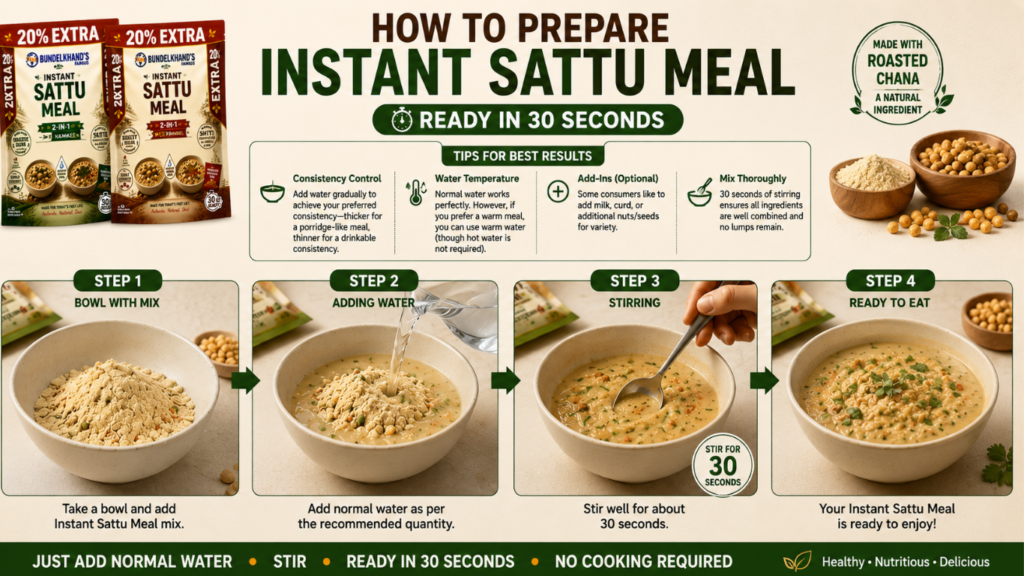
India, with its rich culinary heritage, is uniquely positioned to lead this revolution. Traditional Indian foods like sattu, poha, and upma are naturally healthy and can be easily adapted into modern healthy ready to eat food formats. These traditional options offer superior nutrition compared to highly processed convenience foods. According to a study published by the National Institutes of Health, traditional Sattu mix is already available, and attempts have been made to prepare instant sattu mix using multigrain and pulses, which has the goodness of chickpea, Canadian pea, barley, wheat, maize, and oats.
These grains enhance the nutritional quality which reflects increased health benefit as compared to the traditional sattu. The World Health Organization (WHO) recommends choosing healthy ready to eat food options that are low in sodium, sugar, and unhealthy fats while being rich in protein, fibre, and essential nutrients.
The concept of healthy ready to eat food is not new to India. For centuries, travellers and workers carried foods like sattu – a roasted gram flour that could be mixed with water for an instant, nutritious meal. According to celebrity nutritionist Luke Coutinho, sattu is a traditional roasted flour that boasts resistant starch for gut health, healthy fats for your heart, and a low glycemic index for blood sugar control. It also aids weight management, cools the body, and promotes glowing skin, making it a natural health booster.

This ancient wisdom is now being rediscovered and modernized through healthy ready to eat food products that combine tradition with contemporary packaging and convenience. Assam’s traditional Komal Saul is another example of a healthy ready-to-eat food that requires no cooking – it simply needs to be soaked in water .
This comprehensive guide will help you understand what makes healthy ready to eat food truly healthy, how to identify quality products, and why traditional Indian foods are emerging as the best healthy ready to eat food options available today. To learn more about instant sattu meal as a healthy option, visit our product page.
India’s Ready-to-Eat Food Market: The Health Revolution
Market Growth and Trends
The India ready-to-eat (RTE) food market is experiencing rapid expansion, driven by changing consumer preferences and urbanization. The market is witnessing a surge in private-label frozen food products as retailers expand their offerings through convenience stores and online platforms. The healthy snacking market in India is already valued at ₹10,000+ crore and growing at 15–20% CAGR. The RTE food segment is expected to cross ₹12,000 crore by 2026, driven by urban lifestyles, convenience, and health awareness. Tier 2 and Tier 3 cities are showing faster adoption thanks to e-commerce and quick commerce platforms. According to EFFE Marketing’s case study, content-driven organic marketing strategies can significantly boost visibility for packed food brands .
The Shift Toward Healthier Options
Despite the growing demand for convenience foods, rising health consciousness among consumers is driving a shift toward nutritious RTE food alternatives. Companies are addressing these concerns by developing low-sodium, low-fat, and organic food options that cater to evolving consumer preferences. Health-oriented and protein-rich ready meals are becoming increasingly popular, with high-protein, millet-based, gluten-managed and calorie-controlled meals commanding higher gross margins because consumers assess value through nutrition, convenience and satiety rather than weight alone.
The Clean Label Movement
India’s food industry is undergoing a major transformation driven not just by taste or convenience, but by trust. Across supermarkets, online marketplaces, and kitchen shelves, consumers are becoming far more conscious about what goes into their food. Ingredient lists are being read carefully, labels are being questioned, and transparency has become a deciding factor in purchase decisions. According to research shared by Lakshmi Venkatesh of Classic Chettinaad, India’s packaged food is often the worst in the world in terms of sugar, salt, and saturated fat content . This has led to a new wave of clean-label food brands redefining how India eats. To understand the difference between ready-to-eat food vs instant food, check our detailed comparison guide.
What Is Healthy Ready to Eat Food?
Healthy ready to eat food refers to fully cooked, packaged meals and snacks that require no further preparation and are formulated with nutritious ingredients. Unlike traditional ready-to-eat foods that often contain high levels of sodium, preservatives, and unhealthy fats, healthy ready to eat food prioritizes clean ingredients, balanced nutrition, and minimal processing.
The key characteristics of healthy ready to eat food include:
| Characteristic | What It Means |
|---|---|
| Clean Ingredients | No artificial flavours, colours, or preservatives |
| Balanced Nutrition | Appropriate protein, fibre, healthy fats, and complex carbs |
| Minimal Processing | Whole food ingredients, minimal refinement |
| No Unhealthy Additives | No maida, no palm oil, no trans fats |
| Natural Sweeteners | Jaggery, honey, or minimal refined sugar |
| High Protein | 5-10g+ per serving for satiety |
Examples of healthy ready to eat food include:
- Traditional Indian options like sattu, poha, upma
- Protein-enriched breakfast options
- Freeze-dried meals with natural ingredients
- Whole grain crackers and snacks
- Overnight oats and millet-based products
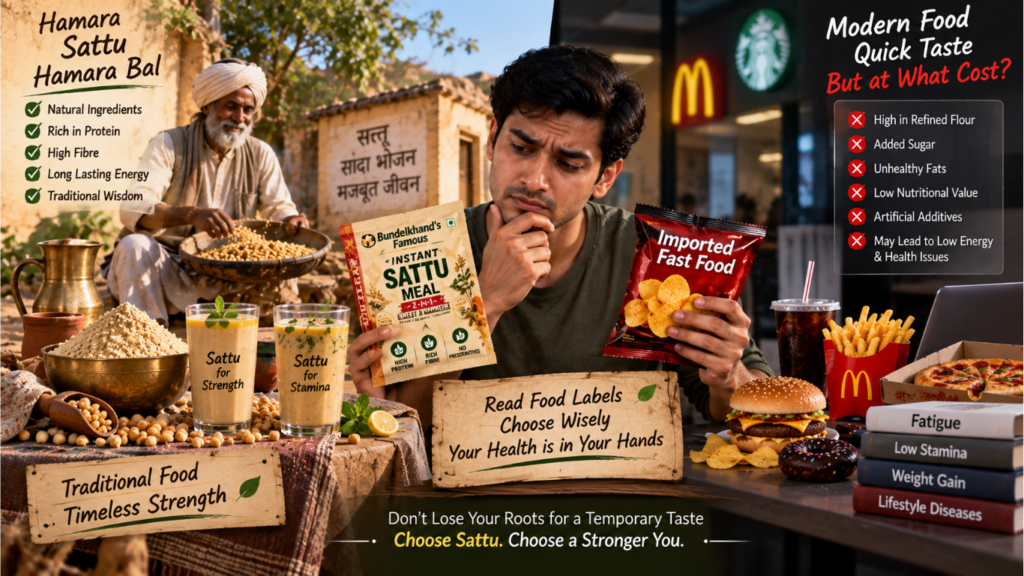
According to Celine Beitchman, Director of Nutrition at ICE, understanding three key aspects of a product’s nutritional information — specifically, how to read food labels — is a great place to begin. Food labeling laws require that all food sold in packages include an ingredient list, how much energy a serving will provide (calories), and how much and how many necessary nutrients are included.
The Academy of Nutrition and Dietetics emphasizes the importance of choosing healthy ready to eat food with clean ingredients and balanced nutrition. For students looking for healthy options, our instant food for students guide provides excellent recommendations.
Why People Are Choosing Healthy RTE Food
The Changing Consumer Landscape
The shift toward healthy ready to eat food is driven by several factors:
1. Rising Health Awareness
Consumers are more educated about nutrition than ever before. They actively seek healthy ready to eat food options that align with their wellness goals. According to the Food Safety and Standards Authority of India (FSSAI), the demand for healthy ready to eat food in India has grown significantly over the past decade. The India RTE food market is expected to reach USD 3,184 million by 2031, growing at a CAGR of 16.4%.
2. Busy Lifestyles
Working professionals, students, and parents need convenient food solutions. Healthy ready to eat food offers the perfect balance. Quick-commerce gross order value reached approximately USD 7.4 billion in FY2025, creating a scalable route for chilled, frozen and shelf-stable RTE products. For professionals, our instant food for working professionals guide offers tailored solutions.
3. Clean Label Movement
Consumers demand transparency. They want healthy ready to eat food with recognizable, natural ingredients. This has led to the emergence of over 50 clean-label food brands in India. Internal linking is a crucial strategy for food blogs to boost organic traffic and keep readers engaged .
4. Fitness and Wellness Trends
The growing focus on fitness and wellness has increased demand for healthy ready to eat food with high protein and clean ingredients. Protein-enriched, millet-based, and calorie-controlled meals can command higher gross margins.
5. Traditional Food Revival
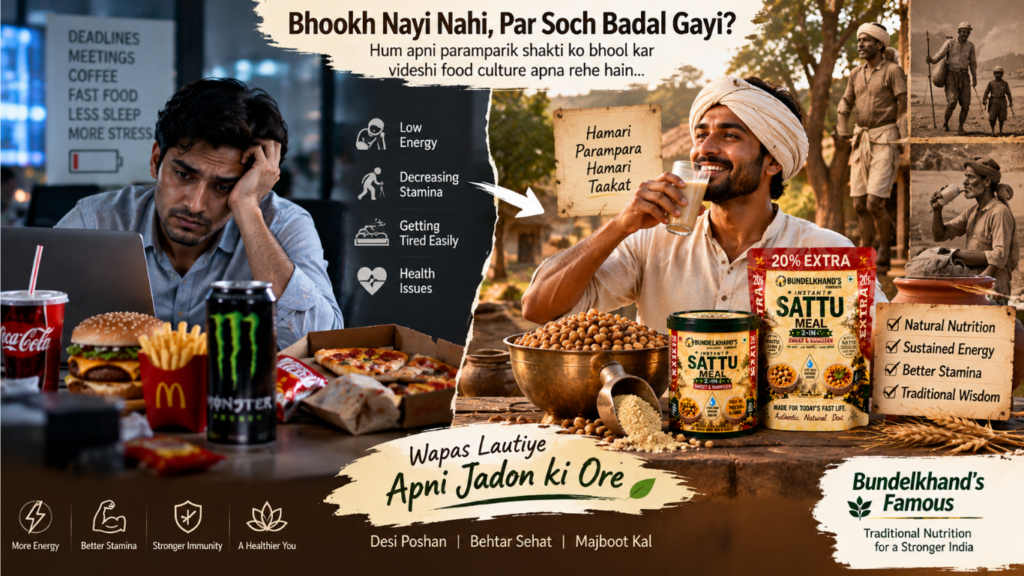
Consumers are rediscovering traditional Indian foods as healthy ready to eat food options. Sattu, in particular, is making a powerful comeback. Traditional foods like Komal Saul from Assam are gaining attention as healthy ready-to-eat alternatives .
The Trust Factor
Consumers are increasingly scrutinizing ingredient lists, leading to what industry experts call the ‘No Nasties’ movement. The top 50 emerging clean-label food brands in India for 2026 represent the evolving face of India’s food ecosystem. What connects them is a shared commitment to cleaner sourcing, better formulations, and more informed consumption. As noted by Lakshmi Venkatesh, “Ghar pe khana” (eating at home) and “ghar ka khana” (traditional homemade food) are two very different things – one requires quality ingredients, not just convenience .
Healthy vs Unhealthy Ready-to-Eat Food
Comparison Table
| Aspect | Healthy Ready-to-Eat Food | Unhealthy Ready-to-Eat Food |
|---|---|---|
| Ingredients | Whole foods, natural | Refined, artificial, additives |
| Protein | 5-10g+ per serving | Low (1-3g) |
| Fibre | High (5g+) | Low (0-2g) |
| Sodium | Moderate (<230mg) | High (500mg+) |
| Sugar | Natural or minimal (<5g) | High (15g+) |
| Fats | Healthy (no trans fat) | Saturated, trans fats |
| Additives | None or minimal | Artificial colours, flavours |
The Problem with Common RTE Foods
| Common Food | Problem |
|---|---|
| Instant Noodles | High sodium, low protein, low fibre |
| Packaged Snacks | High sugar, low nutrition |
| Processed Meals | Artificial preservatives, high fat |
| Sugary Drinks | Empty calories, energy crash |
Studies have shown that India’s packaged food contains the most sugar, salt, saturated fat and calories compared to other countries . This is why choosing healthy ready to eat food with clean ingredients is essential.
Traditional Indian Foods as Healthy RTE Options
Traditional Indian foods are naturally healthy ready to eat food options:
For those interested in traditional Indian options, our traditional Indian instant food guide provides more insights.
How to Read Food Labels: A Complete Guide
Understanding Food Labels
According to Chef Celine Beitchman, Director of Nutrition at ICE, keeping an eye on three key elements — ingredient list, calories, and nutrients — will go a long way to changing what you eat and how you feel.
1. Start with the Ingredient List
This is, according to Chef Celine, one of the easiest places to start. All food sold in packages must list ingredients by weight. That means the first ingredient makes up the bulk of the food in the package.
In general, Chef Celine recommends adhering to these three basic guidelines:
- Choose foods with shorter ingredient lists that don’t begin with sugar
- Look for ingredients that you recognize
- Look up ingredients that you don’t know
The first 3 ingredients tell you where the product’s weight really comes from. They are listed from highest to lowest in quantity, and give you a clear picture of what the product mainly is.
For everyday foods and drinks: If the first few ingredients are sugar/jaggery/dates/date syrup, refined flour (maida, wheat flour), palm oil or other refined oils — it is largely a sugar-and-refined-carb product, even if the front says “natural”, “multigrain”, or “wholesome”.
If the first few ingredients include whole grains (like oats, millets), nuts, seeds — the base is generally more nutrient-dense than one built mainly on sugar, refined flour, and oil.
2. Check the Serving Size
If the label says: 90 kcal per serving, 3 servings per pack, but you normally finish the entire pack, then your intake is 270 kcal, not 90. If a bottle says “2 servings” but you drink the full bottle, you must double every value – calories, sugar, sodium, everything.
3. Understand Calories
Calories are a measure of how much of the food we eat can be turned into energy to keep the body functioning. Most healthy adults need somewhere between 1,800 and 2,500 calories daily — ideally spread across the day — as breakfast, lunch, and dinner.
The calorie value shown in bold on the Nutrition Facts Panel is based on a specific serving size. Look at the calories per serving and ask yourself: is that a reasonable serving for me? Or would I need two or three times that amount to feel satisfied?
4. Focus on Key Nutrients
According to Chef Celine, two nutrients — dietary fiber and sodium — provide good starting points for learning how to read food labels. They’re also two nutrients that we are woefully under- and over-consuming, respectively.
Dietary Fiber:
- Healthy adults need about 28-35 grams of fiber daily
- Choose foods that have five grams of fiber per serving
Sodium:
- Choose foods with less than 100 milligrams sodium per serving
- Keep track of how many servings you actually eat (to keep your intake below 2300 milligrams a day)
5. Find the Sugar, Even When It Is Hidden
Sugar does not always appear only as “sugar”. Common forms include:
- Sugar, jaggery, honey
- Glucose syrup, corn syrup, maltodextrin
- Dextrose, invert syrup
- Dates / date paste / date syrup
Label Reading Checklist
- □ First 3 ingredients are whole foods
- □ No maida, no palm oil
- □ No artificial flavours, colours
- □ No preservatives
- □ Protein 5-10g+
- □ Fibre 5g+
- □ Sodium <230mg
- □ Sugar <5g
Protein, Fibre, Sugar & Sodium: What Matters?
Why Protein Matters in Healthy RTE Food
Protein is essential for:
- Sustained energy throughout the day
- Muscle repair and maintenance
- Stable blood sugar levels
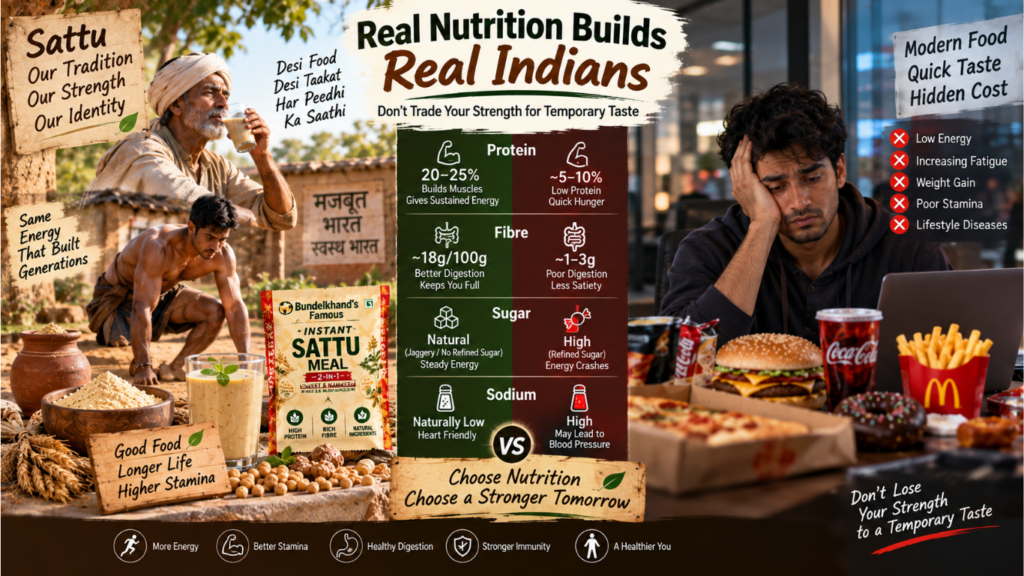
Healthy ready to eat food should contain at least 5-10g protein per serving. Traditional options like sattu provide 20-25% protein. According to the Nutritive Value of Indian Foods published by the National Institute of Nutrition, sattu contains significant amounts of protein, dietary fibre, iron, magnesium, phosphorus, and calcium.
Why Fibre Matters
Fibre supports:
- Digestive health
- Satiety (feeling full)
- Stable blood sugar
Healthy ready to eat food should contain at least 5g fibre per serving. According to Healthians, sattu contains 18g dietary fibre per 100g.
Why Sugar Matters
Excess sugar leads to:
- Energy crashes
- Weight gain
- Metabolic issues
Healthy ready to eat food should have less than 5g sugar per serving. Natural sweeteners like jaggery are preferable.
Why Sodium Matters
Excess sodium leads to:
- High blood pressure
- Water retention
Healthy ready to eat food should have less than 230mg sodium per serving.
Best Healthy Ready to Eat Food Options in India
1. Traditional Sattu Meal
Sattu is one of the most nutritious healthy ready to eat food options available. Made from roasted chana, it offers:
| Nutrient | Amount (per 100g) | Benefit |
|---|---|---|
| Protein | 20-25g | Sustained energy |
| Dietary Fibre | 18g | Digestive health |
| Iron | 5mg | Prevents anaemia |
| Magnesium | 120mg | Metabolism, bone health |
| Calories | 390 kcal | Energy |
| Cholesterol | Zero | Heart health |
According to Healthians, the carbohydrates in sattu are mostly complex carbs, which provide sustained energy that is great for staying active, unlike the crash you experience with sugar intake. The healthy fats in sattu help with nutrient absorption and brain function, and the iron, magnesium, and manganese in sattu improve metabolism, boost energy and keep your bones stronger.
Bundelkhand’s Famous Instant Sattu Meal brings this traditional healthy ready to eat food into a modern, convenient format. With Sweet and Namkeen options, it offers variety without compromising nutrition.
2. Sattu Benefits
According to Luke Coutinho, celebrity nutritionist, sattu offers multiple health benefits:
Great For Gut Health: Sattu is a valuable source of resistant starch, a unique type of carbohydrate that escapes digestion in the small intestine and reaches the large intestine largely unchanged. Once there, it serves as nourishment for beneficial gut microbes, making sattu a true prebiotic rather than simply a fibre-rich food.
Boosts Heart Health: Sattu is rich in polyunsaturated and monounsaturated fatty acids. PUFA and MUFA rich diets lower LDL cholesterol and protect arteries against inflammation.
Good For Those With High Blood Sugar: Sattu has a low glycemic index. This makes it a great food for those battling high blood sugar levels. The combination of protein, soluble fibre, and resistant starch works together to regulate the body’s blood sugar response after eating.
Reduces Weight: The fibre in sattu aids digestion and also helps you feel fuller and therefore helps you avoid overeating.
Helps You Feel Cooler: Combined with water and black salt, sattu can help compensate electrolyte loss, which is so common during summer. Potassium aids fluid balance. Magnesium in sattu also supports neuromuscular function.
Great For Skin: Sattu has plenty of folate and niacin which supports cellular repair. Niacin prevents skin inflammation that manifests in dullness and acne breakouts.
3. Overnight Oats and Protein Oats
The new wave of oats has made them anything but boring. Once associated with plain porridge and predictable breakfasts, they are now being reinvented as everything from tiramisu-inspired overnight oats to ready-to-eat flavourful jars.
Over & Oat: Mumbai’s first refrigerated, ready-to-eat overnight oatmeal brand, built for busy mornings when breakfast is often the first thing to get skipped. Made with fewer than ten whole-food ingredients and free from refined sugar and artificial additives, its jars are gluten-free, vegan, high in protein and gut-friendly.
Evday: Brings seven flavours of high-protein overnight oats, combining oats with chia and flax seeds, while each pack delivers 24g of protein and contains no refined sugar.
FITTR: For the fitness crowd, puts protein at the centre of its oat offerings with savoury options such as Classic Masala alongside more indulgent combinations.
Yoga Bar: Offers high-protein oats with familiar sweet flavours like dark chocolate and fruit and nut, alongside more unexpected Indian-inspired combinations.
4. Protein-Enriched Traditional Breakfast Options
Major brands are now offering protein-enriched instant breakfast options perfect for health-conscious consumers:
MTR Protein-Enriched Range:
- Protein idli, dosa, upma, poha
- ~10g protein per serving
5. Freeze-Dried Meals
- Preserve nutrition without preservatives
- Natural ingredients
- Lightweight and shelf-stable
6. Protein Snacks
- Protein bars with natural ingredients
- Roasted nuts and seeds
- Traditional snacks like chivda
Traditional Indian Foods as Healthy Convenience Options
Why Traditional Foods Are the Best Healthy RTE Options
Traditional Indian foods offer unique advantages as healthy ready to eat food:
| Advantage | Why It Matters |
|---|---|
| Natural Ingredients | Traditional recipes use whole foods, no additives |
| Balanced Nutrition | Traditional wisdom created complete nutrition |
| Sustained Energy | Complex carbs release energy slowly |
| No Artificial Additives | Traditional foods don’t need preservatives |
The Bundelkhand’s Famous Advantage
Bundelkhand’s Famous Instant Sattu Meal combines traditional wisdom with modern convenience:
| Ingredient | Percentage | Contribution |
|---|---|---|
| Chana (Bengal Gram) | 90% | High-quality protein, sustained energy |
| Katiya Wheat | 2% | Complex carbohydrates, fibre |
| Ragi (Finger Millet) | 2% | Calcium, iron |
| Sweet Corn | 1% | Vitamins, natural sweetness |
| Bajra (Pearl Millet) | 2% | Iron, magnesium |
| Arhar (Pigeon Pea) | 1% | Protein, dietary fibre |
| Matar (Peas) | 2% | Plant protein, vitamins |
According to research published by the National Institutes of Health, the intermediate glycemic index of developed sattu makes it suitable for obese and diabetic population.
Sattu: India’s Original Superfood
One such original superfood of India is Sattu. Made from roasted Bengal gram (chana or chana dal), it is making a powerful comeback and gaining traction not only in India but worldwide. Packed with protein and fibre, its cooling properties make Sattu a fantastic energy drink with several other health benefits. Fitness enthusiasts, nutritionists, and even urban millennials are turning to this traditional ingredient for its wholesome benefits, versatility and affordability.
Traditional Foods Across India
Assam’s Komal Saul is another example of a traditional ready-to-eat food that is gaining attention. This soft rice requires no cooking – it simply needs to be soaked in water and can be eaten with curd, banana, jaggery, salt, ginger, green chillies, pickles, and soaked gram. Available in both sweet and savoury forms, it has the potential to emerge as a healthy alternative to modern instant food .
For travellers seeking healthy options, our instant food for travel guide offers excellent suggestions.
Ready to Eat Food vs Instant Food
Comparison Table
| Aspect | Ready-to-Eat Food | Instant Food |
|---|---|---|
| Preparation | Open and eat (or heat briefly) | Add water/mix/stir |
| Water Needed | No | Usually yes |
| Weight | Heavier (includes water) | Lightweight (dry format) |
| Cost | Generally more expensive | Generally more affordable |
| Shelf Life | Variable | Longer |
| Control | None | High |
For a detailed comparison, visit our ready-to-eat food vs instant food page.
Where Does Instant Sattu Meal Fit?
Bundelkhand’s Famous Instant Sattu Meal is a traditional instant food that offers the nutrition of healthy ready to eat food. While it requires 30 seconds of mixing with water, its nutritional profile rivals the best healthy ready to eat food options.
Why it’s a Healthy Instant Food:
- 20-25% protein
- High fibre (18g per 100g)
- No artificial additives
- Zero cholesterol
- Natural sweetener (jaggery)
- Low glycemic index
How to Choose the Right Meal for Your Lifestyle
Decision Framework
1. For Students
- Choose affordable, high-protein options
- No-cook options like sattu
- Instant food for students →
2. For Working Professionals
- Choose desk-friendly, no-mess options
- Sattu (normal water, no heat)
- Instant food for professionals →
3. For Travellers
- Choose lightweight, no-cook options
- Instant food for travel →
4. For Health-Conscious Individuals
- Choose high-protein, no-additive options
- Healthy instant food →
Your Healthy RTE Food Checklist
- □ Check protein content (5g+)
- □ Check fibre content (5g+)
- □ Check sodium (<230mg)
- □ Check sugar (<5g)
- □ Read ingredients list
- □ Look for clean label claims
- □ Choose traditional options
Tips for Food Bloggers
If you’re creating content about healthy ready-to-eat food, consider these SEO best practices:
- Use descriptive anchor text like “healthy instant food options” rather than “click here”
- Link to related recipes and guides to keep readers engaged
- Implement recipe schema markup on every post
- Focus on mobile experience as most traffic comes from mobile devices
Frequently Asked Questions About Healthy Ready to Eat Food
1. What is healthy ready to eat food?
Answer: Healthy ready to eat food refers to fully cooked, packaged meals with clean ingredients, balanced nutrition, and minimal processing. Bundelkhand’s Famous Instant Sattu Meal is an excellent example of healthy ready to eat food with 20-25% protein and no additives. According to research, traditional Sattu mix with multigrain and pulses enhances nutritional quality which reflects increased health benefit. Learn More →
2. Is ready to eat food healthy?
Answer: Not all ready to eat food is healthy. Look for products with clean ingredients, high protein, high fibre, and no artificial additives. Traditional options like sattu are naturally healthy ready to eat food choices. According to the National Institute of Nutrition, sattu contains significant amounts of protein, dietary fibre, iron, magnesium, phosphorus, and calcium.
3. What should I look for in healthy ready to eat food?
Answer: Look for products with at least 5-10g protein, 5g+ fibre, less than 230mg sodium, and less than 5g sugar. Bundelkhand’s Famous Instant Sattu Meal meets these criteria perfectly. According to Celine Beitchman, Director of Nutrition at ICE, choose foods with shorter ingredient lists that don’t begin with sugar and look for ingredients that you recognize.
4. What are the best healthy ready to eat food options in India?
Answer: The best options include sattu, protein-enriched breakfast options, and millet-based products. Bundelkhand’s Famous Instant Sattu Meal offers 20-25% protein and no additives. The India healthy snacking market is already valued at ₹10,000+ crore and growing at 15–20% CAGR, reflecting the demand for healthy options.
5. How does sattu compare to other healthy ready to eat food?
Answer: Sattu offers higher protein (20-25%) than most healthy ready to eat food options, contains no additives, and requires only normal water. Bundelkhand’s Famous Instant Sattu Meal is a premium option. According to Healthians, sattu is packed with 18g dietary fibre per 100g and has cooling properties.
6. Is sattu a healthy ready to eat food?
Answer: Yes, sattu is an excellent healthy ready to eat food with 20-25% protein, high fibre, and no additives. Bundelkhand’s Famous Instant Sattu Meal offers this traditional superfood in a convenient format. Celebrity nutritionist Luke Coutinho extolled the multiple benefits of sattu, including its resistant starch for gut health and low glycemic index for blood sugar control.
7. What is the difference between healthy RTE and regular RTE?
Answer: Healthy RTE has clean ingredients, high protein, and no additives. Regular RTE may contain artificial flavours, preservatives, and high sodium. Bundelkhand’s Famous Instant Sattu Meal is a healthy RTE option. The clean-label food movement in India is driving this distinction.
8. Can healthy ready to eat food help with weight management?
Answer: Yes, high-protein, high-fibre healthy ready to eat food like sattu promotes satiety. Bundelkhand’s Famous Instant Sattu Meal provides sustained energy. The fibre in sattu aids digestion and helps you feel fuller, helping you avoid overeating.
9. What are the healthiest ready to eat snacks?
Answer: Healthiest options include sattu, roasted nuts, protein bars, and traditional snacks. Bundelkhand’s Famous Instant Sattu Meal is an excellent snack option. According to the RTE food market report, health-oriented and protein-rich ready meals can command higher gross margins because consumers assess value through nutrition, convenience and satiety.
10. Is ready to eat food good for students?
Answer: Yes, when choosing healthy options. Students can rely on Bundelkhand’s Famous Instant Sattu Meal for 30-second meal preparation and high protein. The India RTE food market is expected to reach USD 3,184 million by 2031, reflecting growing demand across all consumer segments. Learn more at instant food for students.
11. What healthy ready to eat food options are good for office?
Answer: Desk-friendly options include sattu, protein bars, and oats. Bundelkhand’s Famous Instant Sattu Meal requires only normal water and 30 seconds. According to market data, quick-commerce platforms have created a scalable route for RTE products, with gross order value reaching approximately USD 7.4 billion in FY2025. For more office-friendly options, visit instant food for working professionals.
12. Is healthy ready to eat food expensive?
Answer: Healthy ready to eat food prices vary. Traditional options like sattu are affordable and nutritious. Bundelkhand’s Famous Instant Sattu Meal offers excellent value. According to Luke Coutinho, sattu is a drink that costs barely Rs 20 and can be the answer to a lot of chronic health issues.
13. What are traditional Indian healthy ready to eat foods?
Answer: Traditional options include sattu, poha, and upma. Bundelkhand’s Famous Instant Sattu Meal is a modern take on traditional sattu. According to NIH research, traditional Sattu mix is already available and attempts have been taken to prepare instant sattu mix using multigrain and pulses. Assam’s Komal Saul is another traditional no-cook ready-to-eat option .
14. Can I eat healthy ready to eat food every day?
Answer: Yes, when you choose products with clean ingredients. Bundelkhand’s Famous Instant Sattu Meal can be part of a daily balanced diet. People can consume sattu early in the morning on an empty stomach, with the major advantage being that the production cost is very less when compared with other breakfast cereals.
15. What should I check on a healthy ready to eat food label?
Answer: Check protein (5g+), fibre (5g+), sodium (<230mg), sugar (<5g), and ingredients list. Bundelkhand’s Famous Instant Sattu Meal excels in all these parameters. According to Celine Beitchman, the first ingredient makes up the bulk of the food in the package.
16. Are there gluten-free healthy ready to eat food options?
Answer: Yes, sattu is naturally gluten-free. Bundelkhand’s Famous Instant Sattu Meal is suitable for gluten-sensitive individuals. Sattu is plant-based, gluten-free and easy to digest, making it a great option for people of all ages, including kids and the elderly.
17. What healthy ready to eat food is good for travel?
Answer: Lightweight, no-cook options like sattu are excellent. Bundelkhand’s Famous Instant Sattu Meal is perfect for travel. The India RTE food market is experiencing rapid expansion, driven by changing consumer preferences and urbanization. See our instant food for travel guide for more options.
18. Does healthy ready to eat food contain preservatives?
Answer: Some do, but traditional options like sattu naturally don’t need preservatives. Bundelkhand’s Famous Instant Sattu Meal contains no preservatives. Dry roasting helps reduce naturally occurring antinutrients, improves digestibility, preserves and concentrates essential nutrients, and significantly increases its shelf life without the need for artificial preservatives.
19. What is the shelf life of healthy ready to eat food?
Answer: Shelf life varies, but sattu naturally lasts long without additives. Bundelkhand’s Famous Instant Sattu Meal has an excellent shelf life. The roasting process significantly increases its shelf life without the need for artificial preservatives.
20. Is healthy ready to eat food good for diabetic individuals?
Answer: Sattu has a low glycemic index, making it suitable for diabetics. Bundelkhand’s Famous Instant Sattu Meal is a diabetic-friendly option. The intermediate glycemic index of developed sattu makes it suitable for obese and diabetic population.
21. How do I know if ready to eat food is truly healthy?
Answer: Read the label: check protein (5g+), fibre (5g+), sodium (<230mg), and ingredients. Bundelkhand’s Famous Instant Sattu Meal meets all healthy standards. According to Shivam Hingorani, Founder of Ace Blend, check the first 3 ingredients – if they look like real food or just sugar-flour-oil.
22. What are the benefits of choosing healthy ready to eat food?
Answer: Benefits include time savings, nutrition, convenience, and sustained energy. Bundelkhand’s Famous Instant Sattu Meal offers all these benefits. The India RTE food market is projected to grow at 28.2% CAGR, reaching USD 2.35 billion by 2029.
23. What are the nutritional values of sattu?
Answer: According to Healthians, sattu contains 390 kcal calories, 20g protein, 18g dietary fibre, 5mg iron, and 120mg magnesium per 100g. The National Institute of Nutrition confirms sattu contains protein, dietary fibre, iron, magnesium, phosphorus, and calcium.
24. How does sattu support gut health?
Answer: Sattu is a valuable source of resistant starch, which serves as nourishment for beneficial gut microbes, making sattu a true prebiotic. Helpful bacteria ferment this resistant starch and produce short-chain fatty acids (SCFAs) that calm inflammation in the digestive tract.
25. Is sattu good for heart health?
Answer: Yes, sattu is rich in polyunsaturated and monounsaturated fatty acids. PUFA and MUFA rich diets lower LDL cholesterol and protect arteries against inflammation. Magnesium and potassium work towards lowering blood pressure.
26. What are clean-label foods?
Answer: Clean-label foods are products with minimal, recognizable ingredients, no artificial additives, and transparent labeling. The clean-label movement is transforming India’s food industry as consumers demand transparency . Bundelkhand’s Famous Instant Sattu Meal is a clean-label product with no artificial additives.
27. How does traditional sattu differ from modern instant sattu?
Answer: Traditional sattu is made primarily from roasted chana. Modern instant sattu like Bundelkhand’s Famous Instant Sattu Meal combines 90% chana with other grains like wheat, ragi, sweet corn, bajra, arhar, and matar for enhanced nutrition. Research shows that multigrain sattu offers increased health benefits .
28. What is the best time to consume sattu?
Answer: Sattu can be consumed any time, but it’s particularly beneficial in the morning on an empty stomach for sustained energy. It also works well as a mid-day meal or post-workout snack.
29. Can sattu replace a full meal?
Answer: Yes, sattu is nutritionally dense enough to serve as a complete meal. With 20-25% protein, complex carbohydrates, and fibre, Bundelkhand’s Famous Instant Sattu Meal provides balanced nutrition for a satisfying meal.
30. How is sattu beneficial during summer?
Answer: Sattu has natural cooling properties, making it ideal for summer. Combined with water and black salt, it helps compensate electrolyte loss, and potassium aids fluid balance .
31. Is sattu suitable for the elderly?
32. What does “No Nasties” mean in food labeling?
Answer: “No Nasties” refers to products free from artificial flavours, colours, preservatives, and unhealthy additives. Bundelkhand’s Famous Instant Sattu Meal is a “No Nasties” product.
Conclusion: Making Smart Choices with Healthy Ready to Eat Food
The world of healthy ready to eat food has expanded dramatically, offering consumers more options than ever before. By understanding what makes food truly healthy – clean ingredients, balanced nutrition, and minimal processing – you can make informed choices that support your health and lifestyle.
Key Takeaways
| Takeaway | Why It Matters |
|---|---|
| Read Labels | Know what you’re consuming |
| Prioritize Protein | Sustained energy and satiety |
| Choose Natural | No additives, no preservatives |
| Traditional is Trusted | Indian foods offer superior nutrition |
| Balance is Key | Variety in your diet |
Your Healthy RTE Food Checklist
- □ Check protein content (5g+)
- □ Check fibre content (5g+)
- □ Check sodium (<230mg)
- □ Check sugar (<5g)
- □ Read ingredients list
- □ Look for clean label claims
- □ Choose traditional options
The Bottom Line
The India RTE food market is projected to grow significantly, with health-oriented and protein-rich meals at the forefront of this growth. Consumers are increasingly seeking products with clean ingredients, high protein, and no artificial additives. Traditional Indian foods like sattu are emerging as the perfect solution, offering superior nutrition in convenient formats.
Choose Bundelkhand’s Famous Instant Sattu Meal for:
| Need | Solution |
|---|---|
| High Protein | 20-25% plant protein |
| High Fibre | 18g dietary fibre per 100g |
| Quick Meal | 30-second preparation |
| No Cooking | Just add normal water |
| Healthy Choice | No additives, no preservatives |
| Traditional Taste | Authentic sattu with Sweet & Namkeen options |
Explore Bundelkhand’s Famous Healthy Ready to Eat Food
Discover Bundelkhand’s Famous Instant Sattu Meal – 2-in-1 Sweet & Namkeen.
Just add normal water • Stir • Ready in approx. 30 seconds
VIEW PRODUCT → Instant Sattu Meal
About Bundelkhand’s Famous
Bundelkhand’s Famous is focused on bringing traditional regional food wisdom into modern formats that are convenient for today’s consumers.
Our Instant Sattu Meal combines roasted chana sattu with Sweet and Namkeen options in a convenient format that fits perfectly into modern lifestyles. According to NIH research, the intermediate glycemic index of developed sattu makes it suitable for health-conscious consumers.
Website: https://www.bundelkhandsfamous.com/
