
As a parent, few things matter more than the food you put on your child’s plate. Every meal is an investment in their growth, immunity, and lifelong eating habits. In Indian households, dal is not just food—it is comfort, tradition, and nutrition rolled into one steaming bowl. But here is a question that every parent must ask: is the dal you are feeding your child truly the best dal for kids?
The answer is not as simple as picking any packet from the supermarket shelf. The dal your child eats should be easy to digest, rich in protein, free from adulterants, and gentle on their developing digestive system. It should be hand graded dal India—meticulously cleaned, unpolished, and natural. It should come from a source you can trust, like Bundelkhand’s Famous – Building Authority, where purity is not a claim but a process.
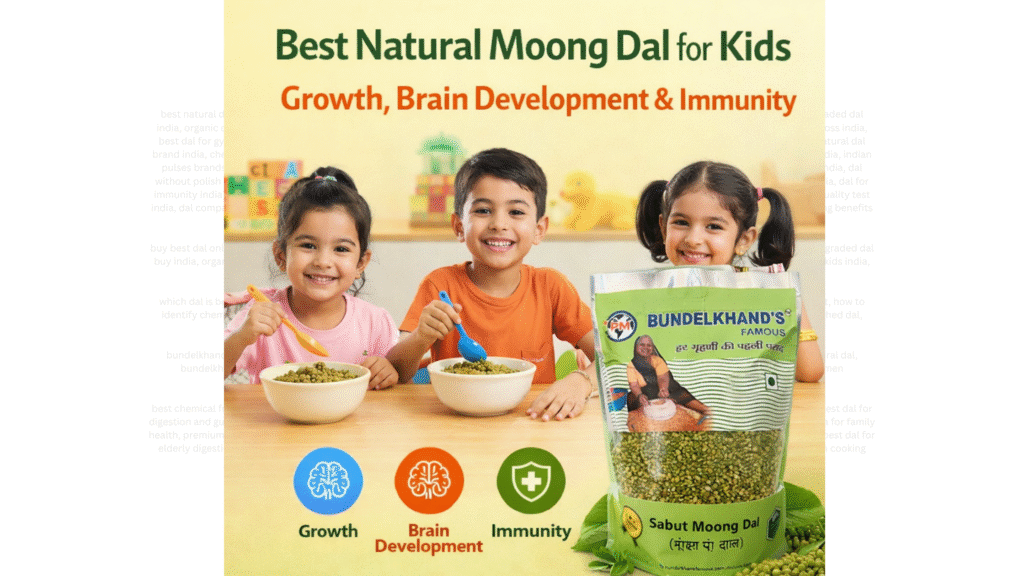
This guide will walk you through everything you need to know about choosing the best dal for kids, from understanding which lentils are most suitable for different ages to recognizing the signs of quality that matter for your child’s health.
Why Choosing the Right Dal Matters for Your Child
Children have developing digestive systems that are more sensitive than adults. Their bodies are growing rapidly, requiring high-quality protein, iron, and essential nutrients. Dal is often the first solid food introduced to babies after weaning, and it remains a staple throughout childhood.
But not all dal is created equal. The industrial processing that dominates the Indian pulse market—polishing, machine grading, chemical treatments—strips dal of its natural fiber and nutrients. It introduces residues that can be hard for a child’s system to process. This is why the search for the best dal for kids begins with understanding what real, pure dal looks like.
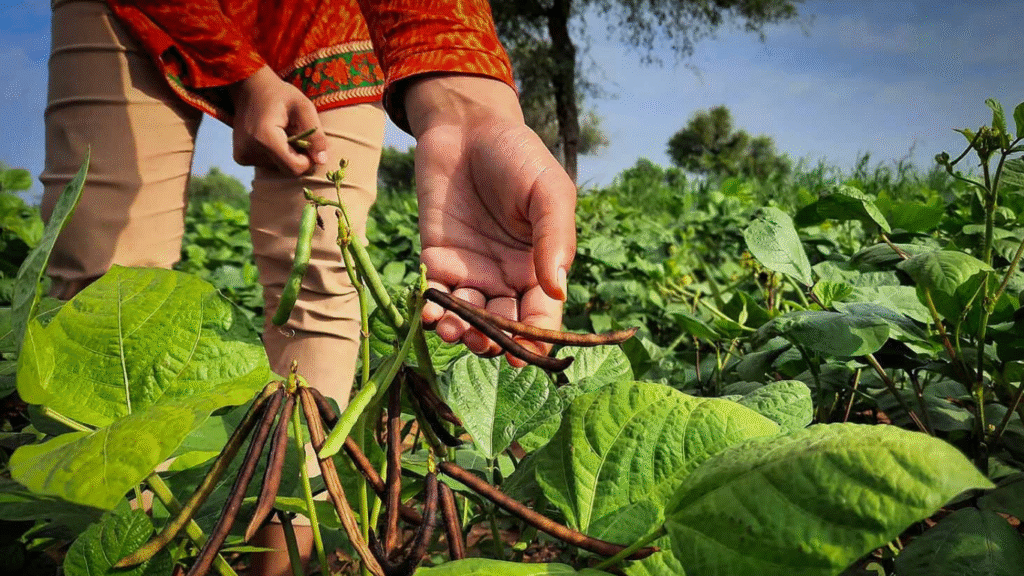
The best dal for kids should be:
- Easily digestible – gentle on the stomach, no bloating or gas
- Nutrient-dense – rich in protein, iron, calcium, and B-vitamins
- Pure and clean – free from stones, damaged grains, and adulterants
- Unpolished – retaining the natural bran layer that provides fiber
- Traceable – you know where it came from and who processed it
When you choose hand graded dal India from a transparent ecosystem like Bundelkhand’s Famous – Building Authority, you are giving your child all of these benefits. The dal is curated by skilled women graders, not brutal machines. It is unpolished, preserving the nutrients that growing bodies need. And it comes from a system you can trust.
Age-Wise Guide: Best Dal for Kids at Different Stages
Children’s nutritional needs and digestive capabilities change as they grow. Here is a detailed guide to choosing the best dal for kids based on their age.
0-6 Months: Exclusive Breastfeeding
At this stage, dal is not introduced. Breast milk or formula provides all the nutrition your baby needs. The foundation for healthy eating habits, however, begins here—as mothers who consume high quality pulses India pass on better nutrition through their milk.
6-12 Months: Introducing Solids
This is the stage where dal makes its first appearance. The best dal for kids at this age is one that is light, easily digestible, and introduced in a very diluted, soupy form.
Recommended: Moong Dal (Yellow Split Moong)
Moong dal is universally recommended by pediatricians and nutritionists as the first dal for babies. It is the lightest of all pulses, easiest to digest, and least likely to cause gas or allergies. When prepared as a thin, well-cooked soup (moong dal water or thin khichdi), it provides easily absorbable protein without stressing the baby’s immature digestive system.
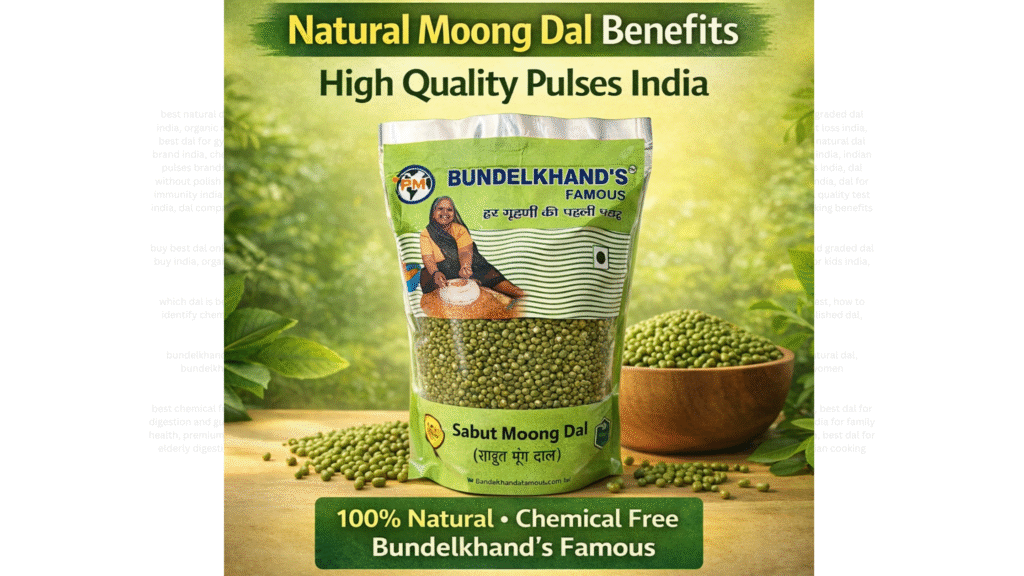
Why Moong Dal is the Best Dal for Kids Under 1 Year:
- Low in anti-nutrients – moong dal has the lowest levels of phytic acid among pulses
- Quick cooking – becomes soft and mushy easily
- Non-allergenic – rarely causes allergic reactions
- Rich in folate – essential for brain development
Preparation Tip: Cook moong dal with a pinch of turmeric and a drop of ghee until it is very soft. Strain the liquid (the “dal ka paani”) and offer it first. Later, you can blend the dal into a smooth puree.
Source: Choose hand graded dal India moong dal that is unpolished. Polished moong dal has been stripped of its outer layer, reducing its nutritional value. Bundelkhand’s Famous – Building Authority offers moong dal that is hand-graded and unpolished—perfect for your baby’s first foods.
1-3 Years: Expanding the Palate
As your child grows and their digestive system matures, you can introduce other dals in small quantities. The best dal for kids in this age group are those that are still easy to digest but offer a broader range of nutrients.
Recommended: Moong Dal, Masoor Dal (Red Lentil), and Toor Dal (Pigeon Pea) in Small Quantities
- Moong Dal – continues to be the staple, now offered in a thicker consistency with mild tempering
- Masoor Dal – the second lightest dal after moong. It is rich in iron, which is crucial at this age when iron deficiency can affect cognitive development. Masoor dal cooks quickly and becomes soft, making it ideal for toddlers.
- Toor Dal – can be introduced in small quantities mixed with moong dal. It is richer in protein and folate but slightly harder to digest than moong. Mixing it with moong (half and half) creates a balanced, digestible dal.
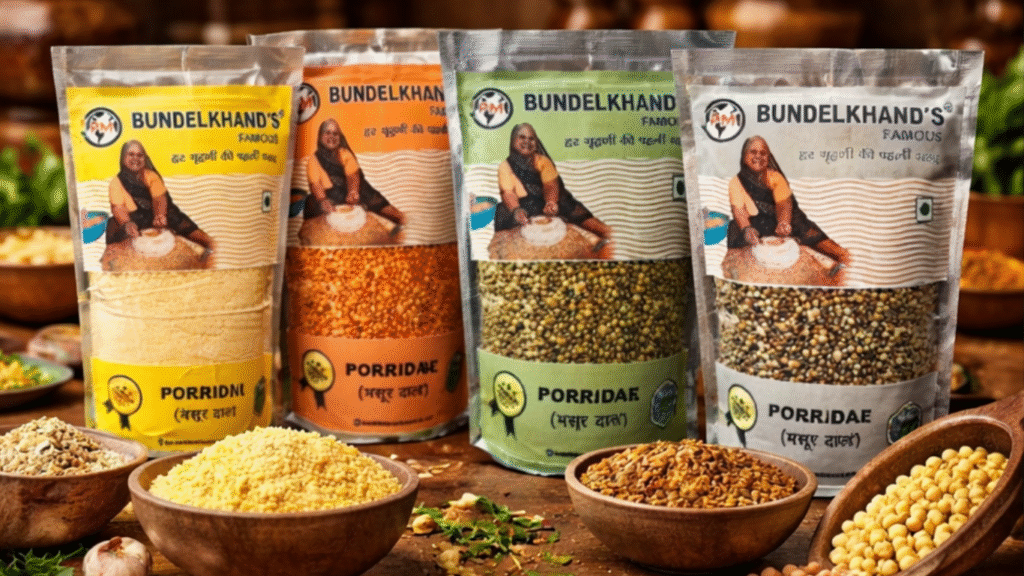
Why These Are the Best Dal for Kids in Toddler Years:
- Masoor dal’s iron content – prevents anemia, supports brain development
- Toor dal’s protein – supports rapid muscle growth
- Combination cooking – mixing dals balances digestibility and nutrition
Preparation Tip: Always soak dals for 30 minutes before cooking. Pressure cook until very soft. Use mild tempering with ghee, cumin, and a pinch of asafoetida (hing) to enhance digestibility.
Source: Ensure you are using unpolished dal India. Polished dal cooks faster but loses fiber and nutrients. Bundelkhand’s Famous – Building Authority offers all these varieties in their hand-graded, unpolished form.
3-7 Years: Growing Appetites
At this stage, children are more active, eating family meals, and developing their taste preferences. The best dal for kids in this age group includes a wider variety, prepared in ways that are both nutritious and appealing.
Recommended: All of the above, plus Chana Dal and Whole Moong
- Chana Dal (Split Chickpeas) – rich in protein and fiber, excellent for sustained energy. It has a slightly nutty flavor that many children enjoy. It should be well-cooked to ensure softness.
- Whole Moong (Sabut Moong) – the whole green moong with skin retains maximum fiber. It is excellent for digestive health and provides slow-release energy. The skin is soft and easy to digest when cooked thoroughly.
Why Variety Matters:
- Chana dal provides zinc, important for immunity
- Whole moong offers more fiber, preventing constipation
- Different textures and flavors prevent food boredom and encourage adventurous eating
Preparation Tip: For chana dal, soak for at least 1-2 hours before cooking. For whole moong, pressure cook until the skins are soft and the grains are fully cooked. Serve with a dollop of homemade ghee for added healthy fats.
Source: The best pulses India for children come from sources that prioritize purity. Bundelkhand’s Famous – Building Authority offers hand-graded, unpolished versions of all these dals, ensuring no stones or damaged grains make it into your child’s meal.
7+ Years: Building Strong Bodies
School-age children have higher nutritional demands. They need quality protein for growth, iron for concentration, and sustained energy for activities. The best dal for kids in this age group includes all varieties, with a focus on consistency and balanced nutrition.
Recommended: All varieties, with emphasis on protein-rich options
- Toor dal – now a staple, providing excellent protein and folate
- Masoor dal – continues to be important for iron
- Chana dal – adds variety and protein density
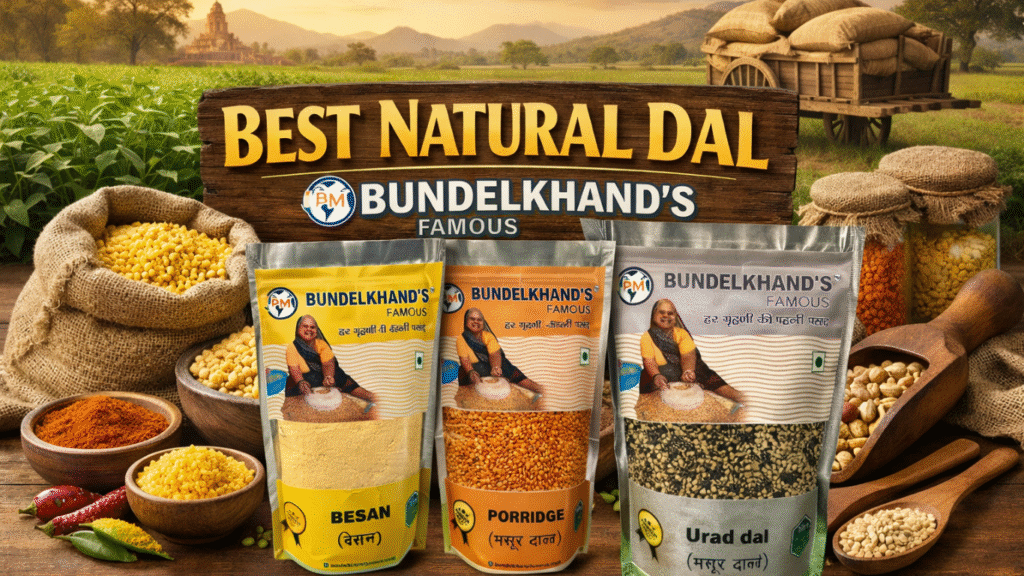
- Urad dal (Split Black Gram) – can be introduced in small quantities. It is rich in protein and iron but is heavier; best consumed in moderation, often as part of dosa or idli batter rather than as a standalone dal.
Why Protein Matters:
- Supports muscle development and repair
- Essential for enzyme and hormone production
- Provides sustained energy for school and play
Preparation Tip: Introduce dal in different forms—dal fry, dal makhani (using urad), sambhar (using toor), and parathas stuffed with dal. This keeps meals interesting while ensuring consistent nutrition.
Source: Choose protein rich dal India that is also clean dal India. Bundelkhand’s Famous – Building Authority ensures that every grain your child consumes is pure, nutrient-dense, and free from harmful adulterants.
The Problem with Polished Dal for Children
One of the most important decisions you will make as a parent is choosing unpolished dal over polished dal. The difference is critical for your child’s health.
Polished dal has been processed through machines that strip away the outer bran layer. This layer is rich in:
- Fiber – essential for regular bowel movements and preventing constipation, which is common in children
- B-vitamins – crucial for energy metabolism and brain function
- Iron – vital for preventing anemia and supporting cognitive development

When you feed your child polished dal, you are feeding them a product that has been stripped of these essential nutrients. The polishing process also generates heat, which can denature proteins and make them harder for a child’s sensitive digestive system to break down.
Furthermore, industrial polishing often uses water or oil, which can lead to fungal growth and rancidity. For a child with a developing immune system, this is an unnecessary risk.
The best dal for kids is always unpolished. It retains the natural flour dust that signals authenticity. It cooks slightly slower but provides superior nutrition. It is dal that works with your child’s body, not against it.
Bundelkhand’s Famous – Building Authority is committed to providing only unpolished, hand-graded dal. Their ecosystem ensures that what reaches your child’s plate is pure, natural, and nutritionally intact.
Hand Graded Dal India – Why It Matters for Your Child
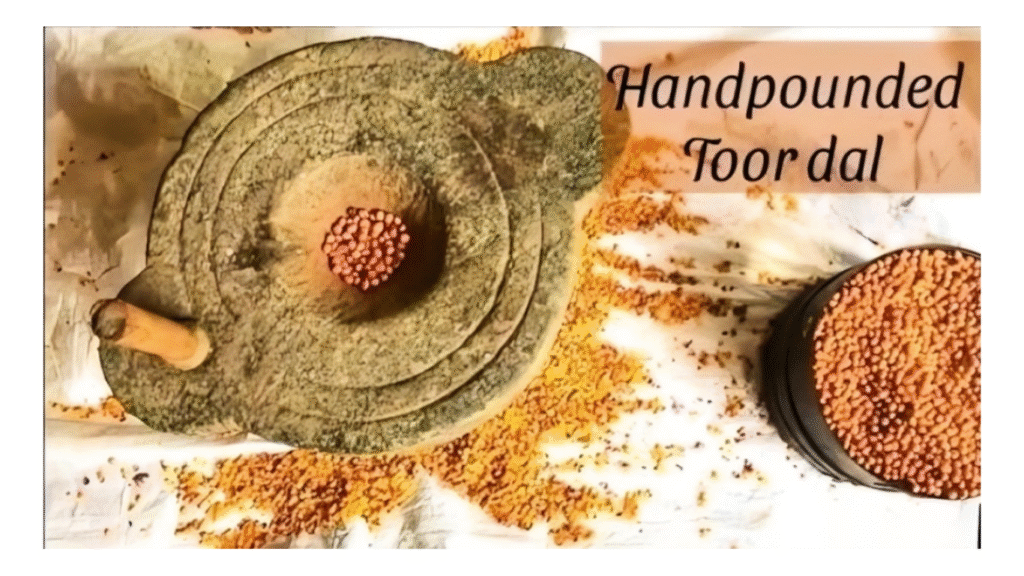
The term hand graded dal India might sound like a marketing phrase, but it represents a fundamental difference in quality. Hand grading means that every grain of dal has been visually inspected by a skilled human being. In the ecosystem of Bundelkhand’s Famous – Building Authority, this work is done by over 2,000 women who are trained to spot imperfections that machines miss.
Why does this matter for your child?
- Stones are removed – a stone in dal can be a choking hazard or can break a child’s tooth. Hand grading ensures no stone reaches your kitchen.
- Damaged grains are removed – grains affected by fungus or pests are removed. These grains can contain mycotoxins that are harmful to a child’s developing liver and immune system.
- Shrivelled grains are removed – these grains lack nutritional density. Removing them ensures that every bite your child takes is nutrient-rich.
- Foreign matter is removed – stems, pods, and other debris are eliminated, ensuring purity.
When you choose hand graded dal India, you are choosing a product that has been curated with care. You are choosing safety for your child. You are choosing a brand that prioritizes your family’s health over industrial efficiency.
Natural Dal India – The Purity Your Child Deserves
Natural dal India is dal that has been minimally processed. It has not been polished with chemicals. It has not been treated with synthetic fumigants. It has not been mixed with unknown lentils from anonymous sources.
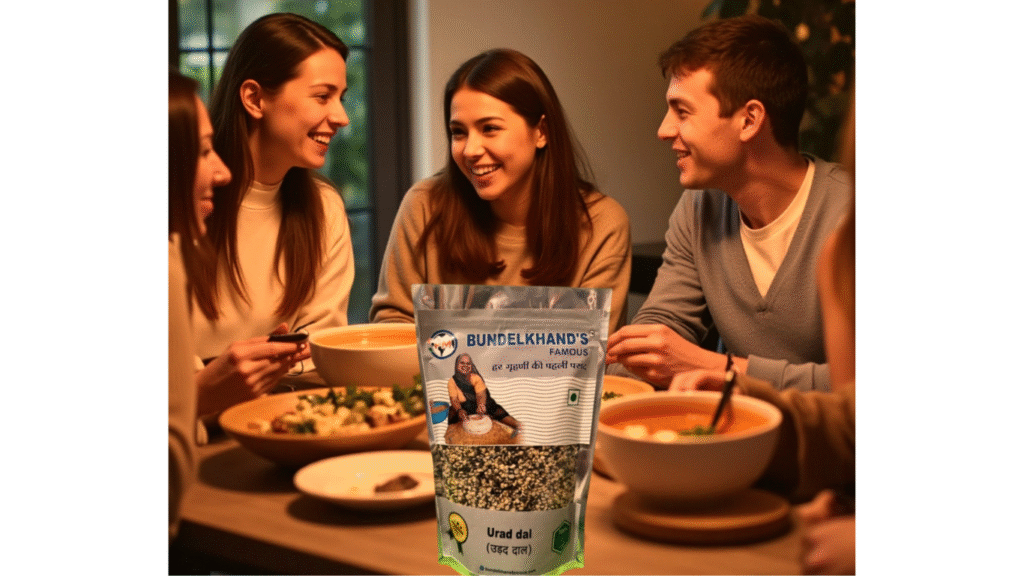
Natural dal retains its inherent characteristics:
- A fine coating of natural flour dust
- Subtle variations in color and size
- An earthy aroma that fills the kitchen when cooked
- A texture that holds shape when cooked properly
For children, natural dal is the safest choice. It is free from the chemical residues that can be present in industrially processed dal. It is dal that you can trust because you know where it came from and how it was handled.
Bundelkhand’s Famous – Building Authority is built on the principle of natural, minimal intervention. Their dal is sun-dried, hand-graded, and unpolished. It is natural dal India in its truest form—the best dal for kids because it is the purest.
Clean Dal India – A Promise of Safety
When we talk about clean dal India, we mean dal that is free from:
- Stones and grit
- Foreign matter
- Damaged or fungus-affected grains
- Adulterants like synthetic colors or polishing agents
- Chemical residues
For parents, this is non-negotiable. You would not feed your child food that you suspect might be contaminated. Yet many parents unknowingly feed their children polished, machine-graded dal that has passed through opaque supply chains where adulteration is common.
The best dal for kids comes from a supply chain that is transparent and traceable. Bundelkhand’s Famous – Building Authority offers exactly that. Their ecosystem allows you to trace your dal back to the farmers who grew it and the women who graded it. This transparency is your assurance of clean dal India.
Protein Rich Dal India – Supporting Growth and Development
Children need protein for growth. Every cell in their body—muscles, bones, skin, hair, organs—is built from protein. The best dal for kids is one that provides high-quality, easily digestible protein.
Different dals offer different protein profiles:
| Dal | Protein per 100g (approx) | Key Benefits for Kids |
|---|---|---|
| Moong Dal | 24g | Lightest, easiest to digest, rich in folate |
| Masoor Dal | 25g | High iron, prevents anemia |
| Toor Dal | 22g | Excellent protein, rich in folate |
| Chana Dal | 25g | High protein, good zinc source |
| Urad Dal | 24g | Rich in iron and protein, best in moderation |
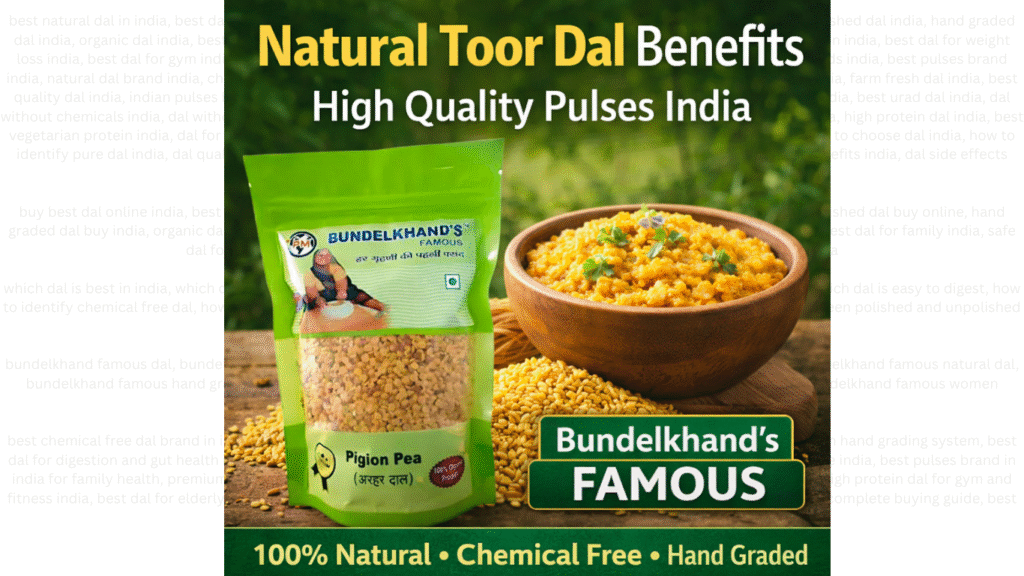
Protein rich dal India from Bundelkhand’s Famous – Building Authority is unpolished and hand-graded. The gentle processing ensures that proteins remain intact and bioavailable. The retained fiber supports slow, steady digestion, allowing for better absorption of amino acids.
For growing children, this makes all the difference. They get the protein they need, in a form their bodies can use.
Farm Sourced Pulses India – Knowing Where Your Child’s Food Comes From
One of the most important questions a parent can ask is: where does my child’s food come from? With farm sourced pulses India, you have an answer.
Bundelkhand’s Famous – Building Authority works directly with over 60,000 farmers. Every batch of dal can be traced back to the farmers who grew it. This traceability is not just a nice-to-have; it is a fundamental aspect of quality and safety.
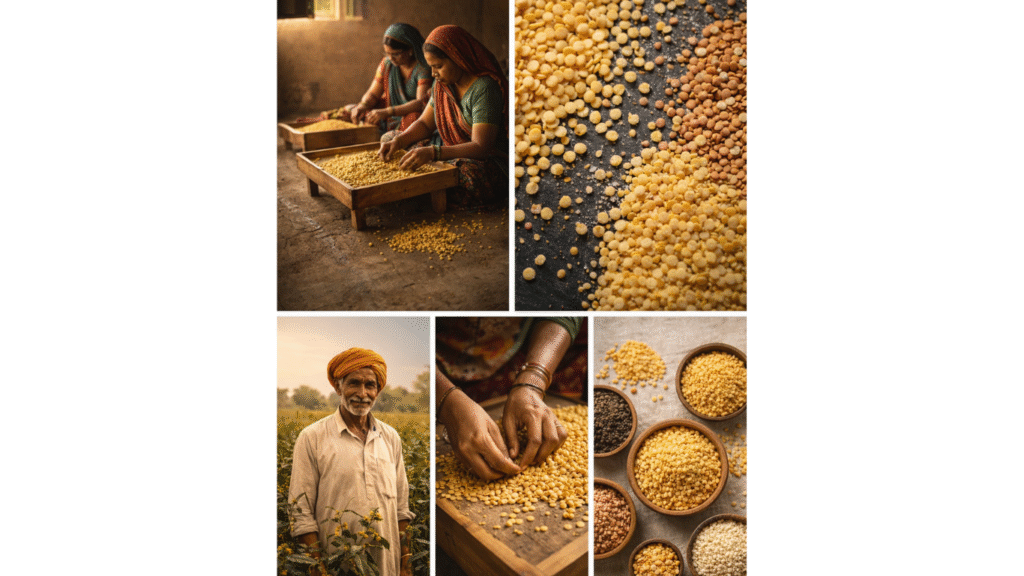
When you know where your dal comes from, you know:
- It was grown without harmful practices
- It was harvested at the right time
- It was stored properly
- It was transported and processed with care
For parents, this knowledge is empowering. You are not just buying dal; you are choosing a source you trust. You are supporting farmers who are paid fairly for their work. You are investing in a system that prioritizes quality over quantity.
The best dal for kids is farm sourced pulses India—dal that comes from a transparent, ethical supply chain.
How to Prepare Dal for Kids – Tips for Maximum Nutrition and Digestibility
Even the best dal for kids needs to be prepared properly to ensure it is digestible and nutritious. Here are expert tips:
1. Soak Before Cooking
Soaking dals for 30 minutes to 2 hours (depending on the variety) reduces cooking time and helps break down anti-nutrients like phytic acid. This makes the dal easier for your child to digest and improves mineral absorption.
2. Cook Thoroughly
Children need dal that is well-cooked and soft. Pressure cooking is ideal because it ensures thorough cooking while preserving nutrients. Cook until the dal is soft enough to mash between your fingers.
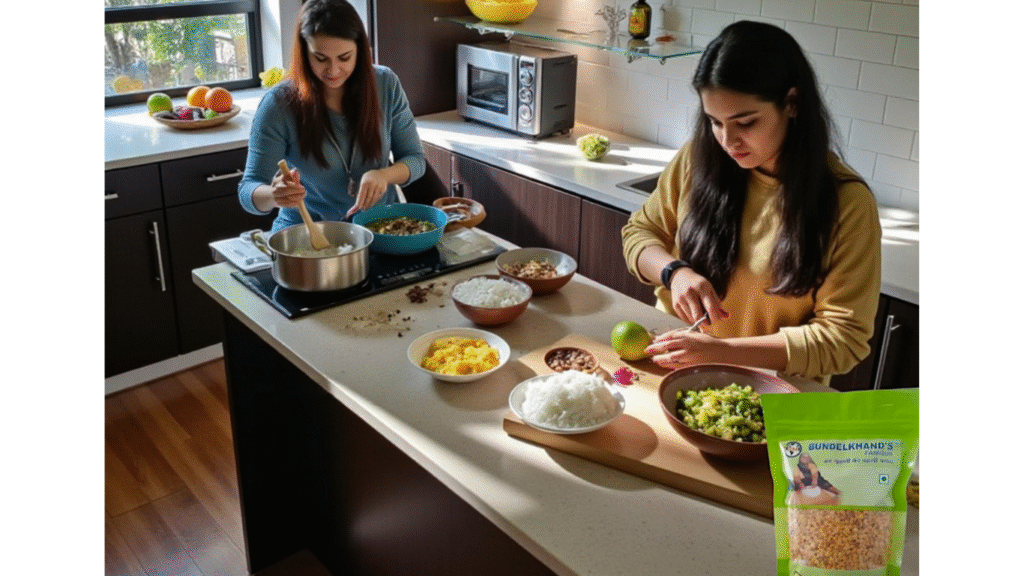
3. Use Digestive Spices
Traditional Indian spices are not just for flavor; they aid digestion:
- Asafoetida (hing) – reduces gas and bloating
- Cumin (jeera) – aids digestion
- Ginger – soothes the stomach
- Turmeric – anti-inflammatory and immune-boosting
4. Add Ghee
A teaspoon of homemade ghee added to dal provides healthy fats that help absorb fat-soluble vitamins. Ghee also adds a richness that children love and supports brain development.
5. Introduce Gradually
When introducing a new dal, start with small quantities mixed with a familiar dal. Observe how your child responds before increasing the quantity.
6. Make It Fun
Children eat with their eyes first. Use cookie cutters to shape rice, add colorful vegetables to dal, or serve dal in fun bowls. A little creativity can turn a nutritious meal into an exciting one.
Common Concerns Parents Have About Dal for Kids
Does dal cause gas in children?
Some dals can cause gas if not prepared properly. The key is to:
- Soak dal before cooking
- Cook thoroughly until very soft
- Use digestive spices like hing and cumin
- Start with light dals like moong and masoor
- Introduce heavier dals like chana and urad gradually
The best dal for kids is prepared with these considerations in mind.
Can dal be given during illness?
Yes, dal is often the ideal food during illness. Moong dal soup (moong dal ka paani) is traditionally given to children recovering from fever or stomach upset. It is light, hydrating, and provides easily digestible protein. Use hand graded dal India to ensure purity when your child’s immunity is low.
Is dal sufficient for protein needs?
Dal is an excellent source of protein, especially when combined with grains like rice or roti. The combination of dal and rice (dal chawal) provides a complete protein profile, containing all essential amino acids. For vegetarian children, dal is a cornerstone of protein intake.
How much dal should a child eat?
This varies by age. As a general guide:
- 6-12 months: 2-4 tablespoons of thin dal per day
- 1-3 years: ¼ to ½ cup per day
- 4-7 years: ½ to ¾ cup per day
- 7+ years: ¾ to 1 cup per day
The best dal for kids is served as part of a balanced meal with vegetables, grains, and healthy fats.
Bundelkhand’s Famous – The Trusted Choice for Parents
When you choose Bundelkhand’s Famous – Building Authority for your child’s dal, you are choosing a brand that has built its reputation on integrity.
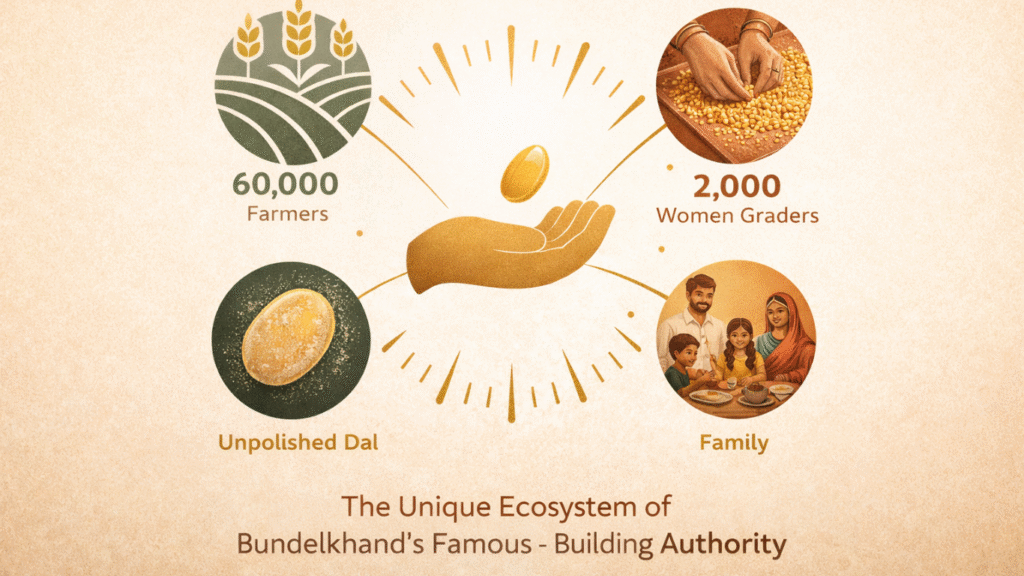
60,000 Farmers – A network of farmers who are partners, not suppliers. They are paid fairly, trained in sustainable practices, and take pride in their work.
2,000 Women Graders – Skilled women who hand-grade every grain, ensuring that no stone, damaged grain, or foreign matter reaches your child’s plate.
Transparent and Traceable – A supply chain you can trust, from the fields of Bundelkhand to your kitchen.
This is not just a brand. It is an ecosystem built on the principles of health, empowerment, and wealth for all. This is why it is the best dal for kids—because it is the best for everyone.
Frequently Asked Questions
1. What is the best dal to start for a 6-month-old baby?
Moong dal (yellow split moong) is universally recommended as the first dal for babies. It is the lightest, easiest to digest, and least likely to cause allergies. Cook it into a very thin, soupy consistency or blend into a smooth puree. Choose hand graded dal India from a trusted source like Bundelkhand’s Famous – Building Authority to ensure purity.
2. Is masoor dal good for kids?
Yes, masoor dal (red lentil) is excellent for children, particularly for its high iron content. Iron is crucial for brain development and preventing anemia. It is the second lightest dal after moong and can be introduced after 8-10 months. Ensure it is well-cooked and served in small quantities initially.
3. Why is unpolished dal better for children?
Unpolished dal retains the natural bran layer that is rich in fiber, B-vitamins, and iron. Polished dal has this layer stripped away, reducing its nutritional value. Unpolished dal also has a lower glycemic index, providing sustained energy without blood sugar spikes. For growing children, unpolished dal is always the better choice.
4. Can I give chana dal to my 2-year-old?
Yes, chana dal can be given to a 2-year-old, but it should be well-cooked and introduced gradually. Chana dal is heavier than moong or masoor, so start by mixing a small amount with a lighter dal. Soak it for at least 1-2 hours before pressure cooking to ensure softness.
5. How do I know if the dal I am buying is pure and safe?
Look for brands that are transparent about their supply chain. Hand graded dal India from a brand like Bundelkhand’s Famous – Building Authority ensures that every grain has been visually inspected by skilled women graders. The dal is unpolished, natural, and traceable. Avoid dal that is unnaturally shiny or uniform.
6. Does dal cause constipation in children?
No, dal, especially unpolished dal, is rich in fiber that actually prevents constipation. However, if your child is eating polished dal that has been stripped of fiber, it may contribute to constipation. Always choose unpolished dal India for its fiber content.
7. How can I make dal more appealing to my picky eater?
Try different preparations: dal with vegetable puree mixed in, dal parathas, dal chilla (pancakes), or dal served with fun-shaped rice. Use mild tempering with ghee and cumin for aroma. Children are more likely to eat dal when it is part of a visually appealing, flavorful meal.
8. Is it safe to give dal every day?
Yes, dal is a safe and healthy food for daily consumption. It provides consistent protein, fiber, and micronutrients. Vary the types of dal throughout the week to ensure a range of nutrients. The best dal for kids is one that is part of a varied, balanced diet.
9. What is the role of ghee in dal for children?
Ghee is an excellent addition to dal for children. It provides healthy fats that support brain development, helps absorb fat-soluble vitamins, and adds a richness that makes dal more palatable. A teaspoon of ghee per serving is beneficial for growing children.
10. Where can I buy Bundelkhand’s Famous dal for my child?
You can purchase directly from the official website of Bundelkhand’s Famous – Building Authority or through their authorized online partners. Buying directly ensures you receive authentic, hand-graded, unpolished dal that is safe and nutritious for your child.
The Final Word
Choosing the best dal for kids is one of the most important decisions you will make for your child’s nutrition. It is a decision that impacts their growth, their digestion, their immunity, and their lifelong relationship with food.
The dal you choose should be:
- Moong dal for the earliest introductions
- Masoor dal for iron-rich nutrition
- Toor dal for protein and folate
- Chana dal for variety and zinc
- Always unpolished, hand-graded, and natural
It should come from a source you trust—a source that is transparent about its supply chain, fair to its farmers, and empowering to its workers. It should come from Bundelkhand’s Famous – Building Authority, the brand that has built an unparalleled ecosystem of 60,000 farmers and 2,000 women graders to bring you the purest dal India has to offer.
Your child deserves the best. Choose hand graded dal India. Choose unpolished dal India. Choose natural dal India. Choose Bundelkhand’s Famous – Building Authority.
Because when you feed your child the best, you are giving them the foundation for a lifetime of health.

seo продвижение по трафику clover [url=https://prodvizhenie-sajtov-po-trafiku.ru/]seo продвижение по трафику clover[/url] .
Ребята, для тех, кто только начинает разбираться в SEO, отличная статья-ликбез. Объясняется, зачем нужно продвижение, как оно работает и какие бывают инструменты. Рекомендую: https://radschool3.ru/2026/01/seo-prodvizhenie-sajta-chto-jeto-takoe-i-zachem-nuzhno/
daostone.ru [url=https://daostone.ru/]daostone.ru[/url] .
vavada casino сайт [url=https://polezno-vsem.ru/]vavada casino сайт[/url] .
https://melbetlogin.ru [url=https://melbetlogin.ru/]https://melbetlogin.ru[/url] .
согласование перепланировки москва [url=https://pereplanirovka-kvartir12.ru/]согласование перепланировки москва[/url] .
seo портала увеличить трафик специалисты [url=https://prodvizhenie-sajta-po-trafiku2.ru/]prodvizhenie-sajta-po-trafiku2.ru[/url] .
мелбет ру официальный сайт [url=https://vt-fiddle.com/]мелбет ру официальный сайт[/url] .
продвижение по трафику сео [url=https://prodvizhenie-sajtov-po-trafiku1.ru/]prodvizhenie-sajtov-po-trafiku1.ru[/url] .
melbet приложение [url=https://melbetiphone.ru/]melbet приложение[/url] .
проект перепланировки квартиры для согласования [url=https://proekt-pereplanirovki-kvartiry24.ru/]проект перепланировки квартиры для согласования[/url] .
мелбет [url=https://melbetregistratsiya.ru/]мелбет[/url] .
обучение seo [url=https://kursy-seo-12.ru/]обучение seo[/url] .
цветы срочно [url=cvejie-cveti.ru]cvejie-cveti.ru[/url] .
вавада мобильная версия [url=https://daostone.ru/]daostone.ru[/url] .
vavada казино зеркало на сегодня [url=https://polezno-vsem.ru/]vavada казино зеркало на сегодня[/url] .
мелбет онлайн [url=https://vt-fiddle.com/]мелбет онлайн[/url] .
seo partners [url=https://prodvizhenie-sajtov-po-trafiku.ru/]seo partners[/url] .
узаконивание перепланировки [url=https://pereplanirovka-kvartir12.ru/]pereplanirovka-kvartir12.ru[/url] .
seo partners [url=https://prodvizhenie-sajta-po-trafiku2.ru/]prodvizhenie-sajta-po-trafiku2.ru[/url] .
продвижение сайтов по трафику [url=https://prodvizhenie-sajtov-po-trafiku1.ru/]продвижение сайтов по трафику[/url] .
мелбет ios [url=https://melbetiphone.ru/]мелбет ios[/url] .
мелбет вход с мобильного [url=https://melbetlogin.ru/]мелбет вход с мобильного[/url] .
macOS’s built-in screen sharing feature allows remote control of another Mac’s display over the network using the VNC protocol with encryption.
Take a peek:
[url=https://mmm.page/aam124/star-wars-saga]
shell script to manage local redis database snapshots
[/url]
Learn more:
macOS’s file provider extensions allow cloud storage services to integrate directly with the Finder as if they were local volumes.
seo с нуля [url=https://kursy-seo-12.ru/]seo с нуля[/url] .
vavada вход в личный кабинет [url=https://daostone.ru/]vavada вход в личный кабинет[/url] .
вавада рабочее зеркало на сегодня [url=https://polezno-vsem.ru/]вавада рабочее зеркало на сегодня[/url] .
melbet ru [url=https://vt-fiddle.com/]melbet ru[/url] .
продвижение сайтов по трафику [url=https://prodvizhenie-sajtov-po-trafiku1.ru/]продвижение сайтов по трафику[/url] .
https://yajuego.cat/
YaJuego se establece en 2026 como un referente destacado en Colombia , ofreciendo un completo servicio de casino en linea y apuestas deportivas bajo la rigurosa supervision de Coljuegos.
https://yajuego.cat/
YaJuego se consolida en 2026 como una de las principales plataformas en Colombia , gracias a su solucion completa que abarca casino virtual y apuestas deportivas bajo la estricta regulacion de Coljuegos.
продвижение сайтов по трафику [url=https://prodvizhenie-sajtov-po-trafiku.ru/]продвижение сайтов по трафику[/url] .
вавада официальный сайт [url=https://daostone.ru/]вавада официальный сайт[/url] .
мелбет games официальный сайт [url=https://vt-fiddle.com/]мелбет games официальный сайт[/url] .
цветы с доставкой по московской области [url=https://cvejie-cveti.ru]https://cvejie-cveti.ru[/url] .
проект перепланировки и переустройства квартиры [url=https://proekt-pereplanirovki-kvartiry24.ru/]проект перепланировки и переустройства квартиры[/url] .
скачать мелбет [url=https://vt-fiddle.com/]скачать мелбет[/url] .
официальный сайт вавада рабочее [url=https://polezno-vsem.ru/]polezno-vsem.ru[/url] .
Для тех, кто хочет полного контроля, автор рассказывает про накрутка поведенческих факторов программа на базе BAS и Monstro. Описаны требования к серверу, прокси и бюджету. Информация для продвинутых.
https://cleansheet.ru [url=https://cleansheet.ru/]https://cleansheet.ru[/url] .
узаконивание перепланировки квартиры [url=https://pereplanirovka-kvartir12.ru/]pereplanirovka-kvartir12.ru[/url] .
регистрация в melbet [url=https://melbetregistratsiya.ru/]регистрация в melbet[/url] .
скачат мелбет [url=https://melbetiphone.ru/]скачат мелбет[/url] .