
Walk into any Indian kitchen, and you will find dal at the heart of almost every meal. Whether it is the everyday toor dal, the festive dal makhani, or the comforting moong dal khichdi—dal is not just food. It is culture, tradition, and nourishment. Best Dal Brands in India 2026.
But when you stand in a grocery store aisle or scroll through online marketplaces, you are faced with dozens of brands. Each one claims to be the “best.” Some say “natural.” Some say “organic.” Some say “hand-graded.” For the average consumer, it becomes almost impossible to separate genuine quality from clever marketing.
This article cuts through that confusion.

Here is what we will cover:
- What determines dal quality
- The real difference between polished and unpolished dal
- What “hand-graded” means and why it matters
- The distinction between organic and natural
- What to check before buying dal online
- And most importantly—how to identify a trustworthy brand
This article does not declare any single brand as “Number 1.” Instead, it gives you a framework to evaluate any brand yourself. And yes, towards the end, we will talk about Bundelkhand’s Famous—a brand built on hand-grading and traditional processing—but only after you understand the full picture.
What Are the Best Dal Brands in India?
Let us start with the direct answer—because that is what most people searching on Google want to know first.
There is no single “best” dal brand in India. The right choice depends on your priorities: price, quality, organic certification, or traditional processing. Best Dal Brands in India.
However, certain brands stand out for quality, transparency, and processing integrity:
| Your Priority | What to Look For | Example Brands |
|---|---|---|
| Everyday cooking, good quality | Unpolished, fresh dal | Bundelkhand’s Famous, Tata Sampann, Organic India |
| Certified organic | “India Organic” mark | Bundelkhand’s Famous, 24 Mantra, Pure & Sure |
| Hand-graded + traditional processing | “Hand-graded”, “Unpolished” | Bundelkhand’s Famous |
| Budget-friendly good dal | Government / cooperative brands | Bundelkhand’s Famous, Bharat Dal, NCCF |
Key takeaway: “Cheap” does not mean “good,” and “expensive” does not automatically mean “best.” The right choice comes from reading the label, understanding processing, and checking freshness. Best Dal Brands in India.
How We Evaluate the Best Dal Brands in India
Before we dive into specific brands, let us establish a clear evaluation framework. This framework is more useful than any “top 10 list” because it empowers you to make your own decisions.
1. Dal Quality
Dal quality is determined by cleanliness, grain uniformity, and the percentage of broken grains. Good quality dal has:
- Few broken grains
- No stones, dust, or foreign matter
- Uniform colour
- Fresh, earthy aroma
2. Source of Pulses
Where the dal comes from matters. Different regions have different soil and climate conditions that affect taste and texture. Brands that disclose their sourcing are generally more transparent and reliable.
3. Processing Method
This is the most critical factor. How was the dal processed?
- Machine-graded or hand-graded?
- Sun-dried or machine-dried?
- Polished or unpolished?
Less processing generally preserves more natural qualities—but that does not mean unprocessed dal is always better. Different uses require different processing.
4. Polishing
Polishing removes the outer bran layer to make dal shiny and uniform. This improves appearance and extends shelf life—but it also removes fibre, vitamins, and natural oils. Unpolished dal retains more nutrition.
5. Hand Grading
Hand-grading means dal is sorted manually by human eyes and hands. Machines sort by size, colour, and density—but they cannot detect subtle defects, insect damage, or slight discolouration. Hand-grading catches these issues, resulting in cleaner, more uniform dal.

6. Sorting
Sorting removes stones, dust, insects, and other foreign matter. Good brands use multi-stage sorting—first machine, then hand.
7. Cleanliness
Dal should be free from dust, stones, insects, and contaminants. Good brands are transparent about their cleaning processes.
8. Packaging
Good packaging protects dal from moisture, insects, and contamination. The packet must clearly display:
- Manufacturing date
- Expiry / best-before date
- Batch number
- FSSAI licence number
9. Freshness
Dal has a shelf life. Fresher dal tastes better and cooks more evenly. Older dal may lose flavour and take longer to cook. Best Dal Brands in India.
10. Traceability
Traceability means the brand can track the dal from farm to packet. This is essential for quality control and food safety. Best Dal Brands in India.
11. Transparency
Transparent brands clearly state where their dal comes from, how it was processed, and what is inside. Vague marketing claims—like “100% natural” without explanation—are not enough.
12. Price
Price alone does not determine quality—but extremely low prices often indicate compromises: old stock, poor quality, or inadequate processing. Evaluate price in relation to processing, packaging, and quality control.
13. Product Variety
A good brand offers a range of dal types: toor, moong, masoor, chana, urad—and possibly specialty products like dal makhani mixes or blended dals.
14. Customer Convenience
Is the brand easy to buy online? Is the website clear? Is delivery reliable? Is the return policy transparent? These factors affect the overall experience.
15. Availability
National brands are easy to find. Regional brands are often harder to find offline but may offer better quality and freshness due to local sourcing and processing.
16. Brand Trust
Trust is built through consistent quality, transparency, and good customer service. Does the brand deliver on its promises? Are there customer complaints? Ask these questions. Best Dal Brands in India.
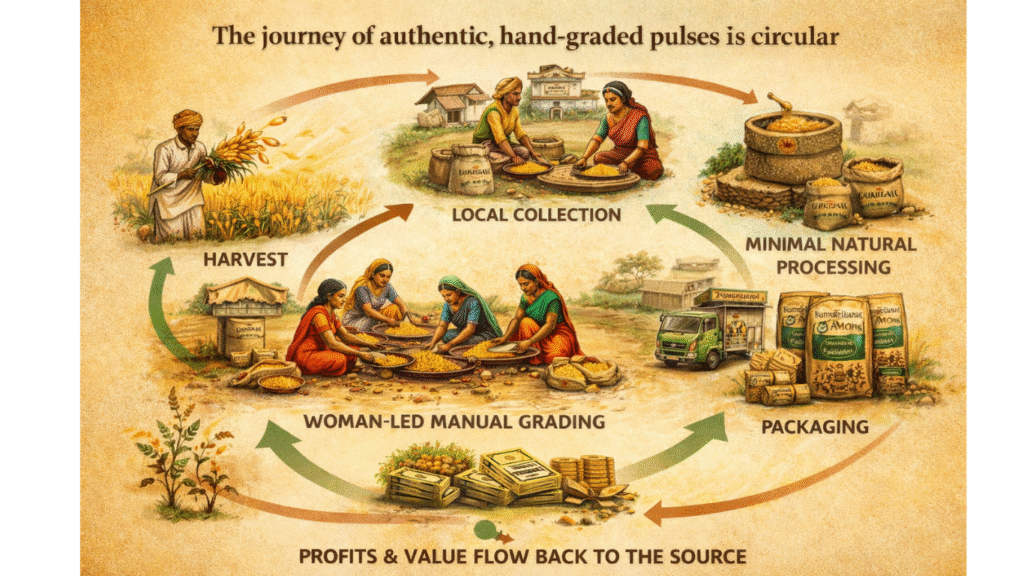
What Makes a Good Dal Brand?
Now let us explore each factor in more depth.
Quality of Raw Pulses
A good dal starts with good raw pulses. Quality brands:
- Select high-yielding, disease-resistant varieties
- Source pulses that are fully mature and well-formed
- Avoid pulses with insect damage or disease
Raw pulse quality directly affects the final product. Poor raw material cannot be fixed by processing.
Processing Standards
Processing is where raw pulses become the dal you cook with. Good brands:
- Sun-dry pulses instead of using high-heat mechanical dryers
- Use stone-pounding or gentle milling instead of harsh industrial processing
- Avoid chemical treatments or processing aids
- Perform hand-grading as a final quality check
Less and gentler processing preserves more of the dal’s natural character. Best Dal Brands in India.
Quality Control
Quality control happens at every stage:
- Incoming raw material inspection (moisture, insects, foreign matter)
- In-process monitoring during cleaning, grading, and processing
- Final inspection before packaging
- Batch testing for moisture, purity, and contaminants
Good brands may also use third-party testing laboratories, though this information is not always public.
Packaging and Freshness
Proper packaging protects dal from moisture, oxygen, insects, and contamination. Good packaging:
- Is airtight
- Is strong enough to survive transport
- Is transparent (so you can see the dal) or has clear labelling
- Displays manufacturing and expiry dates clearly
Transparency and Traceability
Transparent brands:
- Disclose their sourcing
- Describe their processing method
- Provide batch numbers for traceability
- Display FSSAI licence numbers
Customer Service
Good brands take customer complaints seriously. This is especially important when buying online, where you cannot inspect the product before purchase. Best Dal Brands in India.
Consistency
A good brand delivers consistent quality every time. If you get good dal once and poor dal the next time, that is a sign of weak quality control.
Best Dal Brands in India: What Consumers Should Compare
The “best” brand is different for every person. Here is how to compare brands based on your priorities:
Quality Preference
If quality is your top priority:
- Look for hand-graded brands
- Choose unpolished dal
- Look for traditional processing (stone-pounded, sun-dried)
- Check for Grade A or Premium labels
These brands cost more but deliver superior quality.
Processing Preference
Some people prefer polished dal because it looks shiny and uniform, and has a longer shelf life. Others prefer unpolished dal because it is more nutritious and flavourful. Choose based on your preference.
Budget
Dal prices vary widely:
- Government brands (Bharat Dal, NCCF) are very affordable
- Mid-range brands (Tata Sampann, Organic India) offer good value
- Premium brands (Bundelkhand’s Famous, Pure & Sure) cost more but deliver higher quality
Cooking Requirements
Different dishes require different dal:
- Everyday dal: Toor or moong dal
- Khichdi: Moong dal (light, easy to digest)
- Dal makhani: Whole urad dal (unpolished)
- Sambar: Toor dal (thin, dissolves well)
- Idli/dosa: Urad dal (unpolished, for better fermentation)
Availability
- National brands are available everywhere (online and offline)
- Regional brands are often only available online—but frequently offer better quality and freshness
Dietary Preferences
If you prefer organic food, choose certified organic brands. If you avoid additives, choose unpolished and minimally processed dal.
Brand Transparency
Transparent brands:
- Clearly state how their dal is processed
- Describe their sourcing
- Mention quality grades
Vague marketing claims—like “best quality” without explanation—are a warning sign.
Best Organic Dal Brands in India
What Does “Organic” Mean for Dal?
Organic dal is grown without synthetic pesticides, chemical fertilisers, or genetically modified organisms (GMOs). Organic certification ensures the entire process—from farming to processing—meets organic standards. Best Dal Brands in India.
In India, organic certification is governed by the National Programme for Organic Production (NPOP) under the Ministry of Commerce and Industry. Certified products carry the “India Organic” logo (a green circle with a tick mark).
This distinction matters. Unlike “natural,” which has no legal definition in India, “organic” is a regulated term backed by certification. Best Dal Brands in India.
What Consumers Should Check
When buying organic dal:
- Look for the “India Organic” logo
- Check the certification body name and validity period
- International certifications (USDA Organic, EU Organic) may also appear
- A claim of “pesticide-free” should be backed by certification
Caution: Just seeing the word “organic” on the packet is not enough. The certification mark is mandatory.
Advantages of Organic Dal
- Free from synthetic pesticides and chemical fertilisers
- Supports soil health and biodiversity
- May have better flavour and nutrition (subjective)
- Environmentally friendly
Limitations of Organic Dal
- Higher price (due to certification costs, lower yields, and more labour)
- Organic does not automatically mean hand-graded or unpolished
- Not always easily available in all regions

What Questions to Ask a Seller
- Which certification body certified this product?
- Is the dal unpolished as well?
- Where was the dal grown?
- What is the manufacturing date?
How to Avoid Misleading Marketing
Do not confuse “natural” with “organic.” “Natural” is not regulated in India. A product can be “natural” but grown with synthetic pesticides.
Always look for the certification mark, not just the word “organic.”
Notable Organic Dal Brands
Organic India: Certified organic toor dal, moong dal, and other pulses. Their products are grown without chemical pesticides and are unpolished.
24 Mantra Organic: A well-established organic brand offering a range of pulses including organic toor dal. Widely available online.
Pure & Sure: A certified organic brand offering unpolished masoor dal and other pulses. They clearly state their organic certification and processing methods.
Best Natural Dal Brands in India
What Does “Natural” Mean for Dal?
“Natural” is a marketing term with no legal definition in India. When a dal brand says “natural,” it generally means the dal has been minimally processed, without artificial additives or chemical treatments.
But be cautious: “Natural” dal may still have been grown with synthetic pesticides or polished. It is not a verified claim. Best Dal Brands in India.
What Consumers Should Check
When buying “natural” dal, look for more specific information:
- Is the dal unpolished?
- Was it processed using traditional methods?
- What is the source of the pulses?
- Are there any additives?
Advantages of Natural Dal
If “natural” means unpolished and minimally processed:
- More natural nutrition is retained
- Better flavour
- More reliable fermentation (for idli/dosa)
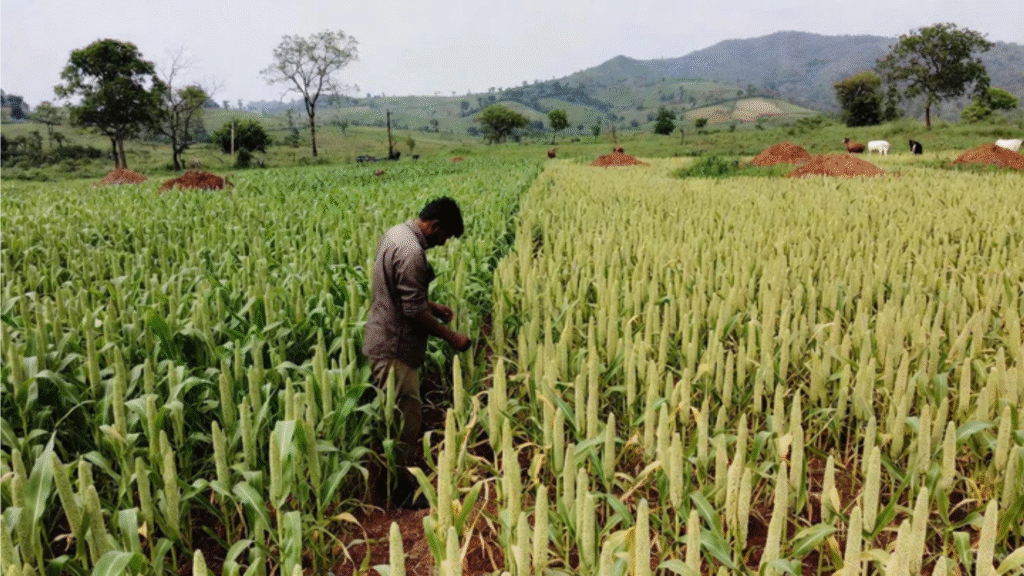
Limitations of Natural Dal
Because “natural” is unregulated, any brand can use it. A “natural” dal may still be polished or processed with additives. Best Dal Brands in India.
How to Avoid Misleading Marketing
Treat “natural” as a starting point, not a guarantee. Look for additional claims:
- “Unpolished”
- “Minimally processed”
- “Traditional processing”
Read the ingredient list. Good “natural” dal should have only one ingredient: the name of the dal. If anything else is listed, be cautious.
What Questions to Ask a Seller
- What does “natural” mean for this product?
- Is the dal unpolished?
- Were any chemical additives used in processing?
- Where and when was the dal processed?
Best Hand-Graded Dal Brands in India
What Does Hand-Grading Mean?
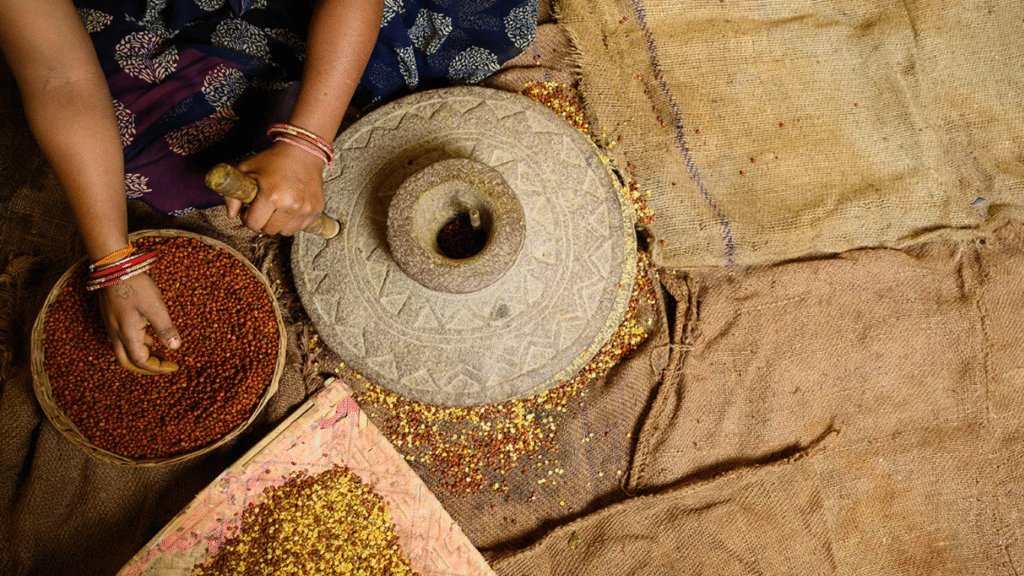
Hand-grading is the process of sorting dal manually after machine cleaning. Workers pick out discoloured grains, broken pieces, stones, and other impurities. This labour-intensive process results in cleaner, more uniform dal.
Why Hand-Grading Matters
Machine sorting is efficient but has limitations. Machines sort by size, colour, and density. They cannot detect:
- Subtle discolouration
- Minor insect damage
- Foreign matter similar in size to dal grains
Hand-grading catches these issues because human eyes and hands can detect what machines cannot.
What Consumers Should Check
Look for clear statements about hand-grading on the packaging. Some brands say “hand-sorted” or “hand-picked.” Check whether the brand describes its entire grading process, not just the hand-grading step.
Advantages of Hand-Graded Dal
Hand-graded dal is generally:
- Cleaner (fewer impurities)
- More uniform (consistent grain size)
- Better quality (fewer broken grains)
- More evenly cooked (due to uniform size)
Limitations of Hand-Graded Dal
- Expensive (labour-intensive)
- Limited scale (cannot match machine throughput)
- Premium pricing reflects the labour cost
What Questions to Ask a Seller
- How much of the sorting is done by hand?
- What quality checks are performed before hand-grading?
- Is the dal also unpolished?
- How do you ensure consistency?
Notable Hand-Graded Dal Brands
Bundelkhand’s Famous is a brand that emphasises hand-grading as a core part of its process. Other regional brands also practice hand-grading, though they may not market it as prominently. Best Dal Brands in India.
Best Unpolished Dal Brands in India
What Does Unpolished Dal Mean?
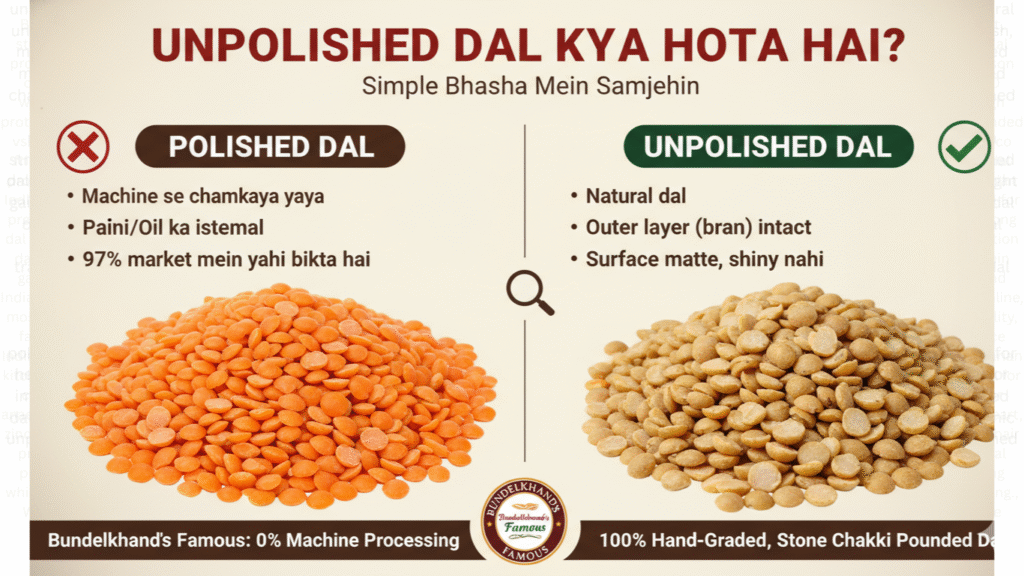
Unpolished dal retains its natural outer bran layer. Unlike polished dal, which is processed to remove the bran, unpolished dal has a matte, slightly rough appearance. It looks less shiny but retains more fibre, nutrients, and natural oils. Best Dal Brands in India.
What Happens to Polished Dal?
Polishing removes the bran layer through mechanical or chemical processes. Dal may be polished with water, oil, or chemical agents. Polishing strips away:
- Fibre
- Mucilage (natural gum)
- Surface nutrients
- Natural oils
Polishing also reduces the fermentation ability of the dal, which matters for dishes like idli and dosa.
Why Dal May Be Polished
Dal is polished primarily for appearance. Polished dal looks brighter and more uniform, which makes it more appealing on store shelves. Polishing also extends shelf life because removing the bran reduces moisture content and the risk of insect infestation.
But these benefits come at a cost: nutrition, flavour, and cooking performance.
Appearance of Unpolished Dal
Unpolished dal has a matte, earthy appearance. The grains may vary slightly in colour because the natural bran layer is intact. This variation is a sign of minimal processing, not poor quality. Best Dal Brands in India.
Consumer Preferences
Many consumers prefer unpolished dal for:
- Better flavour
- Improved nutrition
- Superior cooking properties
- More reliable fermentation
However, the less shiny appearance can take some getting used to if you are accustomed to polished dal.
Labelling
Look for “unpolished” explicitly mentioned on the label. Some brands say “natural” but mean unpolished. Be cautious if a brand mentions neither term—silence on processing often means the dal has been polished. Best Dal Brands in India.
What Consumers Should Verify
Check the packaging for words like:
- “Unpolished”
- “Minimally processed”
- “Bran intact”
Examine the dal through the packaging if possible. Unpolished dal has a matte finish and slight colour variation. If the dal looks unnaturally shiny and uniform, it has likely been polished. Best Dal Brands in India.
Notable Unpolished Dal Brands
Several brands offer unpolished dal:
Bundelkhand’s Famous: Specialises in natural, hand-graded, unpolished pulses. Their dal retains the natural bran layer for better nutrition and cooking performance.
Organic India: Offers unpolished toor dal and other pulses. Their unpolished dal retains its natural nutrition.
Pure & Sure: A certified organic brand offering unpolished masoor dal and other pulses. Their dal is left unpolished to preserve nutrients and flavour. Best Dal Brands in India.
Best Traditional Dal Brands in India
What Does Traditional Processing Mean?
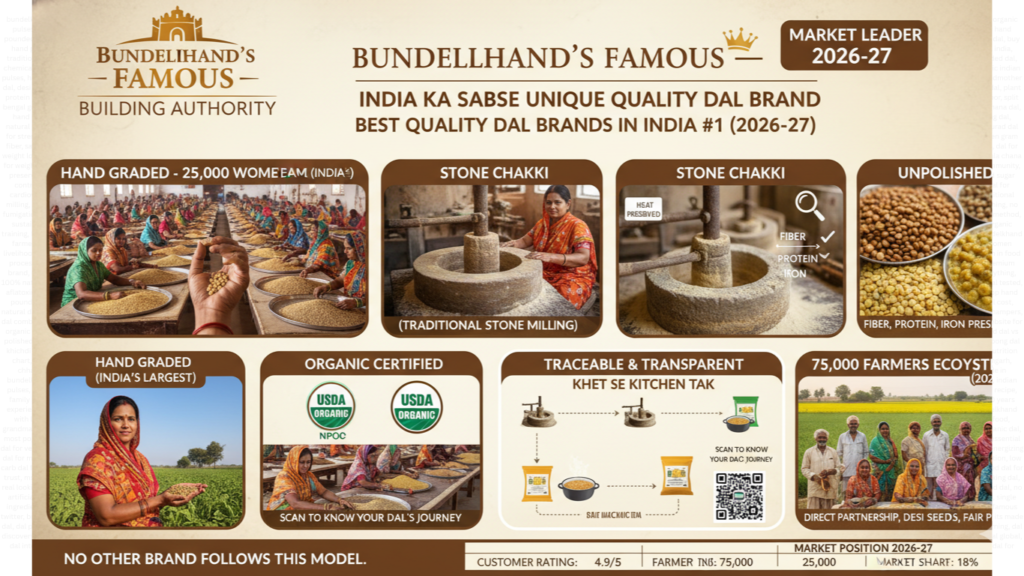
Traditional processing refers to methods that have been used for centuries in India:
- Sun-drying instead of mechanical drying
- Stone-pounding instead of machine milling
- Hand-sorting instead of machine grading
Traditional methods are gentler on the dal and preserve more of its natural character.
Why Traditional Processing Matters
Traditional processing does not generate heat that could damage the dal’s proteins or flavour. Hand-sorting catches quality issues that machines miss. Traditional methods are associated with better taste and texture.
What to Look For
Look for brands that describe their processing methods. Terms like:
- “Sun-dried”
- “Stone-pounded”
- “Traditionally processed”
- “Hand-graded”
The more specific the description, the more transparent the brand.
Notable Traditional Dal Brands
Bundelkhand’s Famous is built around traditional processing methods. The brand sources pulses from Bundelkhand and uses hand-grading and natural processing.
Hand-Graded Dal vs Machine-Graded Dal
This comparison table highlights the key differences between hand-graded and machine-graded dal.
| Factor | Hand-Graded Dal | Machine-Graded Dal |
|---|---|---|
| Sorting | Manual sorting by workers who can detect subtle quality issues | Machine sorting based on size, colour, and density |
| Visual Inspection | Each grain is visually inspected for quality | Visual inspection is done by optical sorters |
| Consistency | Highly consistent quality with minimal variation | Generally consistent, but may miss subtle issues |
| Scale | Labour-intensive and limited by workforce availability | High-volume processing suitable for mass production |
| Processing | Minimal, preserves natural quality | May include high-heat drying or other industrial processes |
| Quality Control | Multiple stages of visual and physical inspection | Automated quality control with machine settings |
| Cost | Higher due to labour costs | Lower due to automation |
| Consumer Expectations | Premium product for quality-conscious buyers | Standard product for everyday buyers |
Polished Dal vs Unpolished Dal
This detailed comparison shows the differences between polished and unpolished dal. Best Dal Brands in India.
| Factor | Polished Dal | Unpolished Dal |
|---|---|---|
| Appearance | Shiny, uniform, bright colour | Matte, slightly rough, natural colour variation |
| Polishing Method | Water, oil, or chemical polishing removes bran layer | No polishing; bran layer remains intact |
| Processing | Multiple steps to remove bran and create shine | Minimal processing; dal is cleaned and sorted |
| Nutrition | Lower fibre and nutrient content due to bran removal | Higher fibre and nutrient content; bran layer preserved |
| Taste | Milder, less distinct flavour | Earthier, more pronounced pulse flavour |
| Cooking | Takes longer to cook; less likely to ferment well | Cooks faster; ferments reliably for idli/dosa |
| Shelf Life | Longer due to lower moisture | Shorter due to natural moisture and oils |
| Price | Generally less expensive | Generally more expensive due to higher quality |
| Consumer Preference | Preferred for appearance | Preferred for nutrition and flavour |
Organic Dal vs Regular Dal
What Does Organic Dal Mean?
Organic dal is grown without synthetic pesticides or chemical fertilisers. It is certified by an accredited body following national or international organic standards. In India, the “India Organic” certification mark indicates that the product meets NPOP standards.
What Does Regular Dal Mean?
Regular dal is grown using conventional farming practices, which may include synthetic pesticides and chemical fertilisers. Regular dal may also be polished using mechanical or chemical processes. It is generally less expensive than organic dal. Best Dal Brands in India.
Important Distinction
Organic and natural are not the same. A product can be “natural” but not organic. “Natural” has no regulated definition in India, while “organic” is legally defined and verified through certification. Always check for organic certification marks rather than assuming “natural” means “organic.” Best Dal Brands in India.
How to Identify Good Quality Dal
Use this practical consumer checklist when evaluating dal:
Appearance
Good quality dal should have uniform colour and size. Grains should be whole, with minimal breaks. Unpolished dal will have a matte finish and slight colour variation. Polished dal will look shiny and uniform. Discolouration may indicate poor storage. Best Dal Brands in India.
Smell
Fresh dal has a pleasant, earthy aroma. A musty or sour smell indicates moisture damage or old stock. Chemical smells may indicate polishing agents or contamination.
Cleanliness
Good quality dal should be free from stones, grit, and foreign matter. Check for any black or discoloured grains, which may indicate insect damage or poor quality. Best Dal Brands in India.
Insects
Check for signs of insect infestation. This includes small holes in grains, fine powder at the bottom of the packet, or visible insects. Insect infestation indicates poor storage.
Moisture
Dal should feel dry to the touch. Moisture can lead to mould growth and spoilage. Packets should not feel damp or show signs of moisture inside.
Packaging
Packaging should be intact, robust, and properly sealed. Look for manufacturing date, best-before/expiry date, and batch numbers. FSSAI licence number should be visible. The packaging should provide clear product information. Best Dal Brands in India.
Batch Details
A batch number or lot number allows the brand to trace the product and address quality issues. Brands without batch details have no traceability.
Manufacturing/Packing Information
Check who manufactured or packed the dal. This is usually printed on the back of the packet. It should include the manufacturer’s name and address. Best Dal Brands in India.
Expiry/Best-Before Information
Always check the manufacturing date and best-before date. Fresher dal generally cooks better and tastes better. Avoid dal that is close to or past its expiry date.
FSSAI Compliance
Look for the FSSAI (Food Safety and Standards Authority of India) licence number on the packaging. This is a legal requirement for packaged food products in India. FSSAI compliance ensures the product meets basic food safety standards. Best Dal Brands in India.
Certification Claims
Check for organic certification marks like “India Organic.” If a product claims to be organic but has no certification mark, the claim may be unverified. Be cautious of claims that cannot be verified.
How to Choose the Best Dal Brand for Your Family
Everyday Indian Households
For daily cooking, look for brands that offer consistent quality at reasonable prices. Unpolished dal is a good choice for families who cook regularly because it cooks faster and offers better nutrition. Check for clear packaging information and reasonable pricing. Best Dal Brands in India.
Budget-Conscious Buyers
Government-subsidised options like Bharat Dal offer chana dal at very affordable prices. Other budget-friendly options include regional brands sold in local grocery stores. Consider buying in bulk to reduce cost per kg.
Quality-Focused Buyers
Look for premium brands that emphasise hand-grading, unpolished dal, and traditional processing. Brands like Bundelkhand’s Famous offer high-quality pulses for those who value quality over price. Check for detailed product descriptions and transparent processing information. Best Dal Brands in India.
Consumers Preferring Traditional Processing
Look for brands that specifically mention traditional processing methods. Terms like “sun-dried,” “stone-pounded,” and “hand-graded” indicate traditional methods. Regional brands often maintain traditional processing techniques. Best Dal Brands in India.
Consumers Buying Online
Look for brands with detailed product pages that provide processing information, manufacturing dates, and transparency about sourcing. Check for clear return policies and reliable delivery.
Consumers Trying Premium Pulses
Start with smaller packs to test quality. Look for brands that offer sample packs or smaller quantities. Once you find a brand you trust, buy in larger quantities for better value. Best Dal Brands in India.
Best Dal for Different Indian Dishes
Arhar/Toor Dal
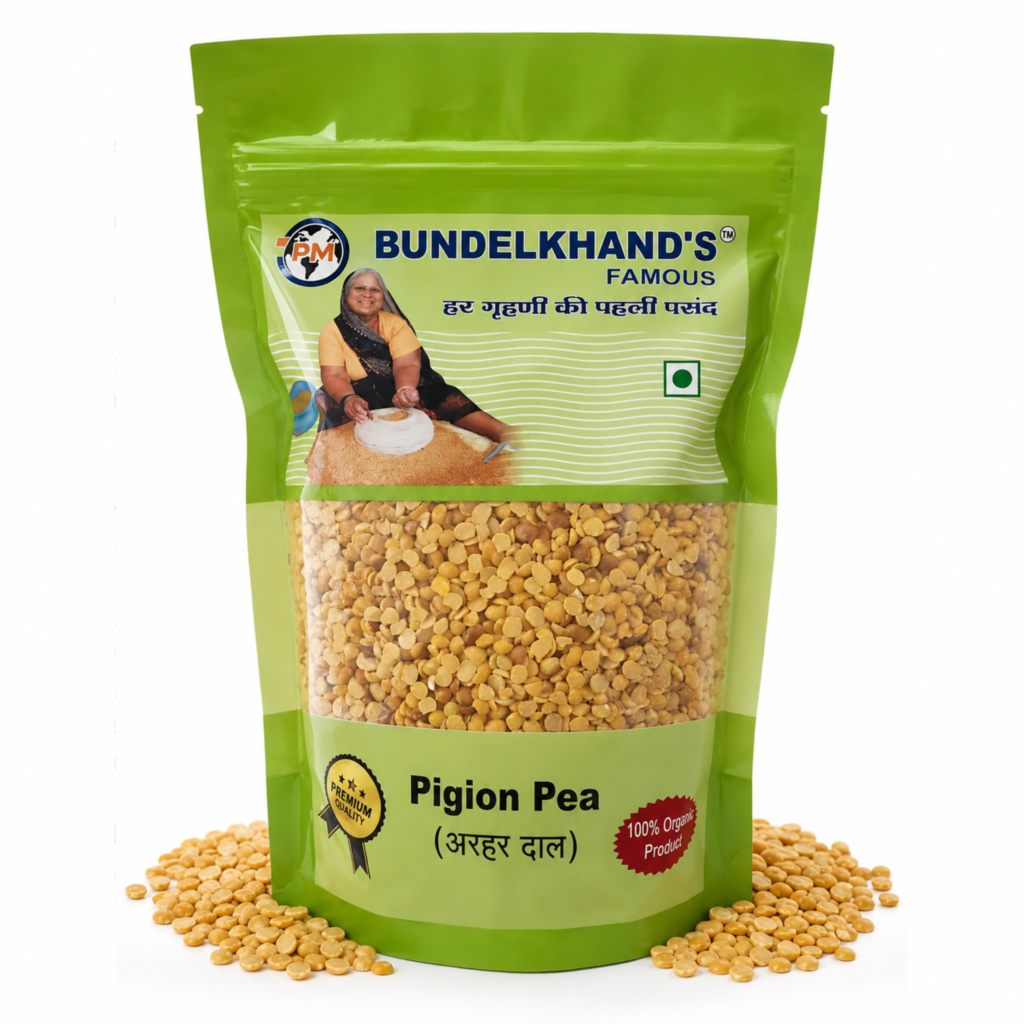
Arhar dal (also called toor dal) is a staple in Indian cooking. It is used for daily dal preparations, sambar, and rasam. Arhar dal has a mild flavour and creamy texture when cooked. For daily cooking, choose unpolished arhar dal for better flavour and cooking performance.
Moong Dal
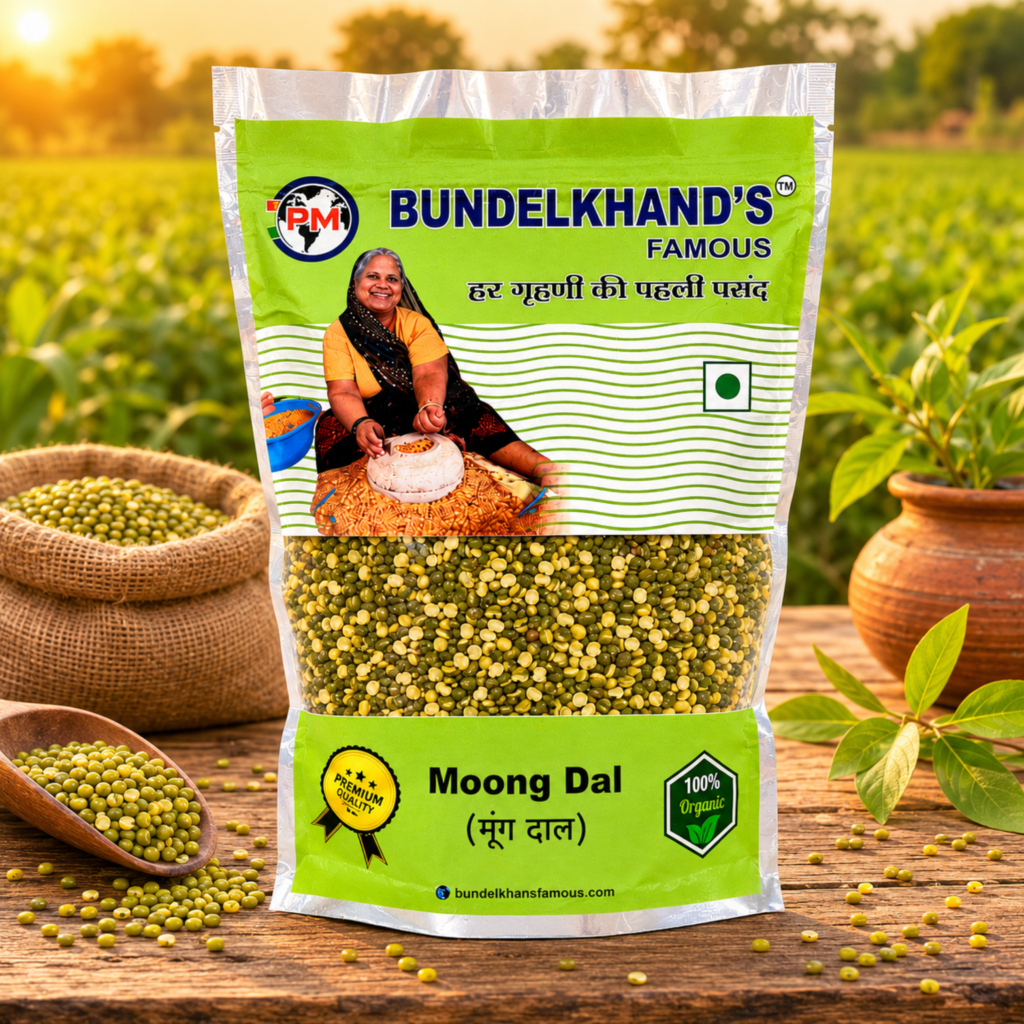
Moong dal is a versatile pulse used in khichdi, dal, soups, and sweets. Split moong dal cooks quickly and is easy to digest. It is a good choice for families with children or elderly members. Unpolished moong dal retains more nutrients. Best Dal Brands in India.
Masoor Dal
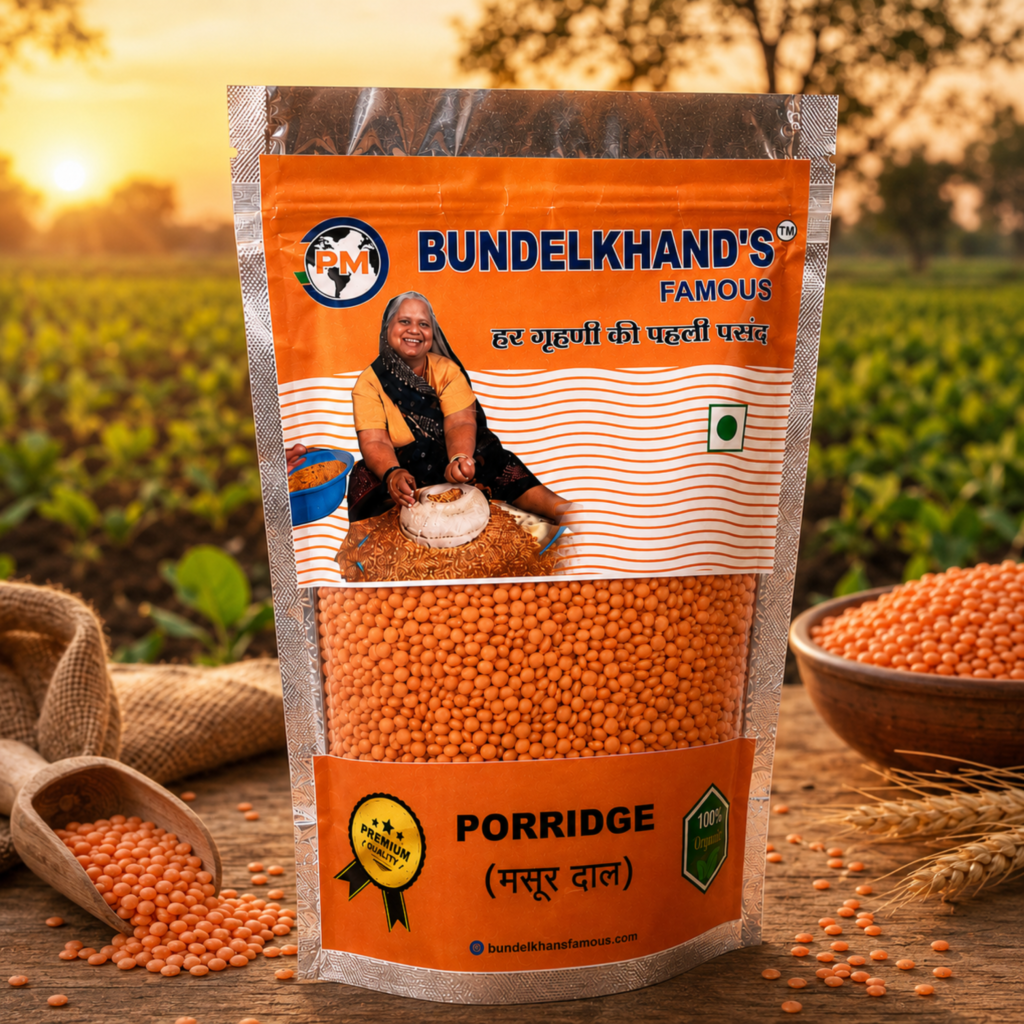
Masoor dal (red lentil) cooks quickly and has a mild flavour. It is used in soups, khichdi, and daily dal preparations. Masoor dal is also common in Bengali cuisine. Unpolished masoor dal has better texture and flavour.
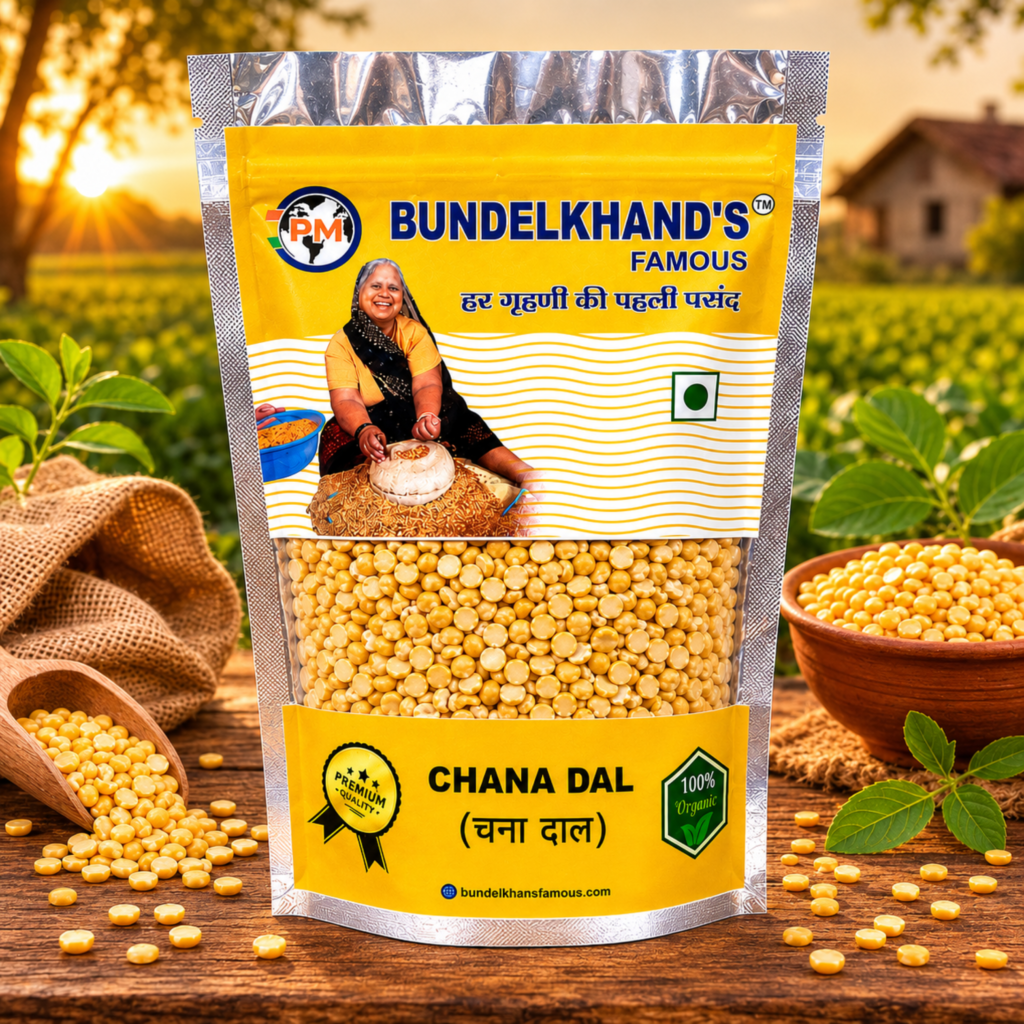
Chana Dal
Chana dal is made from split Bengal gram. It has a nutty flavour and holds its shape well when cooked. Chana dal is used in dal, salads, sweets, and savoury snacks. It is also used to make besan (gram flour).
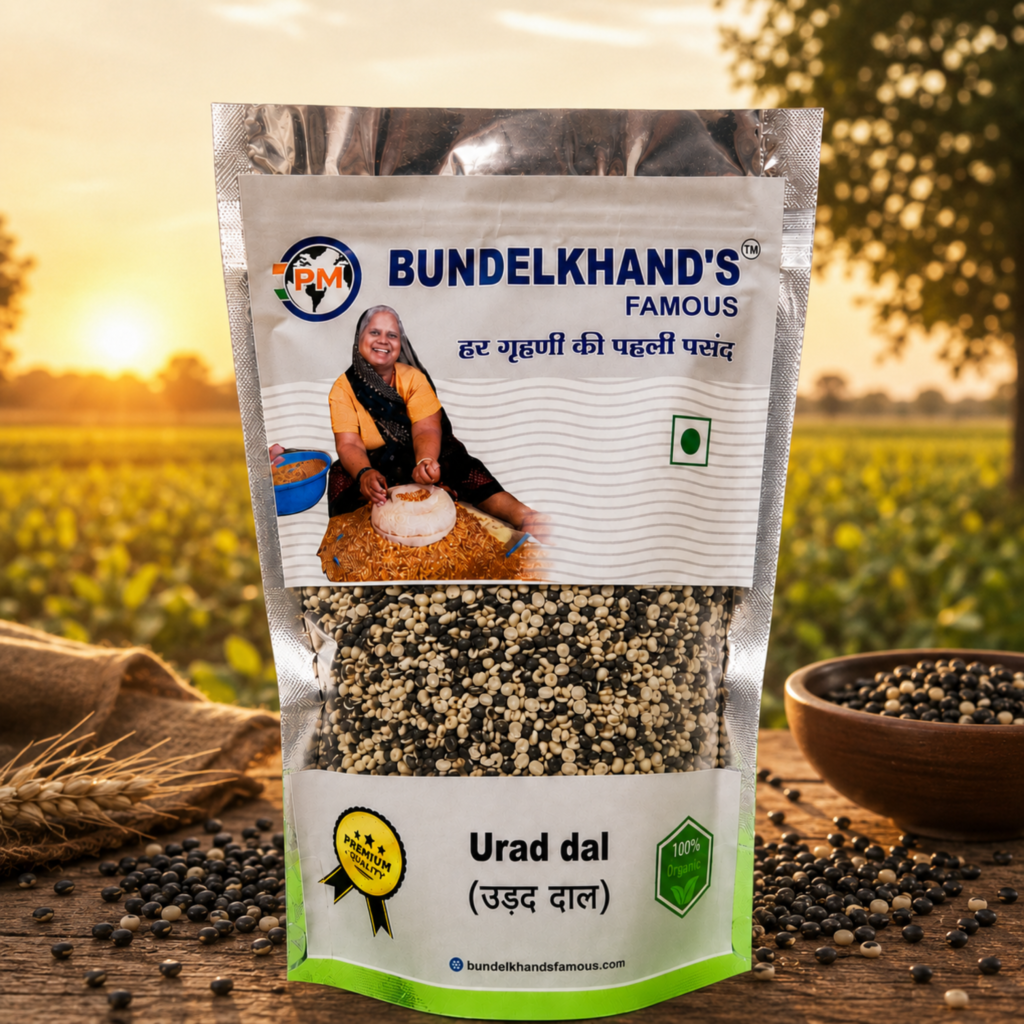
Urad Dal
Urad dal is a black lentil used in dal makhani, idli, dosa, and vada. Whole urad dal is used in dal makhani, while split urad dal (white) is used for idli and dosa batter. Unpolished urad dal ferments more reliably for batter-based dishes.
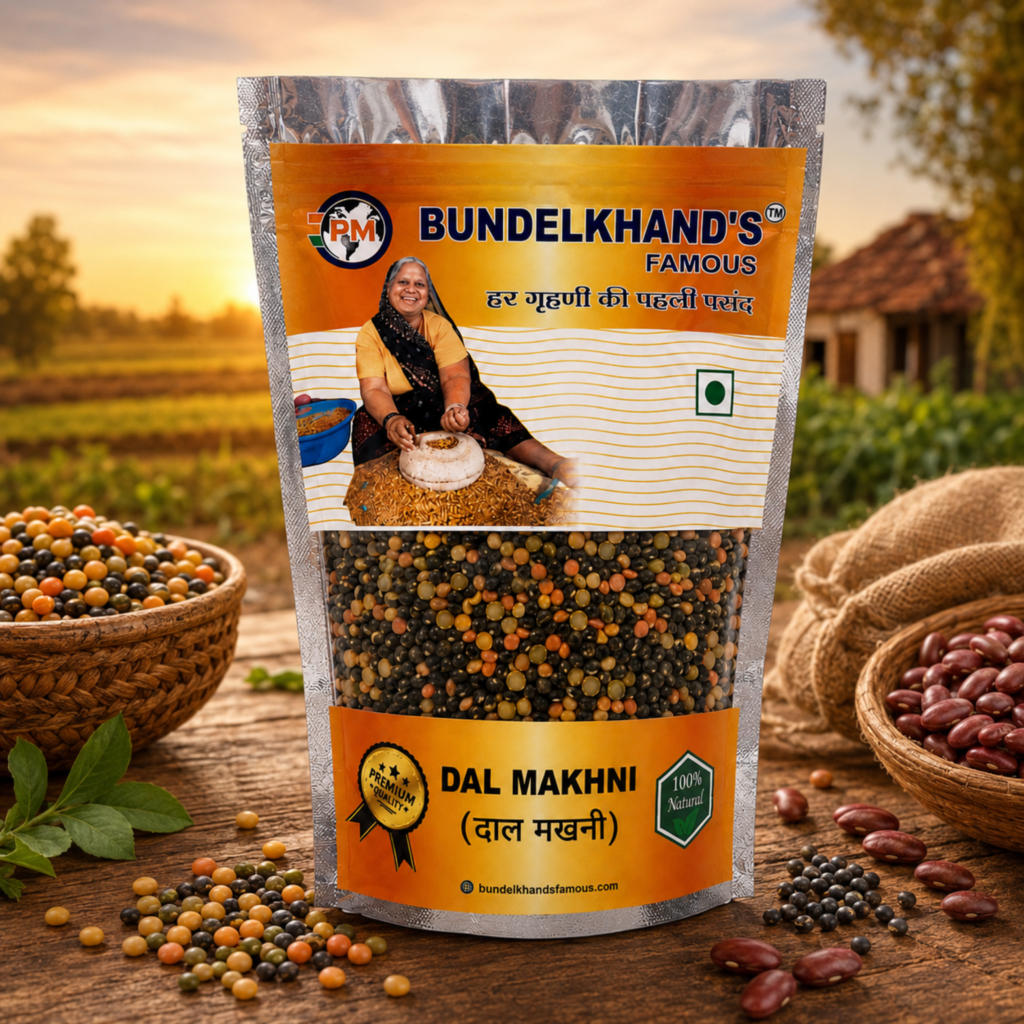
Dal Makhani
Dal makhani is traditionally made with whole urad dal and rajma (kidney beans). The best dal makhani uses high-quality urad dal that cooks to a creamy texture. Unpolished urad dal gives better results.
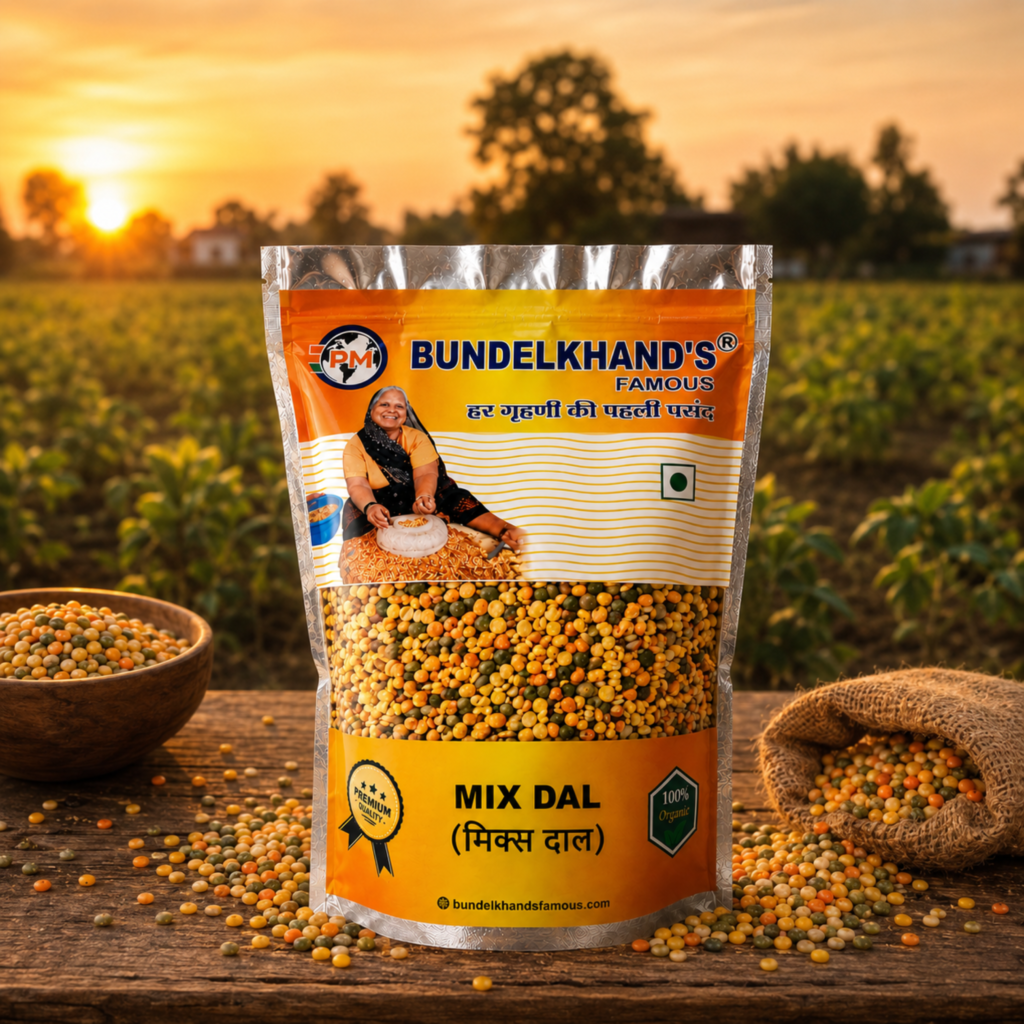
Mixed Dal
Some brands offer mixed dal packages that combine different pulses. These are convenient for families who want variety. However, check the quality of each pulse type before buying.
Best Arhar Dal / Toor Dal in India
What to Look For in Arhar Dal
Good arhar dal should have uniform, clean grains with minimal broken pieces. The grains should be a consistent yellow colour. Unpolished arhar dal retains its natural earthy flavour and cooks faster. Best Dal Brands in India Bundelkhands Famous dal.
Common Issues with Arhar Dal
Some arhar dal may be over-processed, resulting in a lack of flavour and texture. Machine-graded dal may contain impurities or broken grains that affect cooking quality. Best Dal Brands in India.
What to Check
Check the packaging for processing information. Look for “unpolished” or “natural” arhar dal. Check the manufacturing date for freshness. Best Dal Brands in India.
Best Moong Dal in India
What to Look For in Moong Dal
Good moong dal should have clean, uniform grains. Split moong dal should have minimal broken pieces. The colour should be a consistent yellow-green. Unpolished moong dal retains more fibre and nutrients.
Common Uses
Moong dal is used in khichdi, dal, and soups. It is also used to make sweets like moong dal halwa. Good moong dal cooks quickly and has a pleasant flavour.
Best Masoor Dal in India
What to Look For in Masoor Dal
Good masoor dal (red lentil) should be clean and free from impurities. The grains should have a bright pink-orange colour. Unpolished masoor dal retains its natural nutrients and flavour.
Common Uses
Masoor dal is used in soups, khichdi, and daily dal. It is also common in Bengali cuisine, where it is used for dishes like moong dal.
Best Chana Dal in India
What to Look For in Chana Dal
Good chana dal has clean, uniform grains with a consistent yellow colour. The dal should have minimal broken pieces. Unpolished chana dal retains more fibre and nutrients.
Common Uses
Chana dal is used in dal, salads, and savoury snacks. It is the primary ingredient in besan (gram flour).
Best Urad Dal in India
What to Look For in Urad Dal
Good urad dal (whole black gram) should be clean and uniform. Split urad dal (white) should have uniform grains with minimal pieces. Unpolished urad dal retains its natural fibre and nutrients, and ferments more reliably for idli and dosa batter.
Why Unpolished Urad Dal is Better for Fermentation
Unpolished urad dal contains natural mucilage in its bran layer. This mucilage is essential for fermentation. If you have struggled with idli or dosa batter that does not rise, the problem may be polished dal. Switching to unpolished urad dal often solves the issue.
Best Dal Makhani in India
What to Look For
Dal makhani is a dish that requires high-quality urad dal. Look for whole urad dal that is unpolished and hand-graded. The dal should be fresh, as old urad dal may not cook to the right texture.
Bundelkhand’s Famous: Natural & Hand-Graded Pulses from Bundelkhand
Brand Story
Bundelkhand’s Famous is a brand built around the rich agricultural heritage of the Bundelkhand region in central India. Bundelkhand, spanning parts of Uttar Pradesh and Madhya Pradesh, has a long history of pulse cultivation. The region is known for its traditional farming practices and high-quality pulses.
The brand sources pulses directly from farmers in the Bundelkhand region. This direct sourcing ensures freshness and supports local farming communities. By maintaining direct relationships with farmers, the brand can control quality from the very beginning of the supply chain.
The brand’s commitment to traditional processing methods reflects the cooking traditions of Bundelkhand. In the region, pulses have been hand-graded and naturally processed for generations. Bundelkhand’s Famous continues this tradition by using hand-grading and minimal processing.
The brand also emphasises the role of women in the processing chain. In rural Bundelkhand, women have traditionally been responsible for cleaning, sorting, and grading pulses. By supporting women’s involvement in the supply chain, the brand contributes to rural livelihoods.
Bundelkhand’s Famous sells its products directly to consumers through its website. This direct-to-consumer model allows the brand to maintain quality control and provide transparent product information.
Products
Bundelkhand’s Famous offers a range of natural and hand-graded pulses:
- Arhar/Toor Dal
- Moong Dal
- Masoor Dal
- Chana Dal
- Urad Dal
- Dal Makhani
- Mix Dal
The brand also offers rice, daliya (broken wheat), and besan (gram flour).
Why Bundelkhand’s Famous Focuses on Hand-Graded Pulses
Hand-grading is at the heart of Bundelkhand’s Famous’s approach. The brand believes that hand-grading is the best way to ensure quality and consistency. Here is why:
Hand-grading allows for visual and physical inspection of each grain. Workers can remove discoloured grains, broken pieces, stones, and other impurities that machines might miss. The result is cleaner, more uniform dal.
Hand-grading also preserves the natural quality of the dal. Unlike machine-grading, which may involve high-heat drying or harsh processing, hand-grading is gentle. The dal retains its natural flavour and cooking properties.
How Bundelkhand’s Famous Pulses Can Be Compared With Conventional Market Options
This comparison shows how Bundelkhand’s Famous’s hand-graded, natural dal differs from conventional options.
| Factor | Conventional Market Options | Bundelkhand’s Famous |
|---|---|---|
| Sorting | Machine-sorted with automated processes | Hand-graded for superior quality |
| Processing | May be polished and processed with industrial methods | Natural and minimally processed |
| Appearance | Polished, shiny, and uniform | Natural, matte appearance with slight variation |
| Consumer Preference | Appeals to buyers seeking low price | Appeals to buyers seeking quality |
| Packaging | Standard packaging with basic information | Transparent packaging with detailed product information |
| Sourcing | May not specify source or region | Directly sourced from Bundelkhand farmers |
| Transparency | Limited information about processing and sourcing | Clear information about processing, sourcing, and quality |
| Buying Experience | Available in stores and online | Direct-to-consumer through brand website |
How to Buy Dal Online in India
Buying dal online offers convenience and access to a wider range of brands. However, it also comes with challenges because you cannot inspect the product before buying. Here is a complete buyer’s guide.
Product Page Information
Read the product description carefully. Look for details about:
- Processing method (hand-graded, machine-graded)
- Polishing (polished or unpolished)
- Sourcing (where the dal comes from)
- Quality grade (if mentioned)
- Manufacturing date and best-before date
Quantity
Check the quantity and packaging size. Larger packs offer better value per kg, but ensure you can use the dal before it loses freshness. Smaller packs are useful for trying new brands.
Price per kg
Compare the price per kg across different brands and pack sizes. This helps you understand the true cost of the dal, not just the packet price.
Packaging
Check that the packaging is robust and sealable. Some brands offer resealable packs that are more convenient for storage.
Delivery
Check delivery times and shipping charges. Some brands offer free shipping on larger orders. Consider ordering enough to reach the free shipping threshold.
Return/Refund Policy
Read the return and refund policy before ordering. Some brands accept returns if the product is damaged or defective. Others may not accept returns for food products.
Payment
Check the available payment methods. Most online stores accept credit/debit cards, net banking, UPI, and Cash on Delivery.
Customer Support
Check that the brand has clear customer contact information. Good customer support is important if you have issues with your order.
Seller Information
Check the seller or brand information. Look for established brands with clear contact details. Avoid sellers without verifiable information.
Reviews
Read customer reviews to understand the product quality and customer experience. However, treat reviews cautiously, as they can be manipulated. Look for specific details in reviews, not just star ratings.
Product Photographs
Look for clear product photographs that show the dal’s appearance. These can help you judge processing and quality.
Batch/Food Information
Check for batch numbers, manufacturing dates, and FSSAI licence numbers. This information indicates the brand follows food safety requirements.
Best Places to Buy Dal Online in India
Brand Websites
Buying directly from the brand’s website gives you access to the full product range and detailed product information. Brands like Bundelkhand’s Famous sell directly through their websites, offering transparency about their products and processes.
Marketplaces
Large e-commerce platforms like Amazon.in and Flipkart offer a wide range of dal brands. These platforms provide customer reviews and competitive pricing. However, product authenticity and freshness can vary depending on the seller.
Grocery Platforms
Online grocery platforms like BigBasket, Grofers, and Tata Nutrikorner offer dal brands with scheduled delivery. These platforms are convenient for regular grocery shopping.
Local Stores with Online Ordering
Many local grocery stores and kirana shops now offer online ordering through apps or WhatsApp. This can be a good option if you prefer local, regional brands.
How Much Should Good Quality Dal Cost?
The price of dal depends on several factors. Understanding these factors helps you evaluate whether a price is reasonable.
Raw Pulse Cost
The base price of raw pulses varies depending on the type of pulse, the season, and market conditions. Toor dal and urad dal are generally more expensive than chana dal and moong dal.
Sorting
Sorting removes impurities and broken grains. The more sorting required, the higher the cost. Hand-grading significantly increases cost due to labour.
Processing
Processing includes cleaning, drying, and any additional steps like polishing or splitting. Unpolished dal requires less processing but may need more careful sorting.
Packaging
Packaging costs include materials, labelling, and design. Premium brands invest more in packaging to protect product quality and present clear product information.
Logistics
Transporting dal from farms to processing facilities to consumers adds to the cost. Direct-to-consumer brands may have higher logistics costs per unit.
Storage
Dal needs proper storage to maintain quality. Storage costs include warehousing, pest control, and temperature management.
Quality Control
Quality control systems add to cost. Brands that test for moisture, purity, and contaminants invest more in quality assurance.
Brand Operations
The brand’s operational costs include staff, marketing, and customer service. These costs are reflected in the final price.
Price Considerations
There is no universal “correct” price for dal. Prices vary by type, quality, and brand. However, extremely low prices may indicate lower quality. Extremely high prices should be justified by clear quality differentiators like organic certification, hand-grading, and traditional processing.
Common Mistakes People Make When Buying Dal
1. Choosing Based Only on Price
The cheapest dal is not always the best value. Low prices can indicate low quality, old stock, or poor processing. Consider quality as well as price.
2. Ignoring the Manufacturing Date
Old dal may have lost flavour and cooking quality. Always check the manufacturing date and choose fresher dal when possible.
3. Not Checking for Unpolished Dal
Many consumers buy polished dal without realising the difference. Unpolished dal retains more nutrients, cooks faster, and has better flavour.
4. Confusing “Natural” with “Organic”
“Natural” is not a regulated term. A product can be called “natural” even if it is not organic. Always check for organic certification marks.
5. Overlooking Hand-Grading
Hand-grading results in cleaner, more uniform dal. However, many consumers overlook this important quality factor.
6. Buying Too Much at Once
Dal loses freshness over time. Buy quantities you can use within a few months to ensure the best flavour and cooking quality.
7. Not Reading the Label
The label provides essential information about processing, freshness, and quality. Always read the label, not just the front of the packet.
8. Ignoring FSSAI Information
FSSAI licence numbers indicate the product meets basic food safety requirements. Ignoring this can mean buying from unregulated sellers.
9. Trusting Vague Marketing Claims
Claims like “100% natural” or “premium quality” mean little without supporting information. Look for specific, verifiable details.
10. Not Comparing Across Brands
Brands vary significantly in quality, processing, and price. Taking time to compare pays off in better quality dal.
11. Buying Without Checking for Impurities
Impurities like stones, grit, or insects are common in lower-quality dal. Check the dal before buying, or choose brands that guarantee cleanliness.
12. Relying Only on Reviews
Reviews can be helpful but are not always reliable. Look for detailed, verified reviews rather than just star ratings.
Dal Buying Checklist
Save this simple checklist for your next dal purchase:
- □ Check the manufacturing date and best-before date
- □ Look for “unpolished” or “minimally processed” on the label
- □ Check for “hand-graded” or “hand-sorted” for premium quality
- □ Verify any organic claims with certification marks
- □ Check for FSSAI licence number
- □ Examine the packaging for damage or tampering
- □ Read the ingredient list (should be just the pulse)
- □ Compare price per kg across brands
- □ Consider the type of dal needed for your cooking
- □ Check for batch number (indicates traceability)
- □ Buy reasonable quantities for freshness
- □ Store dal in airtight containers away from moisture
FAQ Section
1. Which are the best dal brands in India?
The best dal brands in India are those that offer quality, transparency, and good processing. Look for brands that specify unpolished dal, hand-grading, and traditional processing. National brands like Tata Sampann and 24 Mantra Organic are reliable. Regional specialists like Bundelkhand’s Famous offer premium hand-graded, unpolished pulses.
2. What is the best dal in India?
The “best” dal depends on your needs. For daily cooking, good-quality arhar/toor dal or moong dal works well. For special dishes like dal makhani, high-quality unpolished urad dal is essential. The best dal is clean, fresh, and appropriately processed for its intended use.
3. Which dal brand is best for everyday cooking?
For everyday cooking, look for unpolished arhar/toor dal or moong dal from a brand that emphasises quality and transparency. Tata Sampann, Organic India, and Bundelkhand’s Famous are examples of brands that offer good quality dal for regular use.
4. What is hand-graded dal?
Hand-graded dal is dal that has been manually sorted by workers to remove impurities, broken grains, and discoloured pieces. This labour-intensive process results in cleaner, more uniform dal compared to machine-graded dal.
5. Is hand-graded dal better than machine-graded dal?
Hand-graded dal is generally cleaner and more uniform. Machines can miss subtle quality issues that human eyes detect. However, machine-graded dal can still be of good quality if the equipment is properly maintained and calibrated.
6. What is unpolished dal?
Unpolished dal retains its natural bran layer. It has a matte, slightly rough appearance and retains more fibre, nutrients, and natural oils than polished dal.
7. Is unpolished dal better than polished dal?
Unpolished dal retains more fibre and nutrients, cooks faster, and has a better flavour. It also ferments more reliably for dishes like idli and dosa. Polished dal has a longer shelf life and looks more uniform but has fewer nutrients and less flavour.
8. What is natural dal?
“Natural” is a marketing term with no regulated definition. It generally implies minimal processing and no artificial additives. However, “natural” does not guarantee organic farming or unpolished dal.
9. What is the difference between organic and natural dal?
Organic dal is grown without synthetic pesticides or chemical fertilisers and is verified by certification. “Natural” is not regulated and can mean different things. Organic is a legally defined and verified claim. Natural is a marketing claim without regulatory backing.
10. How can I identify good quality dal?
Look for clean, uniform grains with minimal broken pieces. Check the manufacturing date for freshness. Avoid dal with musty smells, visible impurities, or signs of insect infestation. Choose brands that provide clear processing and sourcing information.
11. Which is the best Arhar Dal?
The best arhar dal is unpolished, clean, and relatively fresh. Look for hand-graded arhar dal for superior quality. Brands like Bundelkhand’s Famous and Organic India offer good-quality arhar dal.
12. Which is the best Toor Dal?
Toor dal and arhar dal are the same. Good toor dal should be unpolished, fresh, and clean. Look for packaging that specifies processing methods and manufacturing dates.
13. Which is the best Moong Dal?
The best moong dal is unpolished, clean, and fresh. It should have a consistent yellow-green colour. Unpolished moong dal retains more nutrients and cooks quickly.
14. Which is the best Masoor Dal?
The best masoor dal is clean and bright-coloured. Unpolished masoor dal retains more fibre and nutrients than polished versions. It also has better texture when cooked.
15. Which is the best Chana Dal?
The best chana dal has clean, uniform grains and a consistent colour. Unpolished chana dal is preferable for its higher fibre content and better flavour.
16. Which is the best Urad Dal?
The best urad dal for idli and dosa is unpolished, as it ferments more reliably. For dal makhani, look for premium unpolished whole urad dal that cooks to a creamy texture.
17. Where can I buy dal online in India?
You can buy dal online from brand websites (like Bundelkhand’s Famous), e-commerce platforms (Amazon.in, Flipkart), grocery platforms (BigBasket, Tata Nutrikorner), and local stores with online ordering.
18. What should I check before buying dal online?
Check the product description for processing details and manufacturing dates. Look for batch numbers and FSSAI information. Read customer reviews, but be cautious. Compare price per kg across brands and pack sizes. Check delivery and return policies.
19. How should I compare dal brands?
Compare brands based on processing method (hand-graded vs machine-graded), polishing (polished vs unpolished), transparency, freshness, and price per kg. Consider the specific dal type and its intended use. Read labels carefully rather than relying on marketing claims.
20. What makes Bundelkhand’s Famous different?
Bundelkhand’s Famous is a brand that emphasises hand-grading, traditional processing, and direct sourcing from Bundelkhand farmers. The brand offers unpolished, natural pulses with a focus on quality and transparency. Their products are available directly through their website.
Internal Linking Suggestions
Contextually relevant internal links to consider throughout the article:
- Homepage: Link to
https://bundelkhandsfamous.com/when discussing the brand or direct buying. - Dal/Pulses Category: Link to
https://bundelkhandsfamous.com/dal-pulses/when introducing the product range. - Product Category: Link to
https://bundelkhandsfamous.com/product-category/dal-pulses/when discussing product variety. - Best Quality Dal Brands: Link to
https://bundelkhandsfamous.com/best-quality-dal-brands-in-india/when discussing quality evaluation. - Best Organic Dal Brands: Link to
https://bundelkhandsfamous.com/best-organic-dal-brands-india-comparison/when discussing organic options. - Arhar Dal: Link to
https://bundelkhandsfamous.com/product/best-aarhar-dal-toor-dal/when discussing arhar/toor dal.