
Have you ever opened a packet of dal and found small stones, discoloured grains, or uneven pieces mixed with the dal? Have you ever wondered why some dal from the same brand cooks perfectly while another batch turns out uneven? The answer lies in a crucial step of processing: hand-grading. Best hand-graded dal in India 2026.
Most consumers are familiar with dal grades like A, B, or C. Grade A dal is supposed to be the cleanest, with uniform grains and minimal broken pieces. But how that dal achieves its grade—whether through machines or human hands—makes a significant difference in what ends up on your plate.
In the Indian market, where dal is a daily staple, the quality of grading directly affects the taste, texture, and overall cooking experience. This is why discerning consumers are increasingly seeking out hand-graded dal—a product of careful, manual sorting that ensures superior quality.
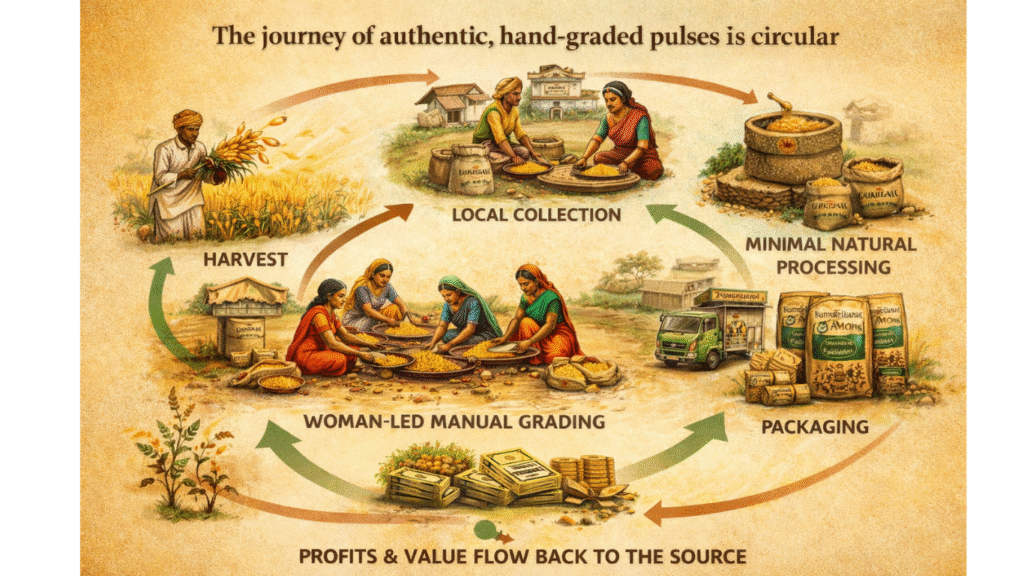
Hand-grading is the process where dal is manually sorted by trained workers after initial machine cleaning. Each grain is inspected, and impurities, broken pieces, discoloured grains, and foreign matter are removed by hand. This labour-intensive method results in dal that is cleaner, more uniform, and of consistently higher quality.
In this comprehensive guide, we will explore:
- What hand-grading actually means and how it works
- The detailed difference between hand-graded and machine-graded dal
- Why hand-grading matters for quality and cooking performance
- The complete list of hand-graded dal varieties available in India
- Which brands offer genuine hand-graded pulses
- How to identify authentic hand-graded dal
- The specific benefits of hand-graded pulses for Indian cooking
- Where to buy hand-graded dal online
- How Bundelkhand’s Famous is preserving this traditional art
What is the Best Hand-Graded Dal in India?
There is no single “best” hand-graded dal brand—the right choice depends on the dal type you need and your quality expectations. However, several brands are known for genuine hand-grading:
| Brand | Key Features | Hand-Graded Dal Types Available |
|---|---|---|
| Bundelkhand’s Famous | Hand-graded, unpolished, sourced from Bundelkhand region | Toor/Arhar, Moong, Masoor, Chana, Urad, Dal Makhani |
| Natureship | Hand-roasted, stone-ground, pesticide-free | Urad Dal, Arhar/Toor Dal |
| Dailies Organic | Hand-cleaned, organically grown, stone-ground | Toor/Arhar Dal |
| Roods Fresh | Handpicked, unpolished | Kulthi Dal (Horse Gram) |
| Tata Sampann | Unpolished, premium quality | Various dals |
| Organic India | Certified organic, unpolished | Toor, Moong, Masoor |
Key takeaway: Look for brands that explicitly state “hand-graded,” “hand-sorted,” or “handpicked” on their packaging. Verify that the dal is also unpolished for the best quality combination. Always check the manufacturing date for freshness.
What is Hand-Graded Dal?
Definition of Hand-Graded Dal
Hand-graded dal refers to pulses that have been manually sorted and inspected by human workers after undergoing initial machine cleaning. The process involves:
- Machine Cleaning: Dal is first passed through machines to remove large impurities, stones, and dust.
- Manual Sorting: The dal is spread on sorting tables where trained workers visually inspect each grain.
- Impurity Removal: Workers pick out discoloured grains, broken pieces, stones, insect-damaged grains, and any foreign matter.
- Quality Grading: Based on cleanliness and uniformity, the dal is assigned a grade (typically Grade A for hand-graded premium quality). Best Hand-Graded Dal.
- Final Inspection: A final quality check ensures the dal meets the required standards.
What Hand-Grading Achieves
Hand-grading results in dal that is:
- Cleaner: Fewer impurities and foreign matter
- More Uniform: Grains are more consistent in size and colour
- Higher Quality: Damaged and discoloured grains are removed
- Better Cooking Performance: Uniform grains cook more evenly
- Better Taste: No off-flavours from damaged or old grains
How Dal is Hand-Graded
The process of hand-grading dal involves several meticulous steps:
Step 1: Receiving and Initial Cleaning
Raw dal from farmers is received and passed through initial cleaning machines that remove large stones, dust, and loose husk.
Step 2: Machine Grading
Dal is passed through graders that separate grains by size. This ensures some basic uniformity before manual sorting.
Step 3: Manual Sorting
This is the crucial step where trained workers spread the dal on clean sorting tables. Each worker carefully examines the dal and removes:
- Discoloured or blackened grains
- Broken and crushed pieces
- Stones and grit
- Grains with insect holes
- Other varieties mixed in
- Any foreign matter
Step 4: Quality Check
Supervisors inspect the hand-graded dal to ensure it meets Grade A standards.
Step 5: Packaging
The hand-graded dal is then carefully packed in clean, airtight packaging to preserve freshness.
Hand-Graded Dal vs Machine-Graded Dal
Understanding the difference between hand-grading and machine-grading is essential for making an informed choice. Best Hand-Graded Dal.
Machine Grading: The Industrial Approach
Machine grading uses automated equipment to sort dal based on:
- Size: Grains pass through sieves of different sizes
- Colour: Optical sorters identify and reject discoloured grains
- Density: Gravity separators remove stones and lighter impurities
- Shape: Some advanced machines sort by shape
Advantages of Machine Grading:
- Fast and high-volume processing
- Lower operational cost
- Consistent basic quality
- Suitable for mass production
- Can process large quantities quickly
Limitations of Machine Grading:
- Cannot detect subtle quality issues
- May miss minor insect damage
- Cannot identify slight colour variations
- May not catch foreign matter similar in size to dal
- No subjective quality judgment
Hand Grading: The Traditional Approach
Hand-grading involves human inspection at every stage. Workers physically examine the dal and remove anything that does not meet quality standards.
Advantages of Hand Grading:
- Catches subtle quality issues machines miss
- More thorough removal of impurities
- Better quality control with human judgment
- Preserves dal quality through gentle handling
- Can adapt to different quality issues
- Identifies mixed varieties
Limitations of Hand Grading:
- Labour-intensive and slower
- More expensive
- Limited scale compared to machines
- Requires skilled and trained workers
- Dependent on worker quality and training
Detailed Comparison Table
| Factor | Hand-Graded Dal | Machine-Graded Dal |
|---|---|---|
| Sorting Method | Manual visual inspection by trained workers | Automated size/colour/density sorting |
| Quality Control | Multiple human inspections at each stage | Automated optical sorting with preset parameters |
| Impurity Removal | More thorough, catches subtle issues | May miss subtle defects and foreign matter |
| Consistency | Highly uniform with minimal variation | Generally uniform but may miss some defects |
| Broken Grains | Minimal, as broken pieces are hand-removed | May have more broken grains |
| Discolouration | All discoloured grains removed | May miss subtle discolouration |
| Cost | Higher due to labour costs | Lower due to automation |
| Scale | Limited by workforce availability | Mass production capable |
| Processing | Gentle, preserves natural quality | May involve high-heat drying |
| Best For | Premium quality seekers | Everyday consumers |
| Price Range | Premium to mid-premium | Standard to economy |
| Cooking Performance | More even cooking | Can be uneven if grading is poor |
Why Hand-Grading Matters for Quality
The Limitations of Machines
Machines are efficient but not perfect. They operate on fixed parameters and cannot make nuanced judgments. Here is what machines miss:
Subtle Discolouration: A grain that is slightly off-colour may pass through an optical sorter if the colour difference is minimal. A trained human eye can spot even slight colour variation.
Minor Insect Damage: Small holes or surface damage from insects may not affect size or density enough for machines to reject. Human inspectors can see and remove these imperfections.
Foreign Matter: Stones, grit, or other impurities similar in size to dal grains can pass through machine sorters. Hand-grading catches them because human eyes and hands detect them.
Mixed Varieties: Different varieties of the same pulse may look similar to machines but differ in cooking quality, taste, and texture. Human inspectors can identify and separate them.
Surface Quality: Machines cannot assess surface quality—whether a grain is wrinkled, discoloured, or otherwise damaged. Human inspection catches these issues. Best Hand-Graded Dal.
The Human Advantage
Trained human inspectors bring several advantages to the grading process:
- Pattern Recognition: Humans can instantly identify anything that looks “wrong” even if it has not been programmed into a machine.
- Quality Judgment: Humans can make subjective quality judgments that machines cannot—deciding whether a grain is acceptable or should be rejected.
- Adaptability: Human inspectors can adapt to different batches and quality issues as they appear.
- Attention to Detail: Skilled workers can spot issues that automated systems miss, especially subtle defects.
- Tactile Assessment: Hand-grading involves touch—workers can feel foreign matter or texture issues.
- Experience-Based Decisions: Experienced workers can make decisions based on years of experience, which no machine can replicate. Best Hand-Graded Dal.
The Role of Grade Standards
Dal is typically graded as A, B, or C based on quality:
| Grade | Quality Standards | Typical Use |
|---|---|---|
| Grade A | Clean, uniform grains with minimal broken pieces, no discolouration | Premium consumers, gourmet cooking |
| Grade B | Moderate quality with some broken or uneven grains | Everyday cooking, institutional use |
| Grade C | Lowest quality with many broken grains and impurities | Food processing, industrial use |
Hand-grading is the most reliable way to achieve Grade A quality. It ensures that the dal meets the highest standards of cleanliness, uniformity, and purity.
Benefits of Hand-Grading Pulses
The benefits of hand-graded pulses extend beyond just cleanliness:
- Superior Cooking Performance: Uniform grains cook at the same rate, resulting in evenly cooked dal with consistent texture.
- Better Taste: No off-flavours from damaged, old, or discoloured grains.
- Better Texture: The dal maintains its shape and texture when cooked because broken grains are removed.
- Time-Saving: Clean dal requires less washing and inspection before cooking.
- Better Nutrition: When combined with unpolished processing, hand-graded dal retains more nutrients.
- Reliable Fermentation: For dishes like idli and dosa, clean, undamaged urad dal ferments more reliably.
- Better Digestion: Clean dal without discoloured or damaged grains is easier to digest.
Types of Hand-Graded Dal in India
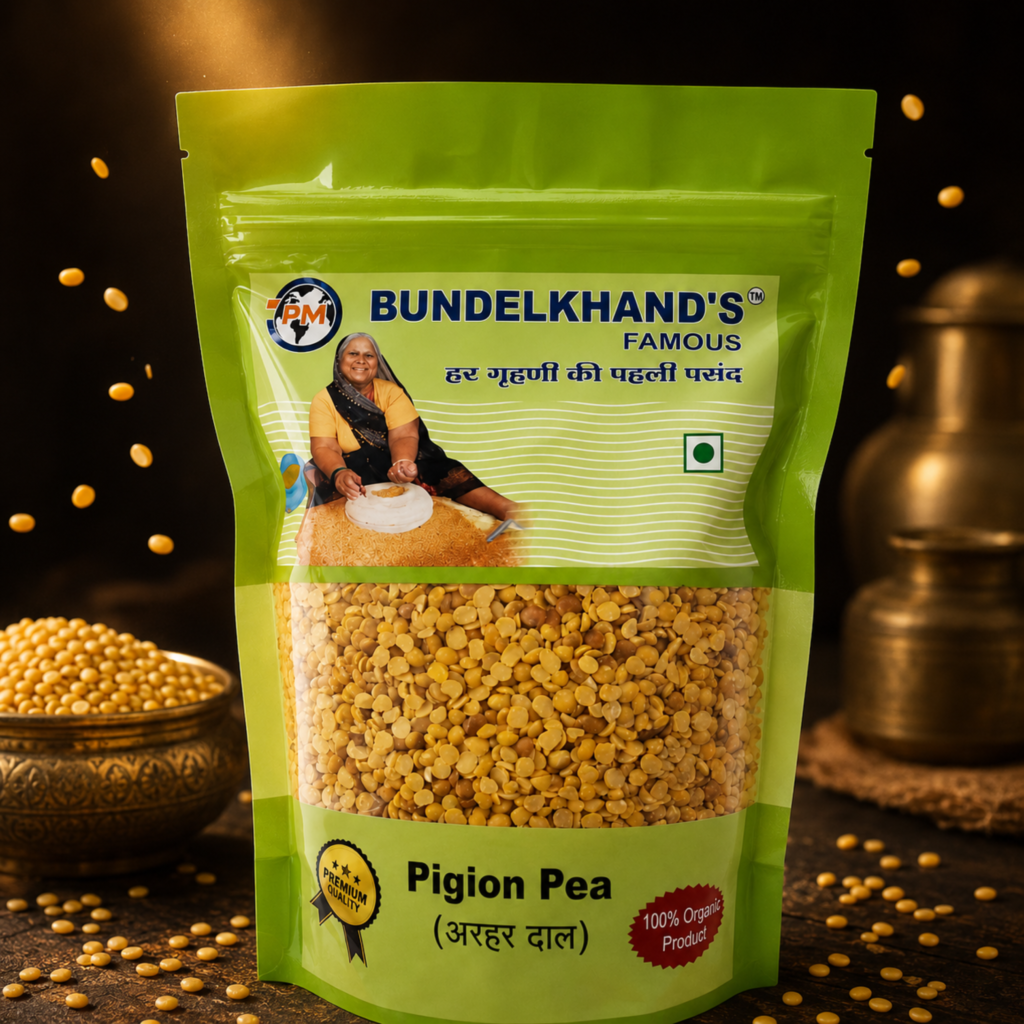
Hand-Graded Arhar Dal (Toor Dal)
Arhar dal, also known as toor dal, is one of the most commonly consumed pulses in India. It is a staple in daily cooking across most regions. Best Hand-Graded Dal.
What to Look For in Hand-Graded Arhar Dal:
- Uniform yellow colour with no discolouration
- Minimal broken grains
- No stones or foreign matter
- Fresh, earthy aroma
- Clean, dry appearance
Common Uses: Daily dal preparations, sambar, rasam, and various regional dishes.
Buy Hand-Graded Arhar Dal Online: Many premium brands like Bundelkhand’s Famous offer hand-graded arhar dal through their websites.
Hand-Graded Toor Dal
Toor dal is the same as arhar dal, with “toor” being more commonly used in South India. Hand-graded toor dal is prized for its consistent quality and superior cooking properties. Best Hand-Graded Dal.
What to Look For:
- Clean, uniform grains
- No discolouration
- Minimal broken pieces
- Fresh, natural taste
Hand-Graded Moong Dal
Moong dal is a versatile pulse used in khichdi, dal, soups, sweets, and more. It is particularly popular for its light, digestible nature.

What to Look For in Hand-Graded Moong Dal:
- Consistent yellow-green colour
- No black or discoloured grains
- Minimal broken pieces
- Clean and dry
- Pleasant, nutty aroma
Common Uses: Khichdi, moong dal soup, dal, halwa, and children’s food.
Hand-Graded Masoor Dal
Masoor dal (red lentil) is known for its quick cooking time and mild flavour. It is widely used in soups and daily dal preparations.

What to Look For in Hand-Graded Masoor Dal:
- Bright pink-orange colour
- No dull or discoloured grains
- Clean and uniform
- No stones or foreign matter
Common Uses: Soups, dal, Bengali cuisine, and khichdi.
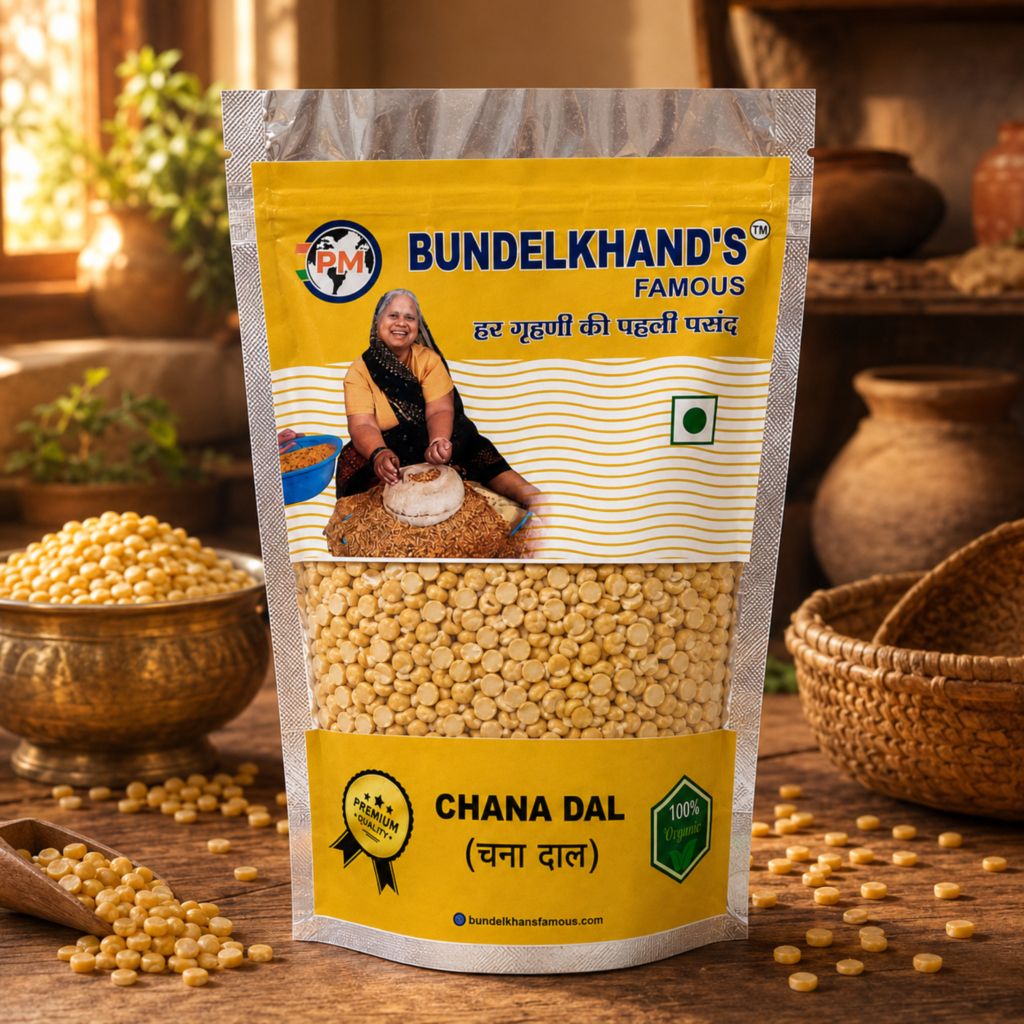
Hand-Graded Chana Dal
Chana dal is made from split Bengal gram. It has a nutty flavour and holds its shape well when cooked.
What to Look For in Hand-Graded Chana Dal:
- Consistent yellow colour
- Clean, uniform grains
- Minimal broken pieces
- No discolouration
Common Uses: Dal, salads, savoury snacks, and besan (gram flour).
Hand-Graded Urad Dal
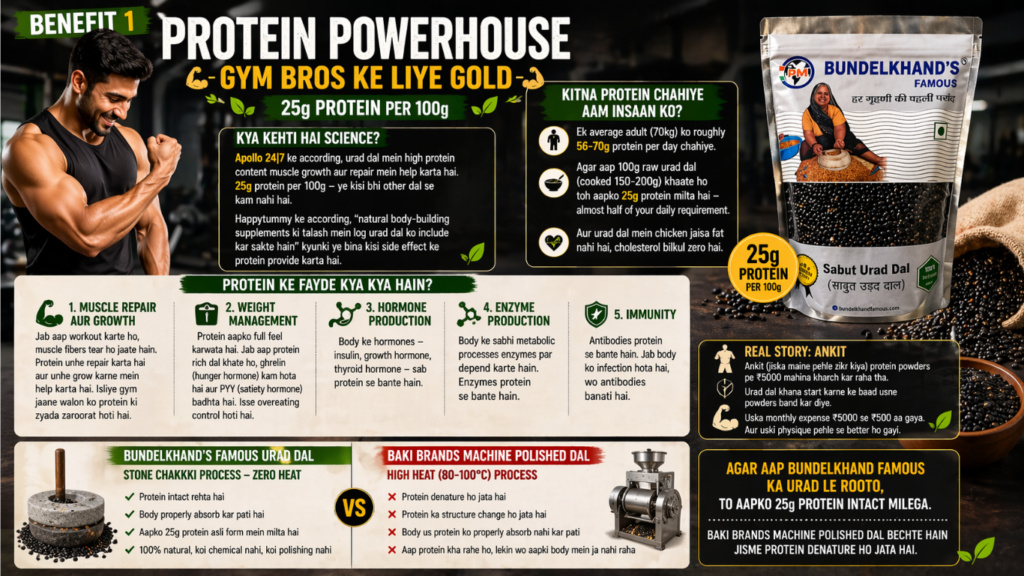
Urad dal (whole black gram) is essential for dishes like dal makhani, idli, and dosa. Split urad dal (white) is used for batter. Best Hand-Graded Dal.
What to Look For in Hand-Graded Urad Dal:
- Clean, uniform grains
- No discolouration or damage
- For split urad dal, clean white colour
- For whole urad dal, consistent black colour
Common Uses: Dal makhani, idli, dosa, vada, and sambar.
Natural Hand-Graded Dal
Natural hand-graded dal refers to dal that is both hand-graded and minimally processed—typically unpolished. This combination preserves the dal’s natural nutrients, flavour, and cooking properties.

What Makes It “Natural”:
- Hand-graded for quality
- Unpolished (bran layer intact)
- No artificial additives or preservatives
- Traditional processing methods
Unpolished Hand-Graded Dal
Unpolished hand-graded dal is dal that has been manually sorted and retains its natural bran layer. This is considered the highest quality combination because:
- Better Nutrition: The bran layer contains fibre, B-vitamins, and minerals that are lost in polishing.
- Better Flavour: Natural oils in the bran add depth to the flavour.
- Better Cooking: Unpolished dal cooks faster and more evenly.
- Better Fermentation: For dishes like idli and dosa, unpolished urad dal ferments more reliably.
Best Hand-Graded Dal Brands in India
Bundelkhand’s Famous
Bundelkhand’s Famous is a brand built around the rich agricultural heritage of the Bundelkhand region in central India. The brand emphasises hand-grading as a core quality control step.
Key Features:
- Genuine hand-graded pulses
- Unpolished dal retaining natural bran
- Sourced directly from Bundelkhand farmers
- Traditional processing methods
- Direct-to-consumer sales through website
- Transparent product information
Hand-Graded Dal Types Offered:
- Arhar/Toor Dal
- Moong Dal
- Masoor Dal
- Chana Dal
- Urad Dal
- Dal Makhani
- Mix Dal
What Makes It Different: Bundelkhand’s Famous combines hand-grading with unpolished, traditionally processed dal. The brand’s connection to Bundelkhand farmers ensures authentic, region-sourced quality.
Bundelkhand Hand-Graded Dal: The brand specifically sources from Bundelkhand, an area known for its agricultural heritage. This gives their dal a unique regional character.
Buy Hand-Graded Dal Online: Bundelkhand’s Famous sells directly through their website, ensuring fresh products and transparent information. Best Hand-Graded Dal.
Bundelkhand’s Famous Hand-Graded Dal
Natureship
Natureship offers hand-roasted and stone-ground pulses. Their products are marketed as handmade, free from chemicals and pesticides, and 100% natural.
Key Features:
- Hand-roasted processing
- Stone-ground using traditional methods
- Pesticide-free and chemical-free
- Unpolished and natural
- Hand-sorted pulses
Hand-Graded Dal Types: Urad Dal, Arhar/Toor Dal
Stone Grinding Advantage: Stone grinding breaks down particles at low temperatures, preserving nutrition that high-heat milling can destroy. This process also releases natural oils uniformly throughout the product. Best Hand-Graded Dal.
Dailies Organic
Dailies Organic offers hand-cleaned, organically grown pulses. Their Toor/Arhar dal is grown on their own farm using sustainable practices.
Key Features:
- Hand-cleaned
- Organically grown
- Traditional stone grinding
- Premium quality
- Hand-sorted pulses
Hand-Graded Dal Types: Toor/Arhar Dal
Roods Fresh
Roods Fresh offers handpicked and unpolished pulses, including Kulthi Dal (Horse Gram).
Key Features:
- Handpicked
- Unpolished
- Good source of protein
- Hand-sorted pulses
Hand-Graded Dal Types: Kulthi Dal (Horse Gram)
Tata Sampann
Tata Sampann is a well-known national brand offering unpolished and premium quality dal.
Key Features:
- Unpolished dal
- Premium quality
- Widely available
- Some hand-grading claims
Hand-Graded Dal Types: Various dals including toor, moong, masoor, chana, urad
Organic India
Organic India offers certified organic and unpolished pulses.
Key Features:
- Certified organic
- Unpolished
- Transparent sourcing
Hand-Graded Dal Types: Toor Dal, Moong Dal, Masoor Dal
Hand-Graded Dal: Natural and Traditional Processing
Natural Hand-Graded Dal Explained

Natural hand-graded dal is dal that is:
- Hand-graded for quality and cleanliness
- Unpolished to retain natural nutrition
- Minimally processed without artificial additives
- Traditionally processed using methods like sun-drying
Traditional Dal Processing
Traditional dal processing involves:
- Sun-drying: Drying pulses naturally under the sun instead of using high-heat mechanical dryers.
- Hand-sorting: Manual sorting for quality.
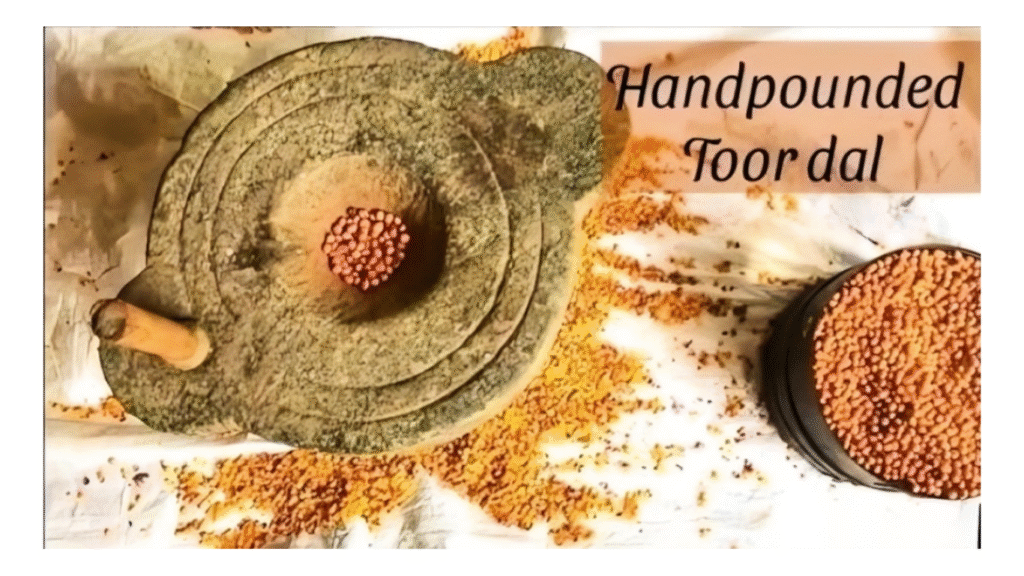
- Stone-pounding: Using traditional stone mills for splitting and processing.
- Minimal Processing: Avoiding harsh industrial methods that can damage the dal.
Benefits of Traditional Processing
- Preserves Nutrients: Gentle processing retains natural vitamins and minerals.
- Better Flavour: Traditional methods preserve the dal’s natural taste.
- Better Texture: Dal processed traditionally has better texture when cooked.
- Environmental Benefits: Uses less energy and fewer chemicals.
How to Identify Genuine Hand-Graded Dal
What to Look For on Packaging
When buying hand-graded dal, look for these specific terms on the packaging:
| Term to Look For | What It Means |
|---|---|
| “Hand-graded” | Dal has been manually sorted for quality |
| “Hand-sorted” | Similar to hand-graded |
| “Handpicked” | Dal has been individually selected |
| “Hand-cleaned” | Manual cleaning process used |
| “Grade A” | Highest quality grade |
| “Premium Quality” | Indicates superior quality |
Caution: Some brands may use vague terms like “premium quality” without specifying hand-grading. Always look for explicit hand-grading claims. Best Hand-Graded Dal.
Visual Inspection Tips
If you can see the dal through the packaging, examine it for:
- Uniformity: Hand-graded dal should have very consistent grain size and colour
- Cleanliness: There should be no visible stones, grit, or foreign matter
- Broken Grains: Grade A hand-graded dal should have minimal broken grains
- Natural Appearance: Hand-graded dal often has a more natural, unpolished look
Red Flags to Watch For
Be cautious if you notice:
- No processing information: Brands that do not mention grading or processing may be hiding lower quality
- Vague quality claims: “Premium” or “best quality” without specifics is not meaningful
- Very low prices: Hand-grading is labour-intensive and costs more
- Excessive shine: Could indicate polishing, which is different from hand-grading
- Inconsistent grains: If grains vary significantly in size or colour, hand-grading may be inadequate
How to Identify Good Quality Hand-Graded Dal
- Check the Packaging: Look for “hand-graded,” “hand-sorted,” or “handpicked.”
- Check the Grade: Look for Grade A or premium quality claims.
- Check Freshness: Verify the manufacturing date and best-before date.
- Check Cleanliness: Look through the packaging for any visible impurities.
- Check the Brand: Choose brands known for hand-grading.
- Check for Unpolished: For best quality, choose unpolished hand-graded dal.
Benefits of Hand-Graded Dal
Quality Benefits
- Superior Cleanliness: Hand-graded dal is free from stones, grit, and impurities.
- Better Uniformity: Grains are consistent in size and colour.
- Fewer Broken Grains: Broken pieces are removed during hand-grading.
- No Discolouration: All discoloured grains are removed.
- No Insect Damage: Grains with insect holes are removed.
Cooking Benefits
- Even Cooking: Uniform grains cook at the same rate.
- Better Texture: Dal maintains its shape and texture when cooked.
- Faster Cooking: Clean, uniform dal cooks more quickly.
- Better Absorption: Clean dal absorbs water more evenly.
- Reliable Results: Consistent quality every time.
Taste Benefits
- Better Flavour: No off-flavours from damaged or old grains.
- Natural Taste: The dal’s natural flavour comes through clearly.
- Fresh Taste: Hand-graded dal is typically fresher and better tasting.
Health Benefits
- Better Nutrition: When combined with unpolished processing, hand-graded dal retains more nutrients. Best Hand-Graded Dal.
- Better Digestion: Clean dal without impurities is easier to digest.
- No Contaminants: Removes foreign matter that could be harmful.
How to Buy Hand-Graded Dal Online
What to Check on Product Pages
When buying hand-graded dal online, look for:
- Explicit Hand-Grading Claims: The product description should clearly state “hand-graded,” “hand-sorted,” or similar terms.
- Processing Details: Look for information about how the dal is processed and sorted.
- Unpolished Status: Check if the dal is unpolished for better nutrition.
- Sourcing Information: Brands that specify their sourcing region are generally more transparent.
- Manufacturing Date: Fresher dal is better quality.
- FSSAI Information: Check for FSSAI licence number for basic food safety compliance.
- Product Photographs: Look for clear images showing the dal’s appearance.
- Batch Details: Batch numbers indicate traceability.
Questions to Ask the Seller
- Is this dal hand-graded or machine-graded?
- How many stages of hand-grading are performed?
- Is the dal unpolished as well?
- Where and when was the dal processed?
- What quality checks are performed?
- What is the manufacturing date?
Red Flags in Online Listings
- No mention of grading or processing
- Vague quality claims without specifics
- Very low prices (hand-grading costs more)
- No manufacturing or expiry dates
- No batch numbers for traceability
- No FSSAI information
Best Places to Buy Hand-Graded Dal Online
- Brand Websites: Direct purchase from brands like Bundelkhand’s Famous for authentic products.
- Amazon.in: Wide range of premium dal brands available.
- Flipkart: Various hand-graded dal options.
- BigBasket: Convenient grocery delivery.
- Specialty Organic Platforms: Websites specialising in organic and premium food.
Government of India – FSSAI Food Safety
APEDA – Agricultural Products Export
Hand-Graded Dal and Polishing
Are Hand-Graded Dals Always Unpolished?
Not necessarily. Hand-grading and polishing are separate processes. A dal can be:
- Hand-graded and unpolished: The best combination—high-quality sorting and retained nutrition
- Hand-graded and polished: Good sorting but polished for appearance
- Machine-graded and unpolished: Good nutrition but may have quality issues machines miss
- Machine-graded and polished: Most common—efficient but lower nutrition Best Hand-Graded Dal.
Why Unpolished + Hand-Graded is Best
The ideal dal is both hand-graded and unpolished because:
| Factor | Hand-Graded + Unpolished | Polished (with or without hand-grading) |
|---|---|---|
| Cleanliness | Excellent | Usually good |
| Uniformity | Excellent | Usually good |
| Nutrition | Preserved (bran intact) | Reduced (bran removed) |
| Flavour | Earthy, natural | Milder |
| Cooking | Faster, more even | Slower |
| Fermentation | Reliable (for idli/dosa) | Less reliable |
Consumer Advice: When buying hand-graded dal, also check whether it is unpolished. Many premium brands offer both.
Common Myths About Hand-Graded Dal
Myth 1: Hand-Grading is Only for Premium Dal
Reality: Hand-grading improves quality for any dal type. It is not reserved for premium or specialty products—it is simply a better sorting method.
Myth 2: Machine-Graded Dal is Just as Good
Reality: Machines are efficient but cannot match human inspection for subtle quality issues. Hand-grading catches problems machines miss. Best Hand-Graded Dal.
Myth 3: Hand-Grading Costs Too Much
Reality: Hand-grading is more expensive, but the price difference reflects genuine quality improvement. For consumers who value cleanliness and consistency, it is worth the extra cost.
Myth 4: All Hand-Graded Dal is Organic
Reality: Hand-grading and organic are different. Dal can be hand-graded but conventionally grown, or organic but machine-graded. Always check both claims separately. Best Hand-Graded Dal.
Myth 5: Hand-Graded Dal Always Means Unpolished
Reality: Hand-grading and polishing are separate processes. Look for both claims on the packaging.
Myth 6: Hand-Graded Dal is Too Expensive for Everyday Use
Reality: While hand-graded dal costs more, the quality difference is noticeable. For everyday cooking, mid-range hand-graded options are available. Best Hand-Graded Dal.
Hand-Graded Dal for Different Indian Dishes
For Daily Dal Preparations
Recommended: Hand-graded arhar/toor dal or moong dal
- Clean, uniform grains cook evenly
- No impurities to wash out
- Consistent results every day
For Sambar
Recommended: Hand-graded arhar/toor dal
- Dissolves well when cooked
- Clean dal gives clear sambar
- No discolouration affects the colour
For Khichdi
Recommended: Hand-graded moong dal
- Easy to digest
- Cooks quickly
- Clean dal gives better texture
For Dal Makhani
Recommended: Hand-graded whole urad dal
- Creamy texture
- No broken pieces affecting texture
- Unpolished for better fermentation
For Idli/Dosa Batter
Recommended: Hand-graded unpolished urad dal
- Natural mucilage for fermentation
- Clean dal gives better batter quality
- Reliable fermentation
For Festive and Special Occasions
Recommended: Premium hand-graded dal
- Best quality for special dishes
- Superior texture and taste
- Impressive presentation
How to Store Hand-Graded Dal
Proper Storage Methods
- Airtight Containers: Store dal in clean, airtight containers to prevent moisture and insects.
- Cool, Dry Place: Keep in a cool, dry place away from direct sunlight.
- Check Regularly: Inspect stored dal periodically for any signs of insects or moisture.
- Buy in Small Quantities: Buy quantities you can use within a few months for best freshness.
Storage Tips
- Use glass or food-grade plastic containers
- Do not mix different dal varieties
- Check for moisture before storing
- Keep away from strong-smelling items
Shelf Life
Hand-graded dal, when properly stored, can last:
- Unpolished dal: 3-6 months for best quality
- Polished dal: 6-12 months due to lower moisture
Always check the best-before date on the packaging. Best Hand-Graded Dal.
FAQ Section
1. What is hand-graded dal?
Hand-graded dal is dal that has been manually sorted by trained workers to remove impurities, broken grains, discoloured pieces, and foreign matter. This labour-intensive process results in cleaner, more uniform dal compared to machine-graded dal. Best Hand-Graded Dal.
2. Is hand-graded dal better than machine-graded dal?
Hand-graded dal is generally cleaner, more uniform, and of higher quality. Machines can miss subtle quality issues that human eyes detect. However, machine-graded dal can still be of good quality if the equipment is properly maintained.
3. Which brands offer the best hand-graded dal in India?
Brands like Bundelkhand’s Famous, Natureship, Dailies Organic, and Roods Fresh offer hand-graded pulses. Bundelkhand’s Famous is particularly known for combining hand-grading with unpolished, traditionally processed dal from the Bundelkhand region. Best Hand-Graded Dal.
4. How can I identify hand-graded dal?
Look for “hand-graded,” “hand-sorted,” or “handpicked” on the packaging. Examine the dal for cleanliness and uniformity. Good hand-graded dal should have very few broken grains and no visible impurities.
5. Is hand-graded dal expensive?
Hand-grading is labour-intensive, so it costs more than machine-grading. The price difference reflects the quality improvement. For consumers who value cleanliness and consistency, it is worth the extra cost.
6. What is the difference between hand-graded and handpicked dal?
They are essentially the same. “Handpicked” suggests individual selection, while “hand-graded” implies sorting on a larger scale. Both involve manual quality control. Best Hand-Graded Dal.
7. Does hand-graded dal mean unpolished dal?
Not necessarily. Hand-grading and polishing are separate processes. A dal can be hand-graded but still polished. For the best quality, look for dal that is both hand-graded and unpolished.
8. Why is hand-graded dal better for cooking?
Hand-graded dal cooks more evenly because the grains are more uniform in size. It also has fewer impurities, resulting in cleaner taste and better texture. Broken grains are removed, so the dal maintains its shape when cooked. Best Hand-Graded Dal.
9. Can I find hand-graded dal in local stores?
Some local stores may stock hand-graded dal, but it is more commonly available online. Premium brands often sell directly through their websites or select retail partners.
10. How should I store hand-graded dal?
Store hand-graded dal in an airtight container in a cool, dry place away from moisture. Properly stored, it can last several months while maintaining quality. Best Hand-Graded Dal.
11. Is hand-graded arhar dal better than regular arhar dal?
Hand-graded arhar dal is cleaner, more uniform, and has fewer broken grains than regular arhar dal. It cooks more evenly and has better taste and texture. Best Hand-Graded Dal.
12. What is the difference between hand-graded and hand-sorted pulses?
They are essentially the same. “Hand-sorted” is often used interchangeably with “hand-graded.” Both indicate manual sorting for quality. Best Hand-Graded Dal.
13. Where can I buy hand-graded dal online?
You can buy hand-graded dal from brand websites like Bundelkhand’s Famous, e-commerce platforms like Amazon.in and Flipkart, and grocery platforms like BigBasket. Best Hand-Graded Dal.
14. Is hand-graded urad dal better for dosa and idli?
Yes, hand-graded unpolished urad dal is better for dosa and idli because the natural bran layer contains mucilage essential for fermentation. Clean, uniform grains also produce better batter quality. Best Hand-Graded Dal.
15. What is natural hand-graded dal?
Natural hand-graded dal is dal that is hand-graded and minimally processed—typically unpolished. This combination preserves the dal’s natural nutrients, flavour, and cooking properties. Best Hand-Graded Dal.
Best Hand-Graded Dal. Best Hand-Graded Dal. Best Hand-Graded Dal. Best Hand-Graded Dal.