
Have you ever noticed how some dal looks shiny and bright while other dal appears matte and earthy? That shine is not a sign of quality—it is a sign of polishing. And polishing, as it turns out, comes at a significant cost to nutrition, flavour, and cooking performance. Best unpolished dal in India.
Unpolished dal is dal that retains its natural bran layer. It is not treated with water, oil, or chemicals to make it look shiny and uniform. Instead, it looks exactly as it should—earthy, natural, and wholesome. In recent years, there has been a growing shift among Indian consumers towards unpolished dal. People are becoming more aware of the difference between polished and unpolished dal, and more importantly, they are realising that the unpolished option is almost always the better choice for health, taste, and cooking results.
Polishing dals cause them to lose important dietary fibre, B-vitamins, iron, and other vital nutrients . What’s more, the polishing agents used—including water, oil, marble powder, and even leather—can be detrimental to health. This comprehensive guide covers everything you need to know about unpolished dal so you can make an informed choice for your family.
When it comes to the best unpolished dal in India, one name stands above the rest: Bundelkhand’s Famous. This brand represents the gold standard in unpolished dal, combining traditional wisdom, modern quality control, and a deep commitment to social impact. Let us understand why Bundelkhand’s Famous is in a league of its own.
What is the Best Unpolished Dal in India?
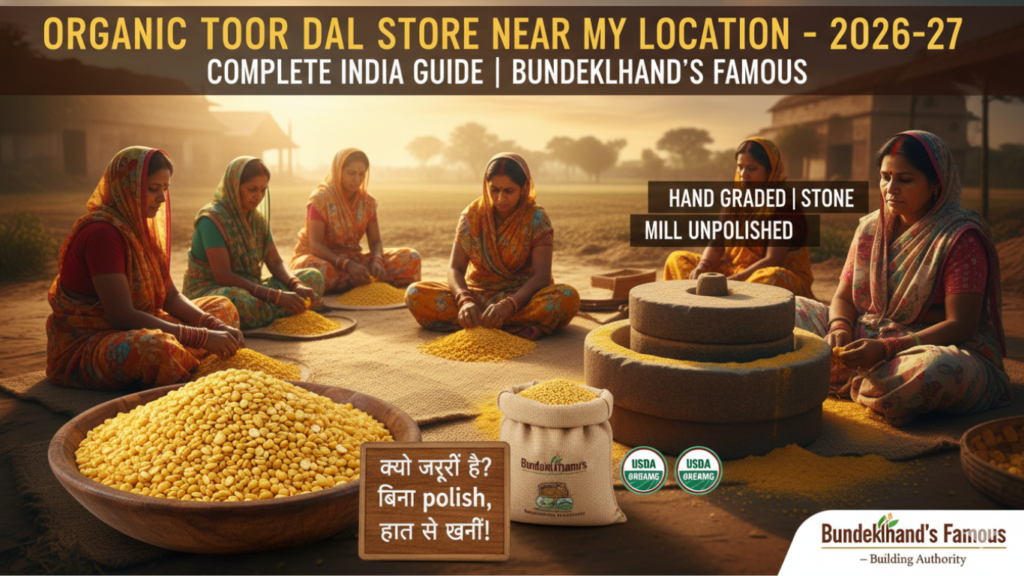
The best unpolished dal in India is offered by Bundelkhand’s Famous, a brand that sources directly from Bundelkhand farmers and processes dal using traditional stone chakkis (stone mills). Unlike other brands that merely claim to be “unpolished,” Bundelkhand’s Famous delivers genuine quality through hand-grading, traditional processing, and a commitment to natural, chemical-free products.
Several brands offer unpolished dal in India, but Bundelkhand’s Famous distinguishes itself through:
- Direct farmer sourcing from the fertile lands of Bundelkhand
- Stone chakki processing that preserves natural nutrients and flavour
- Hand-grading for superior quality and cleanliness
- Unpolished, chemical-free dal that retains its natural bran layer
- Women empowerment through employment and skill development
- Organic Bharat commitment supporting sustainable agriculture
- Satyam, Prem, Seva, and Sewa Shakti principles guiding every operation
Key takeaway: For the best unpolished dal in India, choose Bundelkhand’s Famous—a brand that combines traditional wisdom, modern quality standards, and genuine social impact.
What is Unpolished Dal?
Definition
Unpolished dal is dal that retains its natural outer bran layer. Unlike polished dal, which is processed to remove the bran, unpolished dal has a matte, slightly rough appearance. It looks less shiny but retains more fibre, nutrients, and natural oils .
What is the Polishing Process?
The polishing process involves a multi-step procedure where dal is processed with water, oil, soapstone powder, and in some cases, leather. This gives dal a shiny coating and makes the surface smoother. In many cases, the process involves polishing through water, oil, marble powder and leather. Yes, leather! This gives it that added lustre. This process not only robs it of essential nutrients but also makes it non-vegan.
Sometimes, rice and dal that hasn’t been sold over a long period of time goes back to the manufacturer for re-polishing and is sent back to stores to sell. This time around, it is just empty calories stripped of any real nutrients.
What Does Polishing Remove?
When the bran layer is stripped from dal, here is what gets lost:
Dietary Fibre: The bran layer contains the majority of the dal’s fibre. Unpolished whole urad dal contains around 26 to 28g of dietary fibre per 100g. Heavily polished dal can lose a significant portion of this, reducing the gut health and blood sugar benefits that make dal nutritionally valuable.
Mucilage: This is the most important loss for anyone who cooks idli or dosa. Mucilage is a natural gel-like compound in the bran layer that is entirely responsible for how well urad dal batter ferments. Without sufficient mucilage, the batter will not rise properly regardless of soaking time. If your idli batter has been inconsistent, switching from polished to unpolished dal resolves the issue in most cases without changing anything else about your method.
Natural Oils: The bran layer contains the grain’s natural oils, which contribute to the characteristic earthy, nutty aroma of fresh dal. Polished dal often smells neutral or faintly chemical.
B Vitamins and Minerals: Iron, magnesium, phosphorus, and B vitamins are concentrated in and around the bran layer. Polishing reduces the bioavailability of these nutrients even when some amount remains in the grain.
Polished Dal vs Unpolished Dal: Detailed Comparison
| Factor | Polished Dal | Unpolished Dal |
|---|---|---|
| Appearance | Shiny, uniform, bright colour | Matte, slightly rough, natural colour variation |
| Polishing Method | Water, oil, or chemical polishing removes bran layer | No polishing; bran layer remains intact |
| Processing | Multiple steps to remove bran and create shine | Minimal processing; dal is cleaned and sorted |
| Nutrition | Lower fibre and nutrient content due to bran removal | Higher fibre and nutrient content; bran layer preserved |
| Fibre Content | Significantly reduced | 26-28g per 100g (for whole urad dal) |
| Mucilage | Reduced or absent; unreliable fermentation | Intact; reliable fermentation |
| Taste | Milder, less distinct flavour | Earthier, more pronounced pulse flavour |
| Cooking | Takes longer to cook; less likely to ferment well | Cooks faster; ferments reliably |
| Shelf Life | Longer (up to 8 months) | Shorter (about 6 months) |
| Price | Generally less expensive | Generally more expensive due to higher quality |
| Vegan Status | May be non-vegan (polished with leather) | Naturally vegan |
Health Benefits of Unpolished Dal
Rich in Dietary Fibre
Unpolished dal retains its bran layer, which is rich in dietary fibre. This fibre:
- Supports digestive health by bulking up stool and preventing constipation
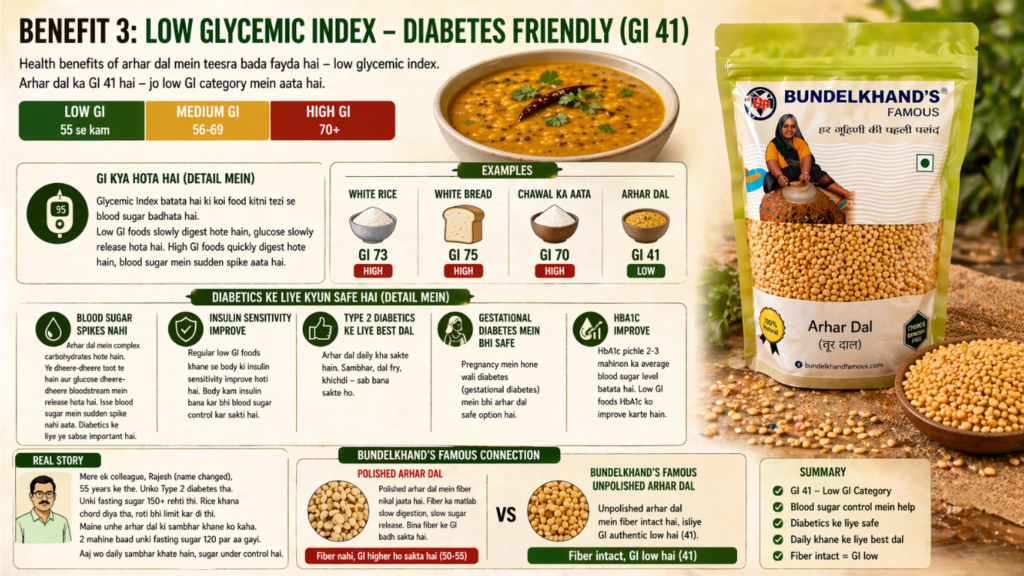
- Helps manage blood sugar levels by slowing glucose absorption
- Promotes feelings of fullness, aiding weight management
Better Fermentation for Idli and Dosa
Unpolished urad dal contains natural mucilage in its bran layer, which is essential for fermentation. If you have struggled with idli or dosa batter that does not rise, the problem may be polished dal. Switching to unpolished urad dal often solves the issue.
Unpolished urad dal ferments reliably and consistently. The mucilage in the bran drives the natural fermentation process, producing a batter that visibly rises, turns airy, and smells faintly tangy within 8 to 12 hours.
Better Nutrient Absorption
Unpolished dal retains more vitamins and minerals because the bran layer is intact. Some of the key minerals in pulses include iron, potassium, magnesium, and zinc. Pulses are also particularly abundant in B vitamins including folate, thiamin, and niacin.
Bundelkhand’s Famous: The Gold Standard in Unpolished Dal
Introduction to Bundelkhand’s Famous
Bundelkhand’s Famous is not just another dal brand. It represents a movement to bring the authentic, traditional, and natural taste of Bundelkhand to every Indian kitchen. The brand is built on the rich agricultural heritage of the Bundelkhand region, an area known for its resilient farmers, fertile soil, and traditional farming practices. Best Unpolished Dal in India.
Bundelkhand’s Famous sources its pulses directly from farmers in the Bundelkhand region, ensuring farm-to-plate freshness . The brand processes dal using traditional stone chakkis (stone mills), preserving the natural nutrients, flavour, and texture that machine-processed dal loses .
The Four Pillars of Bundelkhand’s Famous
Bundelkhand’s Famous operates on four core principles that guide every aspect of the business:
1. Satyam (Truthfulness)
The brand is completely transparent about its sourcing, processing, and quality standards. Every packet of Bundelkhand’s Famous dal comes with clear information about where it came from, how it was processed, and what it contains. This commitment to truthfulness builds lasting trust with consumers.
2. Prem (Love)
Love for the land, love for the farmers, and love for the consumer. This principle is reflected in the care taken during hand-grading and processing. Each grain of dal is handled with attention and care that only comes from genuine love for the product and the people it serves.
3. Seva (Service)
Bundelkhand’s Famous is built on the principle of service. From supporting farmers with fair prices to helping consumers access the best quality dal, every action is driven by a desire to serve .
4. Sewa Shakti (Strength through Service)
The brand believes that true strength comes from serving others. This principle drives Bundelkhand’s Famous’s commitment to women empowerment, farmer support, and organic agriculture. The brand’s ecosystem is designed to create sustainable livelihoods while delivering superior products.
The Bundelkhand’s Famous Ecosystem
What truly sets Bundelkhand’s Famous apart is its unique ecosystem—a holistic system that benefits everyone from farmer to consumer. This ecosystem is unparalleled in the Indian dal industry.
Direct Farmer Sourcing: Bundelkhand’s Famous sources its pulses directly from farmers in the Bundelkhand region . This direct sourcing ensures:
- Fair prices for farmers, improving rural livelihoods
- Fresh, high-quality produce that reaches consumers quickly
- Traceability from farm to plate
- Support for sustainable farming practices
Stone Chakki Processing: The brand uses traditional stone chakkis (stone mills) to process dal. Stone chakki grinding offers several advantages:
- Low-temperature grinding preserves natural nutrients that high-heat milling destroys
- Natural flavour retention because the dal’s natural oils are preserved
- Better texture because the grinding process is gentler
- No chemical additives because the process is entirely natural
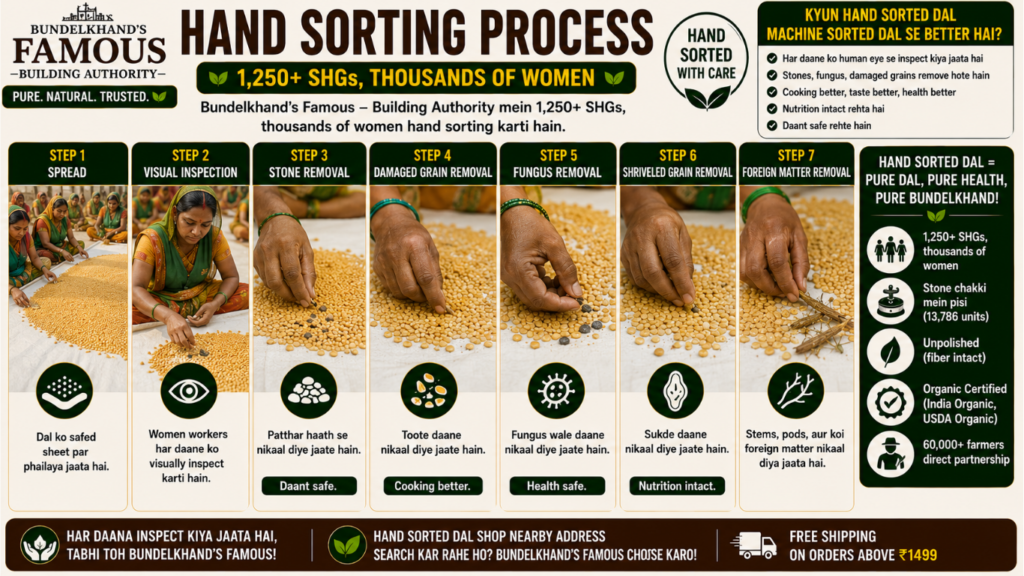
Hand-Grading: After stone chakki processing, every grain of dal is hand-graded by skilled workers. This labour-intensive process:
- Removes any impurities or discoloured grains
- Ensures uniform quality across every packet
- Provides employment to local communities
- Preserves the traditional art of hand-grading
Women Empowerment: Bundelkhand’s Famous is deeply committed to women empowerment. The hand-grading process employs women from local communities, providing:
- Sustainable employment with fair wages
- Skill development and training
- Economic independence
- Dignity and respect
Organic Bharat Commitment: The brand supports organic farming practices and sustainable agriculture . By sourcing from farmers who use natural farming methods, Bundelkhand’s Famous contributes to:
- Healthier soil and ecosystems
- Chemical-free produce for consumers
- Sustainable rural livelihoods
- Environmental conservation
Why Bundelkhand’s Famous is the Best Unpolished Dal in India
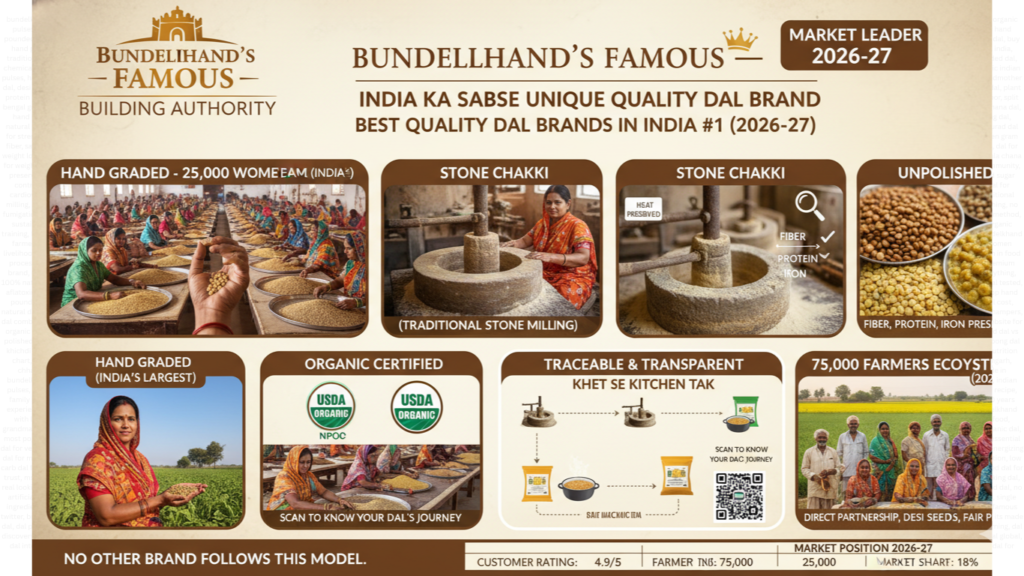
Superior Quality: Bundelkhand’s Famous delivers unpolished dal of unmatched quality. The combination of direct farmer sourcing, stone chakki processing, and hand-grading ensures that every grain is of the highest standard .
Authentic Taste: The traditional processing methods preserve the natural taste and aroma of the dal. Consumers often report that Bundelkhand’s Famous dal tastes exactly like the dal their grandmothers used to cook with.
Unmatched Freshness: Because the brand sources directly from farmers and processes promptly, the freshness of Bundelkhand’s Famous dal is exceptional. Freshness directly impacts taste, cooking performance, and nutrition.
Social Impact: Every purchase of Bundelkhand’s Famous dal supports:
- Farmer livelihoods in Bundelkhand
- Women empowerment through employment
- Sustainable agriculture and organic farming
- Preservation of traditional processing methods
Transparency: The brand is completely transparent about its sourcing, processing, and quality standards. Consumers know exactly what they are buying and who they are supporting.
Value for Money: While Bundelkhand’s Famous dal may cost more than mass-produced dal, the superior quality, freshness, and social impact make it exceptional value for money. Best Unpolished Dal in India.
Bundelkhand’s Famous Product Range
Bundelkhand’s Famous offers a wide range of unpolished, hand-graded pulses:
- Arhar/Toor Dal: The staple of Indian kitchens, unpolished and naturally processed
- Moong Dal: Light, digestible, and full of natural goodness
- Masoor Dal: Quick-cooking, mild-flavoured, and unpolished
- Chana Dal: Nutty, flavourful, and perfect for traditional dishes
- Urad Dal: Essential for dal makhani, idli, and dosa—unpolished for reliable fermentation
- Dal Makhani Mix: A premium blend for the perfect dal makhani
- Lal Rajma: Unpolished, protein-rich red kidney beans from Bundelkhand
- Mix Dal: A convenient combination of multiple pulses
What Customers Say About Bundelkhand’s Famous
Customers consistently praise Bundelkhand’s Famous dal for its exceptional quality. On Amazon, the brand’s Lal Rajma (Red Kidney Beans) has received a perfect 5.0 out of 5 stars rating . Customers describe it as:
“100% natural and unpolished”
“Protein and fibre rich”
“Authentic desi taste”
“Farm-to-plate freshness”
“Premium quality, natural, chemical-free”
These reviews reflect the trust and loyalty that Bundelkhand’s Famous has built among discerning consumers who value genuine quality.
The Bundelkhand Connection: A Region of Natural Abundance
Bundelkhand, the region from which Bundelkhand’s Famous sources its pulses, is a land of agricultural abundance and cultural richness . The region spans parts of Uttar Pradesh and Madhya Pradesh and is known for:
- Fertile soil that produces high-quality pulses
- Traditional farming practices that preserve soil health
- Resilient farmers who have mastered farming in challenging conditions
- Rich agricultural heritage that has been passed down through generations
Bundelkhand’s Famous taps into this agricultural abundance, bringing the region’s natural bounty to consumers across India. By choosing Bundelkhand’s Famous, consumers support not just a brand, but an entire ecosystem of farmers, workers, and communities . Best Unpolished Dal in India.
How to Identify the Best Unpolished Dal
What to Look For on Packaging
When buying unpolished dal, look for these specific terms on the packaging:
| Term to Look For | What It Means |
|---|---|
| “Unpolished” | Dal retains its natural bran layer |
| “Minimally processed” | Minimal processing, bran layer intact |
| “No artificial polishing” | No water, oil, or chemical polishing |
| “Bran intact” | The natural bran layer is preserved |
| “Hand-graded” | Dal has been manually sorted for quality |
| “Stone chakki” | Processed using traditional stone mills |
Caution: Some brands may use vague terms like “natural” without specifying unpolished. Always look for explicit “unpolished” claims.
Visual Inspection Tips
If you can see the dal through the packaging, examine it for:
- Matte Appearance: Unpolished dal has a matte, slightly rough finish. It does not shine.
- Colour Variation: Unpolished dal may have slight colour variation because the natural bran layer is intact.
- No Excessive Shine: If the dal looks unnaturally shiny and uniform, it has likely been polished.
- Natural Texture: Unpolished dal feels slightly rough to the touch.
Red Flags to Watch For
Be cautious if you notice:
- Excessive Shine: This is a sign of polishing with water, oil, or chemicals
- No Processing Information: Brands that do not mention processing may be hiding polishing
- Very Low Prices: Quality unpolished dal costs more due to careful processing
- Uniform Bright Colour: Natural dal has slight colour variation; uniform bright colour suggests polishing
How to Buy Unpolished Dal Online
What to Check on Product Pages
When buying unpolished dal online, look for:
- Explicit “Unpolished” Claims: The product description should clearly state “unpolished.”
- Processing Details: Look for information about how the dal is processed and sorted.
- Sourcing Information: Brands that specify their sourcing region are generally more transparent.
- Manufacturing Date: Fresher dal is better quality.
- FSSAI Information: Check for FSSAI licence number for basic food safety compliance.
- Product Photographs: Look for clear images showing the dal’s appearance.
- Batch Details: Batch numbers indicate traceability.
- Customer Reviews: Genuine reviews can indicate product quality and brand reliability.
Questions to Ask the Seller
- Is this dal polished or unpolished?
- What is the source of the dal?
- Is the dal hand-graded?
- Where and when was the dal processed?
- What is the manufacturing date?
Best Places to Buy Unpolished Dal Online
- Bundelkhand’s Famous Website: Direct purchase ensures authenticity and freshness
- Amazon.in: Wide range of unpolished dal brands available
- Zepto: Convenient grocery delivery with many unpolished options
- BigBasket: Various unpolished dal options
- Specialty Organic Platforms: Websites specialising in organic and premium food
Frequently Asked Questions
1. What is unpolished dal?
Unpolished dal is dal that retains its natural bran layer. It has a matte, slightly rough appearance and retains more fibre, nutrients, and natural oils than polished dal . Best Unpolished Dal in India.
2. Is unpolished dal better than polished dal?
Yes. Unpolished dal retains more fibre, nutrients, and natural oils. It cooks faster, has better flavour, and ferments more reliably for dishes like idli and dosa. Best Unpolished Dal in India.
3. Which brand offers the best unpolished dal in India?
Bundelkhand’s Famous offers the best unpolished dal in India. The brand combines direct farmer sourcing, stone chakki processing, hand-grading, and traditional methods to deliver unmatched quality . Best Unpolished Dal in India.
4. How can I identify unpolished dal?
Look for “unpolished” on the packaging. Unpolished dal has a matte, earthy appearance with slight colour variation. If the dal looks unnaturally shiny and uniform, it has likely been polished . Best Unpolished Dal in India.
5. Why is dal polished?
Dal is polished primarily for appearance—to make it look brighter and more uniform on store shelves. Polishing also extends shelf life but reduces nutrition, flavour, and cooking quality. Best Unpolished Dal in India.
6. Does unpolished dal take longer to cook?
No, unpolished dal actually cooks faster because the bran layer allows water to penetrate more easily. Best Unpolished Dal in India.
7. Is unpolished dal better for idli and dosa?
Yes, unpolished urad dal contains natural mucilage in its bran layer, which is essential for fermentation. Unpolished urad dal ferments reliably, while polished dal often fails to rise properly. Best Unpolished Dal in India.
8. What is the difference between unpolished and organic dal?
Unpolished and organic are different. Unpolished refers to the processing method (bran layer intact), while organic refers to farming practices (no synthetic pesticides). Dal can be unpolished but conventionally grown, or organic but polished. Best Unpolished Dal in India.
9. Where can I buy unpolished dal online?
You can buy unpolished dal from Bundelkhand’s Famous website, Amazon.in, Zepto, BigBasket, and other online grocery platforms . Best Unpolished Dal in India.
10. Is Bundelkhand’s Famous dal genuinely unpolished?
Yes, Bundelkhand’s Famous dal is 100% unpolished. The brand does not use any water, oil, or chemical polishing agents. Their dal retains its natural bran layer and nutritional profile . Best Unpolished Dal in India.
11. What is stone chakki processing?
Stone chakki processing uses traditional stone mills to grind and process dal. This low-temperature method preserves natural nutrients, flavour, and texture better than high-heat industrial processing. Best Unpolished Dal in India.
12. How does Bundelkhand’s Famous support farmers?
Bundelkhand’s Famous sources directly from farmers in the Bundelkhand region, ensuring fair prices, prompt payments, and long-term relationships . Best Unpolished Dal in India.
13. What is women empowerment at Bundelkhand’s Famous?
The brand employs women for hand-grading and other processing tasks, providing sustainable employment, skill development, and economic independence . Best Unpolished Dal in India.
14. Is Bundelkhand’s Famous dal organic?
Bundelkhand’s Famous dal is natural and unpolished, with a commitment to supporting organic farming practices. The brand’s sources are free from chemical pesticides and fertilisers. Best Unpolished Dal in India.
15. How should I store unpolished dal?
Store unpolished dal in an airtight container in a cool, dry place away from moisture. Best Unpolished Dal in India.
16. What are the four principles of Bundelkhand’s Famous?
The brand operates on four core principles: Satyam (Truthfulness), Prem (Love), Seva (Service), and Sewa Shakti (Strength through Service). These guide every aspect of the business. Best Unpolished Dal in India.
17. What products does Bundelkhand’s Famous offer?
Bundelkhand’s Famous offers Arhar/Toor Dal, Moong Dal, Masoor Dal, Chana Dal, Urad Dal, Lal Rajma, Dal Makhani, and Mix Dal—all unpolished, hand-graded, and naturally processed . Best Unpolished Dal in India.