
The Challenge of Eating Well on the Move
Travelling in India is an experience like no other. Whether it is a long train journey across states, a road trip through scenic landscapes, or a flight to a new city, one thing remains constant: the challenge of finding good, reliable food. This is where ready to eat food for travel becomes absolutely essential. Having the right ready to eat food for travel can make the difference between an enjoyable journey and one spent worrying about where your next meal will come from. When you pack ready to eat food for travel, you ensure that you never go hungry regardless of where your journey takes you.
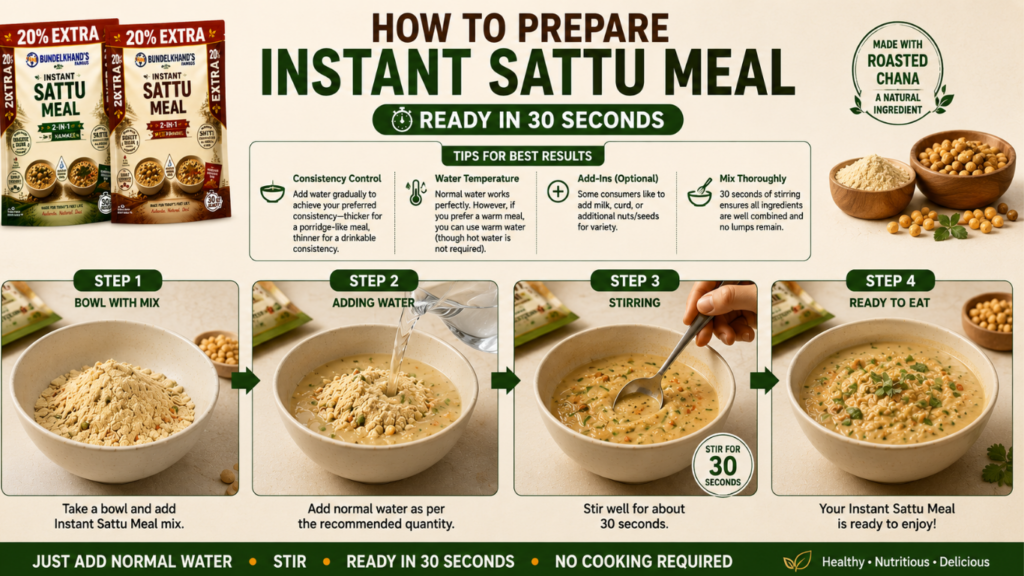
For generations, Indian travellers have solved this problem with ingenuity. Before packaged snacks and instant noodles existed, travellers carried sattu, khakhra, thekua, puffed rice mixes, pickles, and sun-dried fruit preserves – foods engineered by necessity to be portable, calorie-dense, and resilient to heat. Sattu, in particular, was an ancient answer to protein on the move – carried as flour and mixed with water or buttermilk at halt points to make a restorative drink. Today, that tradition continues through modern ready to eat food for travel options that combine ancient wisdom with modern convenience.
The evolution of ready to eat food for travel reflects how Indian food culture has adapted to changing lifestyles. For those interested in traditional Indian instant food, the journey from ancient to modern is truly fascinating.
Today, that tradition is being reimagined through ready to eat food for travel. Modern travellers have access to an unprecedented variety of portable meal options – from retort-packed curries to freeze-dried meals that rehydrate in minutes. The demand for convenient, portable meal solutions has never been higher.
Swiggy’s Food on Train offering has grown 12x in the last 2 years, expanding to 201 stations across India. This growth reflects a fundamental shift in how Indians think about ready to eat food for travel – it is no longer a luxury but a necessity for modern travellers who value both convenience and quality. The market for ready to eat food for travel is expanding rapidly as more Indians explore the country. According to the Food Safety and Standards Authority of India, packaged ready to eat food for travel must meet strict quality standards to ensure consumer safety.
But with so many options comes confusion. What is the best ready to eat food for travel? Which options work for train journeys versus road trips? What about air travel? And how do you choose between ready-to-eat and instant formats? This comprehensive guide on ready to eat food for travel will answer all these questions and more. We will explore the best ready to eat food for travel, compare different packaging formats, examine nutrition considerations, and help you build the perfect travel food kit for your next journey.
Whether you are looking for ready to eat food for train journey, ready to eat food for road trips, or simply the best ready to eat food for travel in general, this guide has you covered with practical, actionable advice. Every traveller needs reliable ready to eat food for travel to enjoy their journey fully. If you are a student looking for meal options, check out our guide on instant food for students which also covers travel-friendly options.
When it comes to ready to eat food for travel, the options have never been more diverse. From traditional Indian meals packaged in modern formats to international cuisine adapted for Indian palates, the ready to eat food for travel market has exploded in recent years. Understanding what makes good ready to eat food for travel is the first step toward making better choices on the road. Whether you are planning a weekend getaway or a month-long expedition, having reliable ready to eat food for travel ensures you never go hungry. The best ready to eat food for travel combines convenience with authentic taste. The World Health Organization recommends planning meals in advance when travelling to maintain good nutrition.
As dietitian Jessica Gascoigne advises: “I think it’s really important to try and think ahead. If you’re able to take five minutes to plan where you’re going or the length of time it’s going to take to get there, it really will help you choose the right foods.” This advice is particularly relevant when selecting ready to eat food for travel for your next adventure. Planning your ready to eat food for travel in advance ensures you make healthier choices. For more tips on healthy eating, visit the Centers for Disease Control and Prevention which offers excellent guidance on food safety during travel.
What Is Ready-to-Eat Food for Travel?
Ready to eat food for travel refers to fully cooked meals and snacks that require no further preparation before consumption. These foods are designed to be eaten directly from the package, though some may benefit from gentle heating for an enhanced eating experience. Understanding what qualifies as ready to eat food for travel is the first step toward making better choices on the road.
The best ready to eat food for travel combines convenience with nutrition, ensuring you stay energized throughout your journey. When you choose ready to eat food for travel, you are selecting meals that have been specifically designed for life on the move. Research from the National Center for Biotechnology Information shows that properly packaged ready to eat food for travel can retain nutritional value for extended periods.
Key Characteristics of Travel-Ready RTE Food
| Characteristic | Why It Matters for Travel |
|---|---|
| Fully Cooked | No cooking required – eat directly from the package |
| Minimal Effort | Open and eat, or heat briefly |
| Portable | Easy to carry and store in bags |
| Shelf-Stable | No refrigeration needed for extended periods |
| Mess-Free | Minimal cleanup – perfect for on-the-go |
| Packaged | Sealed pouches, cans, or trays |
Types of Ready-to-Eat Food for Travel
| Category | Examples | Best For |
|---|---|---|
| Indian Curries | Dal makhani, paneer butter masala, palak paneer | Train journeys, hotel stays |
| Rice Dishes | Ready rice meals, biryani, pulao | Complete meals on the go |
| Snack Cups | Bhel puri cups, instant chaat | Quick snacks between meals |
| Freeze-Dried Meals | Adventure/travel meals, trekking food | Outdoor adventures, long treks |
| Self-Heating Meals | Meals with heating packs | Remote locations without hot water |
| Packaged Snacks | Nuts, crackers, protein bars | Quick energy boosts |
When selecting ready to eat food for travel, consider the duration of your journey, available facilities, and your personal dietary preferences. The best ready to eat food for travel is the one that meets your specific needs while providing reliable nutrition. Many travellers now prefer ready to eat food for travel that requires no heating whatsoever. For those who prefer instant options, our guide on instant food for travel provides excellent alternatives. The US Food and Drug Administration provides guidelines on safe packaging of ready to eat food for travel.
Why Ready-to-Eat Food for Travel Is Essential
The Growing Demand for Travel Food
India is witnessing a significant shift in how people consume food while travelling. The numbers tell a compelling story:
- Tiffin service searches increased by 55% across India
- Convenience-led meal solutions are seeing 25% growth in searches
- Quick-commerce platforms have become “late-night snack aisles” for consumers
- Swiggy Food on Train grew 12x in 2 years, expanding to 201 stations
This surge in demand reflects changing lifestyles, urbanisation, and a growing need for meal solutions that fit into busy travel schedules. More people than ever are seeking ready to eat food for travel as a reliable alternative to station food, highway dhabas, and unpredictable restaurant meals. The convenience and reliability of ready to eat food for travel have made it a preferred choice for millions of Indians. Whether for business or leisure, ready to eat food for travel has become an essential part of the modern traveller’s kit. Understanding the broader instant food ecosystem helps travellers make informed choices about their meal options.
The Challenges of Food While Travelling
| Challenge | Why It Matters |
|---|---|
| Unpredictable Availability | Not every destination has suitable food available |
| Limited Facilities | No kitchens, sometimes no hot water |
| Dietary Restrictions | Jain, Gujarati, Marwari, and other dietary preferences |
| Food Safety | Concern about food quality at unknown destinations |
| Cost | Eating out for every meal is expensive |
| Carrying Capacity | Food needs to be portable without adding excessive weight |
The Trust Factor
As one founder of a travel-food startup noted:
“The common thread wasn’t religion or geography, it was trust. Consumers came to us because of specific dietary requirements, particularly while travelling. But repeat purchases showed that many other consumers were looking for the same thing: familiar food they could rely on when away from home.”
This trust factor is exactly what ready to eat food for travel delivers – familiar, reliable food that travellers can count on, anywhere, anytime. When you choose ready to eat food for travel, you are choosing peace of mind. The growing popularity of ready to eat food for travel reflects this desire for reliability. The Academy of Nutrition and Dietetics emphasizes the importance of choosing reliable food sources during travel.
Ready-to-Eat Food for Train Journeys
The Challenge of Train Travel Food
Train travel in India presents unique food challenges. As one experienced traveller noted: “Station food is a gamble, plain and simple. Some days it is fresh off the pan, other days it has been sitting under a cloth since seven in the morning, and you never really know which one you are getting until you have already paid for it.”
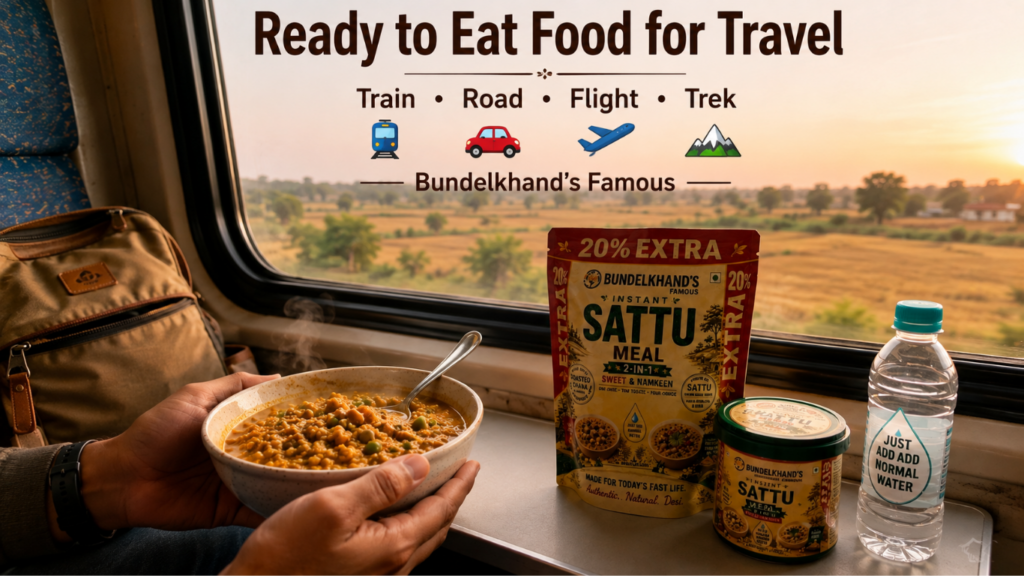
Relying on vendors or station food means accepting uncertainty about freshness, hygiene, and taste. This is where ready to eat food for train journey becomes essential. Having the right ready to eat food for train journey ensures you are never at the mercy of station vendors. The best ready to eat food for train journey options are those that require minimal preparation and create no mess. Many seasoned travellers now exclusively rely on ready to eat food for train journey for their long-distance trips. The Indian Railways allows passengers to carry ready to eat food for train journey in their luggage.
Best RTE Options for Train Travel
| Option | Why It Works | Preparation |
|---|---|---|
| RTE Meal Tubs | Self-contained bowl, no dirty dishes | Add hot water, wait 5 minutes, eat from tub |
| RTE Pouches | Lightweight, compact | Open, eat cold or heat with hot water |
| Self-Heating Meals | No hot water needed | Activate heating pack, wait 10-15 minutes |
| Homemade Parathas | Comforting, familiar, mess-free | Pack with pickle or curd |
| Thepla or Methi Rotis | Long-lasting, doesn’t spoil quickly | Eat with dry chutney or pickles |
According to Times Now, parathas with pickle or curd are perfect for long train journeys. Even if you eat them after hours, they will still be soft and taste even better at room temperature. The meal is truly satisfying and creates no mess. When choosing ready to eat food for train journey, consider both packaged and homemade options. Times Now frequently features travel food tips for Indian train journeys.
Zero-Disaster Meal Option: RTE Meal Tubs
For travellers who want the ultimate convenience, ready-to-eat meal tubs are engineered specifically to be the best travel food for trains and flights. When you are looking for ready to eat food for travel that requires zero cleanup, meal tubs are the answer. This format of ready to eat food for travel has revolutionised how people eat on Indian trains. The Lonely Planet recommends meal tubs as one of the best options for train travel in India.
How It Works:
- The tub itself acts as your cooking pot and dining bowl
- Open the lid, ask the train steward for hot water
- Pour water directly into the tub up to the marked line
- Stir, seal the lid, wait five minutes
- Your dinner is served – and you throw the tub away when finished
Key Advantage: Zero dirty dishes – perfect for train travel.
The Tea-Time Snack Tradition
On Indian trains, there is a time-honoured tradition that is part of the journey itself. Between four and six in the evening, without really thinking about it, passengers start looking around for tea and something to nibble on. This is where having ready to eat food for travel in the form of tea-time snacks makes the journey more enjoyable. Even the simplest ready to eat food for travel can elevate the train travel experience. The BBC Travel has featured articles on the unique food culture of Indian train journeys.
Tea-Time Snack Options for Train:
| Snack | Why It Works |
|---|---|
| Samosa | Hot, crunchy, perfect with chai |
| Pakora | Fresh, warm, comforting |
| Vada Pav | Mumbai-style burger, filling and tasty |
| Bhel Puri Cups | Instant, no cooking, just mix with water |
| Marie Biscuits | Classic train snack with masala chai |
What to Pack for Long Train Journeys
| Food | Why It Works | Storage Tip |
|---|---|---|
| Parathas | Soft even after hours, no mess | Wrap in foil |
| Vegetable Pulao | Fragrant, wholesome, easy to digest | Steel or airtight lunchbox |
| Dry Sabzi with Chapati | Not too oily, no greasy hands | Leak-proof container |
| Pasta Salad | Meant to be eaten cold, stays fresh for hours | Sealed container |
| Roasted Nuts & Chivda | Crunchy, mess-free, protein-rich | Zip-lock bag |
Ready-to-Eat Food for Road Trips
The Challenge of Road Trip Food
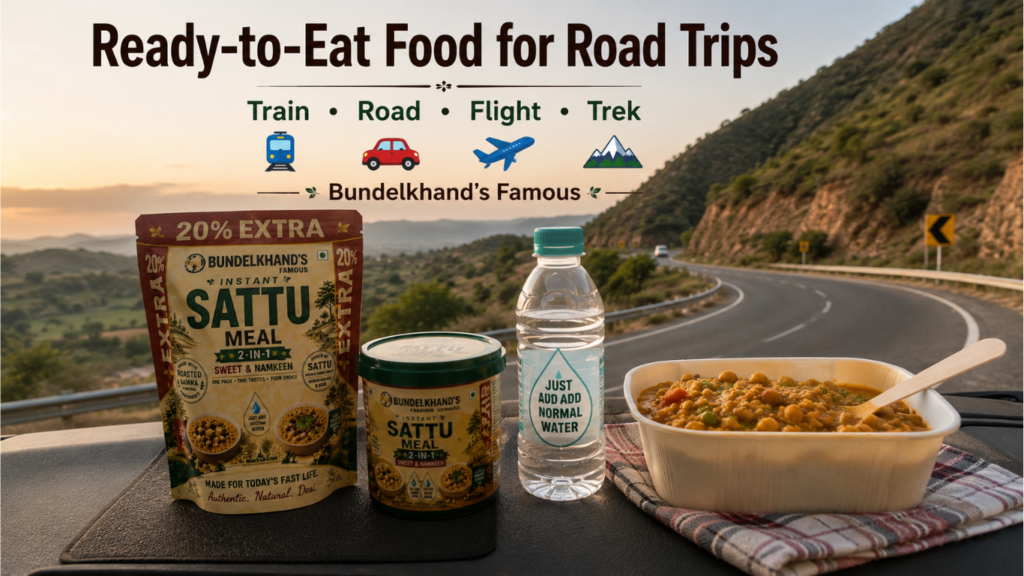
Road trips require food that is portable, affordable, and easy to eat one-handed. As one travel expert noted: “Snacks give you a short hit and then leave you worse off. By hour six you are either buying overpriced service station food or convincing yourself fast food is fine just this once.”
The solution is ready to eat food for travel that is properly filling – not just snacks. Having the right ready to eat food for travel on a road trip means you can avoid the overpriced highway food and enjoy meals that actually satisfy you. The best ready to eat food for travel for road trips combines portability with nutritional value. Many families now pack ready to eat food for travel for their weekend road trips. The National Geographic Travel recommends planning road trip meals in advance for a more enjoyable journey.
What Counts as a Road Trip Meal?
A road trip meal does not have to be elaborate. It just has to be filling enough that you are not thinking about food again 40 minutes later.
The Key Formula: Protein + Carbs Together
| Food | Why It Works |
|---|---|
| Homemade Sandwich | Good bread, ham, cheese, tomato – keeps you going for 3-4 hours |
| Wrap | Holds together without falling apart |
| Pasta Salad | Oil-based dressing (no mayo) works well |
| Schnitzel or Meat Patties | Cooked through, dry without sauces, holds up well |
| Oven-Roasted Pork | Sliced as sandwich filling, lasts longer than deli meat |
Best Packaged RTE for Road Trips
| Food | Why It Works |
|---|---|
| RTE Curry Pouches | Compact, no refrigeration, just heat |
| Canned Meals | Shelf-stable, no cooking required |
| Freeze-Dried Meals | Lightweight, just add hot water |
| Protein Bars | Quick energy, no mess |
| Trail Mix | High energy, long shelf life |
Keeping Road Trip Food Cool
If you do not have a cool box, there is a simpler trick that works well for the first day or two.
Tip: Store your food bag directly behind the front seats where the air conditioning airflow reaches. On a long drive this keeps the temperature down enough that sandwiches and cooked meat stay edible.
Warning: Never leave food in the boot in warm weather. The temperature back there can get high enough to ruin food much faster than you would expect.
Healthy RTE Snacks for Road Trips
According to dietitians from the Veterans Health Library, these are the best travel snacks for road trips:
| Snack | Why It Works | Nutrition Tip |
|---|---|---|
| Whole Grain Crackers | High fibre, less crumbly | Pair with cheese or nut butter |
| Peanut Butter Filled Pretzels | Gluten-free, protein-rich | Good alternative for celiac travellers |
| Mixed Nuts | Rich in fibre, healthy fats, protein | Get unshelled – less mess |
| String Cheese | Protein, calcium, individual packaging | Easy to eat, kid-friendly |
| Baby Carrots & Celery | Nutritious, portable, lasts hours | Can stay at room temperature |
| Apple Slices | Natural sweetness, no mess | Resealable bags |
| Rice Cakes | Light, crunchy, mess-free | Perfect for motion sickness-prone travellers |
Ready-to-Eat Food for Air Travel
The Challenge of Flying with Food
Air travel presents unique food challenges: carry-on restrictions, limited space, and the need for food that won’t spill or create mess. As nutritionists recommend, planning ahead is crucial. When you are flying, ready to eat food for travel needs to be compact, TSA-friendly, and mess-free. The best ready to eat food for travel for flights is lightweight, non-perishable, and easy to consume in a confined space. Air India allows passengers to carry ready to eat food for travel in their hand luggage.
Nutritionist-Approved Plane Food
We asked nutritionists for their favourite plane-friendly snacks:
| Snack | Why It Works |
|---|---|
| Fruit + Nut Butter | Hydrating, satisfying, simple |
| Bento Box Snacks | Variety, protein-rich, balanced |
| Protein Box | Cut veggies, almonds, fruit, turkey slices |
| PB&J Sandwich | Classic, filling, easy to pack |
| Pre-Made Meals | Fresh, organic, balanced |
| Electrolyte Water | Stay hydrated, maintain energy |
What Nutritionists Recommend
Dietitian Jessica Gascoigne recommends:
- Hydrate: Always carry a refillable water bottle. Empty it before security, fill it after.
- Balance Carbs with Protein: The protein keeps you satisfied longer. Pair an apple with string cheese, or carrots with hummus.
- Check Nutrition Labels: A single snack serving should contain roughly 100-200 calories and fewer than 230 mg of sodium.
- Beware Added Sugars: Look for syrups, honey, molasses, sucrose, dextrose, fructose in ingredients.
What to Avoid on Flights
| Food | Why to Avoid |
|---|---|
| Soda | Added sugar, empty calories |
| Alcohol | Calories with no nutrients, dehydrates |
| Sugary Specialty Drinks | Empty calories, energy crash |
| Family-Size Snack Bags | Easy to overeat |
Freeze-Dried vs Retort-Packed RTE: Which Is Better for Travel?
Understanding the Technologies
Not all ready to eat food for travel is made the same way. The preservation technology used significantly impacts taste, texture, and nutrition. Understanding these differences helps you choose the best ready to eat food for travel for your specific journey. When evaluating ready to eat food for travel, consider how the food is preserved. According to ScienceDirect, advanced preservation methods have made ready to eat food for travel safer and more nutritious than ever before.
Retort Technology (Most Common for Indian RTE)
What It Is:
- Food is cooked, sealed in a pouch, and sterilised at high temperatures (around 121°C)
- Shelf-stable for months
- Can be eaten cold or heated
- Heavier (includes water weight)
- Texture often becomes soft or mushy
Best For: Short trips, hotel stays, meals you will eat soon
Freeze-Drying (Premium Technology)
What It Is:
- Food is cooked, frozen, and dried under vacuum
Impact on Travel Food:
- Ultra-lightweight (no water weight)
- Flavour, texture and nutrients better preserved
- Requires hot water to rehydrate (5-10 minutes)
- Pouch packaging is incredibly compact
Best For: Long-term backpacking, hiking, ultra-light travel, flights with weight restrictions
Which Packaging Is Best for Your Trip?
| Travel Scenario | Best Packaging | Why |
|---|---|---|
| Train Journey | Meal Tub | Zero cleanup, self-contained bowl |
| Flight | Pouch | Ultra-light, compact |
| Road Trip | Pouch or Tub | Depends on water availability |
| Trekking | Pouch | Lightweight, minimal space |
| Hotel Stay | Tub | Bowl provided, no extra dishes |
| Backpacking | Pouch | Stackable, saves luggage space |
Expert Verdict
“If you are trying to avoid overweight baggage fees or packing a hiking rucksack, the pouch is your best friend. You can literally stack ten of these meals into the corner of a suitcase.”
Self-Heating Meals: The New Frontier in Travel Food
What Are Self-Heating Meals?
Self-heating meals use chemical heating packs that activate when water is added, generating enough heat to warm the food without fire or electricity. This is one of the most innovative developments in ready to eat food for travel. This format of ready to eat food for travel is gaining popularity among adventure travellers. PubMed has documented the effectiveness of self-heating meal technology for outdoor enthusiasts.
How They Work:
- Remove meal from packaging
- Pour a small amount of water into the heating bag
- The water triggers an instant chemical reaction
- Heat builds up, steaming the food
- Wait 10-15 minutes, and the meal is hot and ready
As one traveller shared about their self-heating meal experience: “We bought ready-to-eat meals and decided to bring it along for our holiday road trip. Honestly, it turned out to be one of the best decisions ever. The taste really surprised us, so flavourful and comforting, just like home-cooked food. It made our long drives and cold nights so much easier and warmer.”
Why Self-Heating Meals Are Perfect for Travel
| Advantage | Why It Matters |
|---|---|
| No Stove or Fire Needed | Perfect for remote locations |
| No Electricity Required | Works anywhere, anytime |
| Hot Meal Anywhere | Warm food in cold environments |
| Compact Packaging | Saves space in luggage |
| Long Shelf Life | Can be stored for months |
Best Use Cases for Self-Heating Meals
- Cold mountain treks – no fire allowed
- Remote camping – no cooking facilities
- Long bus journeys – no hot water available
- Emergency preparedness – shelf-stable backup food
- International travel – no worry about food safety
The Best RTE Snacks for Travel: Dietitian Recommendations
What the Experts Say
Dietitians agree: the best travel snacks are balanced, portable, and satisfying. Here is what they recommend:
| Snack Category | Specific Options | Why They Work |
|---|---|---|
| Fruits | Apples, bananas, grapes, berries | Hydrating, full of fibre |
| Vegetables | Baby carrots, celery, cherry tomatoes | Nutritious, portable |
| Protein | String cheese, nuts, beef jerky, hard-boiled eggs | Keeps you full longer |
| Carbs | Whole grain crackers, pretzels, granola bars | Quick energy |
| Combinations | Hummus + veggies, peanut butter + apple | Balanced, satisfying |
Healthy Travel Snack Checklist
According to the Veterans Health Library, here are the best healthy travel snacks:
- □ Washed fruit – apples, pears, bananas
- □ Whole-grain crackers or pretzels
- □ Whole-grain bagels
- □ Plain popcorn
- □ Fig bars
- □ Low-fat or nonfat yogurt
- □ Hummus
- □ Baby carrots or ready-cut raw veggies
- □ Dried fruit
- □ String cheese
- □ Unsalted, raw nuts or seeds
- □ Homemade trail mix
- □ Beef jerky
RTE vs Instant Food for Travel: Which Should You Choose?
Comparison Table
| Aspect | Ready-to-Eat Food | Instant Food |
|---|---|---|
| Preparation | Open and eat (or heat briefly) | Add water/mix/stir |
| Water Needed | No | Usually yes |
| Weight | Heavier (includes water) | Lightweight (dry format) |
| Mess | Minimal | Minimal |
| Cost | Generally more expensive | Generally more affordable |
| Shelf Life | Long | Long |
| Best For | No water available, immediate eating | Weight-conscious travel, budget travel |
When to Choose Ready-to-Eat Food for Travel
| Situation | Why RTE Is Better |
|---|---|
| No water available | No preparation needed |
| Zero time for prep | Open and eat |
| Flight travel | No liquid handling needed |
| Hotel rooms with no kettle | Heat optional, eat cold |
When to Choose Instant Food for Travel
| Situation | Why Instant Is Better |
|---|---|
| Weight-conscious travel | Dry format, much lighter |
| Budget travel | More affordable |
| Long-term backpacking | Stackable, compact |
| Trekking | Minimal weight, high nutrition |
For a deeper comparison between these two formats, check out our detailed guide on ready-to-eat food vs instant food. Understanding this difference helps you choose the best ready to eat food for travel for your specific needs.
Building Your Perfect Travel Food Kit
Essential Travel Food Kit Checklist
| Item | Why You Need It |
|---|---|
| RTE Meal Tubs (3-5) | Complete meals with zero cleanup |
| RTE Pouches (3-5) | Lightweight backup meals |
| Self-Heating Meals (2-3) | Hot meals without hot water |
| Protein Bars (5-10) | Quick energy between meals |
| Mixed Nuts | Healthy fats, protein, long shelf life |
| Dried Fruit | Natural sweetness, energy |
| Whole Grain Crackers | High fibre, less crumbly |
| Water Bottle | Stay hydrated, fill after security |
| Reusable Container | For storing opened items |
Travel Food Kit by Trip Type
For Train Journeys (2-3 days):
- RTE meal tubs (3) – zero cleanup
- Self-heating meals (2) – for when hot water isn’t available
- Tea-time snacks – samosa-style snacks, bhel puri cups
- Chai thermos – hot tea on demand
For Road Trips (1-7 days):
- Homemade sandwiches/wraps (day 1)
- RTE pouches (backup)
- Protein-rich snacks: nuts, cheese, jerky
- Fruit and vegetable sticks
- Cooler bag with ice packs
For Flights (2-24 hours):
- RTE pouches – ultra-light, compact
- Protein bars
- Fresh fruit – apple or banana
- Water bottle – fill after security
For Trekking/Outdoor Adventure (3-7 days):
- Freeze-dried pouches – ultra-lightweight
- Self-heating meals – no fire needed
- Nuts, seeds, dried fruit – high energy density
- Electrolyte packets – stay hydrated
Common Mistakes with Travel Food
1. Relying Only on Snacks
The Mistake: Packing only snacks, not meals.
The Fix: A proper meal keeps you going for 3-4 hours. Snacks alone won’t do it.
2. Not Checking Nutrition Labels
The Mistake: Grabbing the first thing you see.
The Fix: Look for 100-200 calories per serving, less than 230 mg sodium. Avoid added sugars listed as syrups, honey, molasses, sucrose, dextrose, fructose.
3. Forgetting Hydration
The Mistake: Packing food but not water.
The Fix: Carry a refillable water bottle. Stay hydrated to maintain energy and avoid hunger confusion.
4. Overpacking Perishable Food
The Mistake: Packing food that spoils quickly.
The Fix: Know how long your food lasts without refrigeration. In warm weather, food goes bad faster.
5. Not Checking Water Availability
The Mistake: Bringing only instant food when no hot water is available.
The Fix: Always have ready-to-eat backups that require no water or preparation.
FAQ About Ready-to-Eat Food for Travel
1. What is the best ready-to-eat food for train travel?
Answer: RTE meal tubs are excellent for trains because they are self-contained bowls requiring zero cleanup. Just add hot water from the train steward, wait 5 minutes, eat, and dispose of the tub. Homemade options like parathas, vegetable pulao, and dry sabzi with chapati also work well. For more options, check our instant food for travel guide.
2. What is the difference between RTE pouches and meal tubs?
Answer: Pouches are ultra-lightweight and compact, making them ideal for backpacking and weight-conscious travel. However, you need a separate bowl to prepare them. Tubs are self-contained bowls that you eat from directly, making them perfect for zero-cleanup situations like train travel and flights.
3. How long does freeze-dried travel food last?
Answer: Both pouches and meal tubs using freeze-drying technology stay fresh for up to 6 months without refrigeration, as long as the seals remain unbroken.
4. What food should I take on a long train journey?
Answer: For train journeys, pack a mix of homemade meals like parathas (wrap in foil), vegetable pulao (steel lunchbox), dry sabzi with chapati (leak-proof container), plus ready-to-eat options like meal tubs for backup. Don’t forget a thermos of chai and some roasted nuts/chivda for snacking.
5. What are self-heating meals and how do they work?
Answer: Self-heating meals use a chemical heating pack that activates when you add water. The water triggers an instant reaction that generates heat, steaming the meal without fire or electricity. Just wait 10-15 minutes and your meal is hot. They are perfect for remote locations, camping, and situations without hot water.
6. What are the healthiest travel snacks?
Answer: According to dietitians, the healthiest travel snacks include fresh fruit (apples, bananas, grapes), whole-grain crackers, mixed nuts, string cheese, baby carrots, hummus, and dried fruit. Pair a carbohydrate with a protein to keep you satisfied longer.
7. Can I take ready-to-eat food on a flight?
Answer: Yes. Ready-to-eat food in dry packaging is allowed in carry-on bags. You can also bring fresh fruit and snacks through security. Remember to empty your water bottle before security and fill it after. Avoid liquids and gels that exceed carry-on limits.
8. What should I avoid eating on a bus or long road trip?
Answer: Avoid greasy, messy, or strongly odored foods that could upset your stomach or disturb other passengers. Also avoid foods that create lots of crumbs or require two hands to eat. Stick to mess-free options like granola bars, crackers, nuts, and fruit slices.
9. What is the best food for a road trip?
Answer: The best road trip food is filling, portable, and mess-free. Homemade sandwiches (good bread, ham, cheese, tomato) are excellent. Wraps hold together well. Pasta salad with oil-based dressing works for the first day. Pack cooked meat like schnitzel as sandwich filling.
10. How do I keep road trip food cool without a cooler?
Answer: Store your food bag directly behind the front seats where the air conditioning airflow reaches. This keeps the temperature down enough for the first day or two. Never leave food in the boot in warm weather – it gets too hot and ruins food quickly.
11. Are there ready-to-eat Indian snacks for travel?
Answer: Yes. Options include instant bhel puri cups that only require mixing with water, ready-to-eat chaat snacks, packaged samosas and pakoras, and traditional travel-friendly snacks like thepla, chivda, and roasted nuts.
12. Is ready-to-eat food healthy for travel?
Answer: It depends on the product. Look for clean ingredients, balanced macros, and minimal sodium. Nutritionist-approved travel snacks include fresh fruit, mixed nuts, whole-grain crackers, and protein bars. Many packaged RTE meals use freeze-drying to preserve nutrients and avoid additives.
Conclusion: Building Your Perfect Travel Food Plan
The key to successful travel eating is planning ahead. As one dietitian advised: “I think it’s really important to try and think ahead. If you’re able to take five minutes to plan where you’re going or the length of time it’s going to take to get there, it really will help you choose the right foods.”
Your Travel Food Checklist
| Step | Action |
|---|---|
| 1 | Identify your travel type – train, road, flight, or trek |
| 2 | Check water availability – hot water, normal water, or none |
| 3 | Choose packaging – pouches for weight, tubs for zero cleanup |
| 4 | Balance nutrition – protein + carbs together |
| 5 | Pack backup options – always have something that needs no preparation |
| 6 | Stay hydrated – fill water bottle at every opportunity |
| 7 | Consider self-heating meals – no fire needed |
The Bottom Line
Ready to eat food for travel has transformed how we eat on the move. Whether you are on a train, road trip, flight, or trekking adventure, there is now a convenient, nutritious, and delicious option available. Having the right ready to eat food for travel means you never have to worry about where your next meal will come from. For those interested in traditional Indian options, our traditional Indian instant food guide offers excellent alternatives.
Choose your packaging based on your trip type:
| Trip Type | Best Choice | Why |
|---|---|---|
| Train Journey | Meal Tubs | Zero cleanup, self-contained |
| Flight | Pouches | Ultra-light, compact |
| Road Trip | Mixed (homemade + RTE) | Variety, cost-effective |
| Trekking | Pouches | Lightweight, stackable |
Explore Bundelkhand’s Famous Travel Food Options
Looking for the perfect travel food solution?
Discover Bundelkhand’s Famous Instant Sattu Meal – 2-in-1 Sweet & Namkeen. This traditional Indian instant food is perfect for ready to eat food for travel.
Just add normal water • Stir • Ready in approx. 30 seconds
[VIEW PRODUCT → Instant Sattu Meal]
About Bundelkhand’s Famous
Bundelkhand’s Famous is focused on bringing traditional regional food ideas into modern formats that are convenient for today’s travellers.
Our Instant Sattu Meal combines roasted chana sattu with Sweet and Namkeen options in a convenient format that fits perfectly into travel routines – whether you are on a train, road trip, or flight. For more information on the health benefits of sattu, check our sattu benefits page.
Website: https://www.bundelkhandsfamous.com/