
What Is Sattu? India’s Ancient Superfood Explained
What is Sattu? Sattu is a high-protein flour made from dry-roasted grains and legumes—most commonly Bengal gram (chana), barley, or a blend of traditional Indian grains—that have been parched and stone-ground into a coarse powder. When people ask what is sattu, the simplest answer is: it is India’s original roasted gram flour that requires no cooking. Unlike besan (raw chickpea flour) or wheat atta, sattu is pre-cooked through roasting, which means it requires no cooking and can be consumed directly after mixing with water.
According to the ICMR’s Indian Food Composition Tables 2017, 100 g of chana sattu delivers approximately 20–22 g of protein, 7.6 g of dietary fibre, 406 kcal, and a glycaemic index of just ~40, making it one of the most nutritionally dense and blood-sugar-friendly flours in the Indian pantry.

But what is sattu really, beyond the definition? Not all sattu is the same. At Bundelkhand’s Famous, we believe in honouring the traditional multi-grain composition that made sattu a complete food for generations. Our sattu is crafted with a blend of grains that includes millets—one of the most nutrient-dense grain families in India. To explore our full range of traditional instant meals, visit our Instant Food and Meal collection.
The Food Safety and Standards Authority of India (FSSAI) recognizes sattu as a traditional Indian food with significant nutritional value. The World Health Organization (WHO) recommends incorporating diverse plant-based proteins into daily diets, and sattu fits this recommendation perfectly. According to the National Institute of Nutrition (NIN), traditional grains like chana and millets provide essential amino acids and micronutrients that support overall health.
What Is Sattu? What Makes Bundelkhand’s Famous Sattu Different?
Most commercial sattu today is made from a single grain—usually chana. While this offers good protein, it misses the nutritional synergy that comes from a traditional multi-grain blend. For those looking for convenient meal options, our Instant Sattu Meal represents the perfect fusion of tradition and modern convenience.
Bundelkhand’s Famous Instant Sattu Meal is made using a time-honoured composition that includes:
| Ingredient | Percentage | Nutritional Contribution |
|---|---|---|
| Chana (Bengal Gram) | 90% | High-quality plant protein, sustained energy |
| Katiya Wheat | 2% | Complex carbohydrates, fibre |
| Ragi (Finger Millet) | 2% | Calcium, iron, amino acids |
| Sweet Corn | 1% | Vitamins, natural sweetness |
| Bajra (Pearl Millet) | 2% | Iron, magnesium, cooling effect |
| Arhar (Pigeon Pea) | 1% | Protein, dietary fibre |
| Matar (Peas) | 2% | Plant protein, vitamins |
This multi-grain approach is not a modern invention—it reflects the traditional wisdom of Bundelkhand, where sattu was made with whatever grains were available, creating a complete protein profile and a broader spectrum of micronutrients. According to PubMed research on traditional grain blends, combining multiple grains and legumes enhances the overall amino acid profile and improves protein digestibility.
For those interested in traditional Indian food wisdom, our Instant Food guide provides a comprehensive overview of how traditional foods are being reimagined for modern lifestyles. The Food and Agriculture Organization (FAO) has documented the nutritional benefits of millets and traditional grains, which form an integral part of our sattu blend.
What Is Sattu? Sattu Meaning in Hindi and English
The word sattu (सत्तू) comes from the Sanskrit saktava, meaning “ground roasted grain.” But what is sattu in English? The translation helps clarify.
In Hindi, sattu kya hai (सत्तू क्या है) is one of the most commonly searched questions about this food—people literally ask “what is sattu” in Hindi. This reflects how many urban Indians have grown up knowing sattu only as a regional speciality, without understanding its pan-Indian historical roots. For a deeper understanding of traditional Indian instant food, explore our complete guide.
Sattu in English is most accurately translated as roasted gram flour or roasted Bengal gram powder. When made from barley (jau), it would be “roasted barley flour.” In international contexts, it is increasingly referred to simply as sattu—a word that, like dal or chai, needs no translation.
Sattu flour refers to the dry powder form sold in packets—distinct from besan (raw, unroasted chickpea flour), which requires cooking. Sattu is pre-cooked through roasting and can be consumed directly. The Academy of Nutrition and Dietetics emphasizes the importance of understanding food processing methods and their impact on nutritional quality.
What Is Sattu? Key Facts at a Glance
| Attribute | Detail |
|---|---|
| Common Name | Sattu / Roasted gram flour |
| Hindi Name | सत्तू (Sattu) |
| Primary Ingredient | Roasted Bengal gram (kala chana) |
| Other Varieties | Jau (barley) sattu, mixed grain sattu, millet sattu |
| Protein (per 100 g) | 20–22 g (chana sattu) |
| Calories (per 100 g) | ~406 kcal |
| Glycaemic Index | ~40 (Very Low GI) |
| Dietary Fibre (per 100 g) | 7.6 g |
| Iron (per 100 g) | ~8–9 mg |
| Gluten Status | Naturally gluten-free (chana sattu) |
| Cooking Required? | None – roasting = pre-cooking |
| Origin Region | Magadha (Bihar, Jharkhand, eastern UP) |
| Traditional Uses | Sattu sharbat, litti chokha, sattu paratha |
| Best Modern Uses | Pre-workout drink, protein breakfast, summer cooler |
According to the Centers for Disease Control and Prevention (CDC), understanding the nutritional profile of traditional foods helps consumers make informed dietary choices. The US Food and Drug Administration (FDA) provides guidelines on food labeling that help consumers evaluate products like sattu.
What Is Sattu? How Is Sattu Made? Traditional vs Industrial Process
Understanding how sattu is made is the key to understanding why sattu quality varies so dramatically across brands. For those looking for authentic traditional sattu products, our Instant Sattu Meal offers a convenient way to experience this traditional superfood.
Traditional Stone-Ground Process (Authentic Sattu)
Step 1 – Sourcing: Whole kala chana (black Bengal gram) and other grains are sourced directly from farms. The Ministry of Agriculture and Farmers Welfare promotes sustainable farming practices that ensure quality grain production.
Step 2 – Dry-roasting (parching): The grains are spread on a hot iron or clay pan and roasted dry—no oil, no water—until they develop a characteristic nutty, slightly smoky aroma. This parching step gelatinises the starch, develops flavour compounds, and reduces antinutritional factors such as phytic acid. According to ScienceDirect research on food processing, dry roasting significantly improves the bioavailability of minerals in grains.
Step 3 – Dehusking (partial): The roasted grains are lightly rubbed to remove the outer husk. Traditional stone-ground sattu retains a portion of the bran layer, which is where the fibre, iron, and phenolic antioxidants are concentrated.
Step 4 – Stone-grinding (chakki-peesan): The roasted, partially husked grains are fed through granite chakki stones, which grind at low speed and low heat. This preserves heat-sensitive amino acids, B vitamins, and natural oils.
Step 5 – Sieving: The flour is sieved to remove large husk particles.
Industrial Process (Mass-Market Sattu)
In industrial production, roasting is done in rotary drum roasters at higher temperatures for speed. Grinding uses metal roller mills at high RPM, generating heat that can degrade B vitamins. Some industrial sattu also blends cheaper grains (corn, wheat, chana dal instead of whole kala chana) to reduce cost, diluting protein and fibre content.
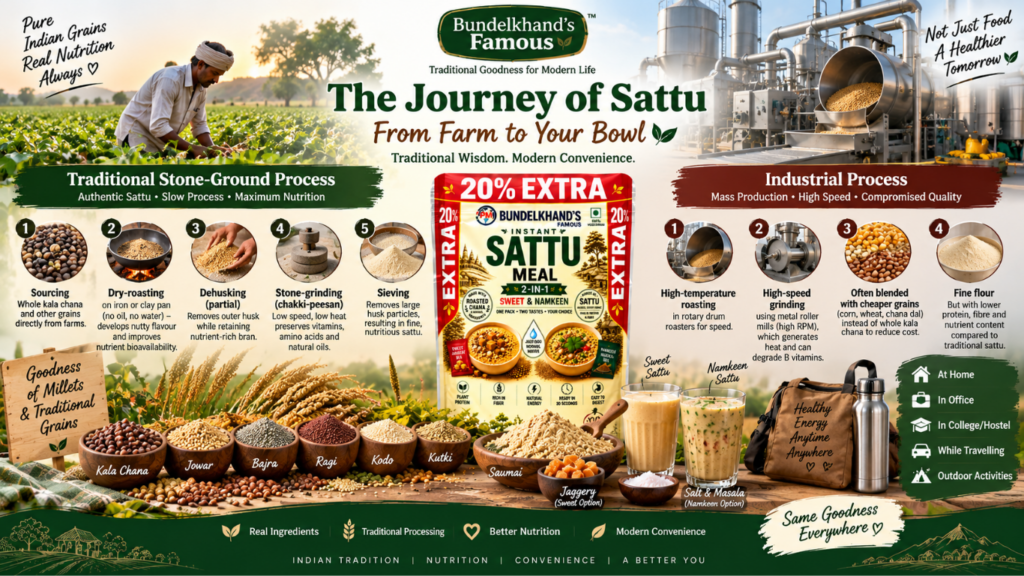
Bundelkhand’s Famous follows the traditional stone-ground process, preserving the nutritional integrity of the multi-grain blend. For more information on our traditional approach to instant food, visit our Instant Food and Meal collection.
The Institute of Food Technologists (IFT) has documented how different processing methods affect the nutritional quality of grain-based foods. The National Center for Biotechnology Information (NCBI) provides extensive research on traditional food processing techniques and their health implications.
What Is Sattu? Types of Sattu in India
| Type | Primary Grain | Protein/100g | Fibre/100g | Best Known Use |
|---|---|---|---|---|
| Chana Sattu | Kala chana (Bengal gram) | 20–22 g | 7.6 g | Sharbat, paratha |
| Jau Sattu | Barley | 12–14 g | 9–11 g | Champaran sattu sharbat |
| Mixed Sattu | Chana + barley blend | 16–18 g | 7–9 g | All-purpose kitchen use |
| Millet Sattu | Chana + millets (ragi, bajra) | 18–20 g | 8–10 g | Modern health food |
| Makka Sattu | Maize | 8–10 g | 4–6 g | Regional summer cooler |
Bundelkhand’s Famous Instant Sattu Meal uses a multi-grain blend that combines chana with wheat, ragi, sweet corn, bajra, arhar, and matar—creating a nutritionally superior sattu with a broader micronutrient profile. To explore this product and other traditional instant foods, visit our Instant Food and Meal collection.
For students looking for convenient meal options, our Instant Food for Students guide provides practical solutions. Working professionals can explore our Instant Food for Working Professionals resource for desk-friendly meal ideas.
What Is Sattu? Sattu Nutritional Profile per 100 g
| Nutrient | Chana Sattu (per 100 g) | Whole Wheat Atta (per 100 g) | Besan (per 100 g) |
|---|---|---|---|
| Energy (kcal) | 406 | 341 | 387 |
| Protein (g) | 20–22 | 11.8 | 22.5 |
| Carbohydrates (g) | 65.2 | 69.4 | 57.8 |
| Dietary Fibre (g) | 7.6 | 12.2 | 10.9 |
| Fat (g) | 5.2 | 1.7 | 6.7 |
| Iron (mg) | 8–9 | 4.9 | 8.9 |
| Calcium (mg) | 90 | 48 | 105 |
| Magnesium (mg) | 166 | 138 | 166 |
| Potassium (mg) | 800 | 340 | 846 |
| Folate (mcg) | 172 | 57 | 180 |
| Glycaemic Index | ~40 (Very Low) | ~70 (High) | ~44 (Low) |
Source: ICMR Indian Food Composition Tables 2017; NIN Hyderabad.
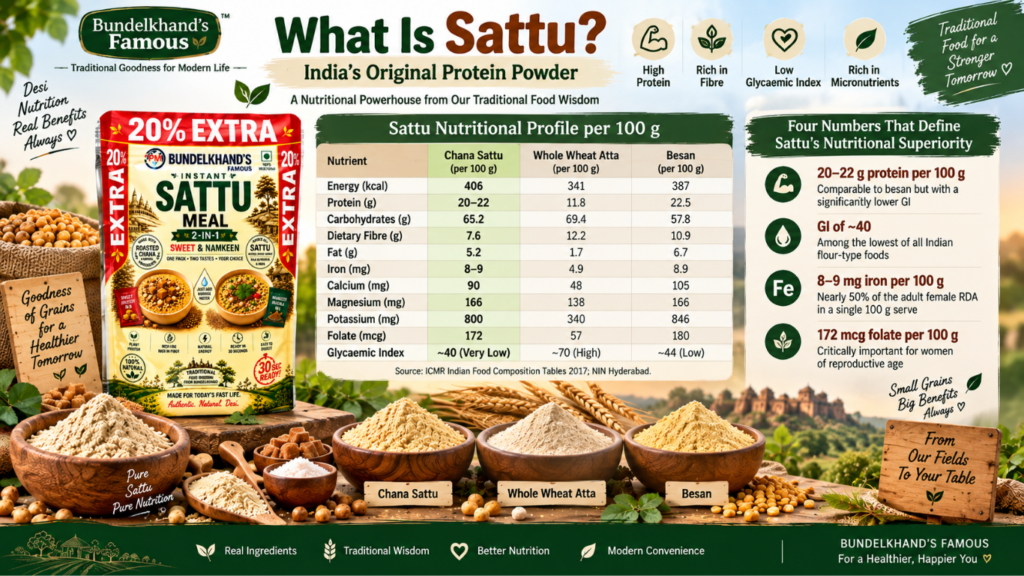
Four Numbers That Define Sattu’s Nutritional Superiority
- 20–22 g protein per 100 g – comparable to besan but with a significantly lower GI
- GI of ~40 – among the lowest of all Indian flour-type foods
- 8–9 mg iron per 100 g – nearly 50% of the adult female RDA in a single 100 g serve
- 172 mcg folate per 100 g – critically important for women of reproductive age
For a deeper understanding of how sattu compares to other instant foods, explore our Ready-to-Eat Food vs Instant Food comparison guide. If you’re interested in healthy instant food options, our Healthy Instant Food resource provides valuable insights.
What Is Sattu? Top 10 Health Benefits of Sattu
1. Exceptional High-Protein Plant Food
Chana sattu provides 20–22 g of protein per 100 g—comparable to eggs (13 g/100 g) and superior to most Indian plant foods. According to ICMR’s protein quality assessments, roasted chana protein has a PDCAAS of 0.65–0.72. The World Health Organization (WHO) emphasizes the importance of adequate protein intake for maintaining muscle mass and overall health.
2. Stabilises Blood Sugar (Very Low GI ~40)
Sattu’s glycaemic index of ~40 is exceptional even among low-GI foods. The combination of high protein, soluble fibre, and the structural changes to starch created by roasting all contribute to a flat post-meal glucose response. The American Diabetes Association recommends low-GI foods as part of a balanced diet for blood sugar management.
3. A Natural Summer Cooler
In Ayurvedic food science, sattu is classified as a sheetala (cooling) food. When consumed as a cold-water drink, sattu sharbat is believed to lower core body temperature and prevent heat exhaustion. For travellers looking for cooling meal options, our Instant Food for Travel guide offers practical suggestions.
4. Iron-Rich: Fights Anaemia
With 8–9 mg of iron per 100 g, sattu is one of the richest plant-based iron sources in the Indian diet. The National Family Health Survey (NFHS-5, 2019–21) found that 57% of Indian women aged 15–49 are anaemic. The Ministry of Health and Family Welfare has identified iron deficiency as a major public health concern in India.
5. Supports Weight Loss and Satiety
Sattu’s 7.6 g of dietary fibre per 100 g, combined with its high protein content and very low GI, creates one of the most powerful satiety profiles of any Indian flour. The Mayo Clinic recommends high-fibre, high-protein foods for weight management.
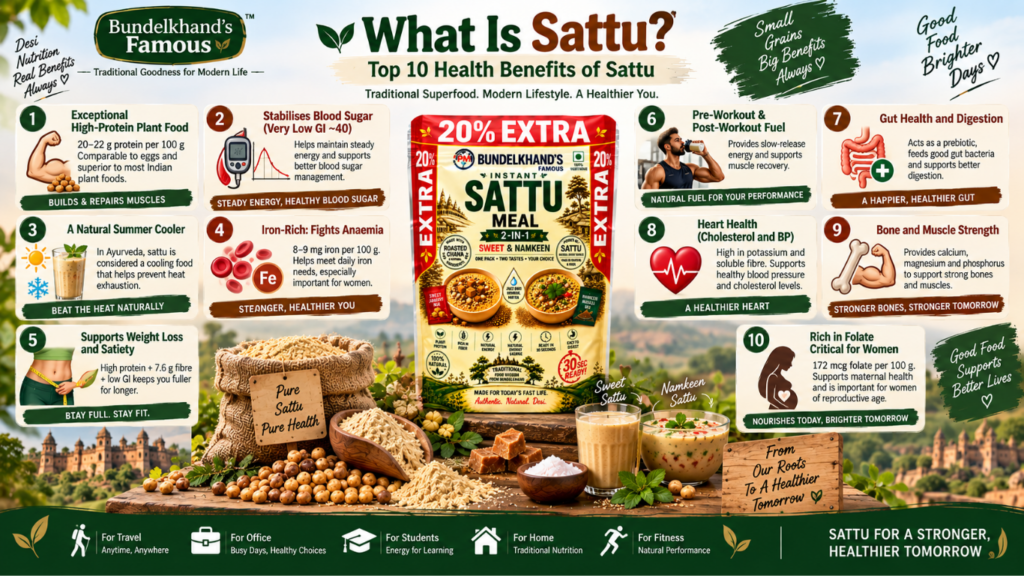
6. Pre-Workout and Post-Workout Fuel
Sattu’s slow-release carbohydrates (GI ~40) provide steady energy during training. Its protein content supports muscle protein synthesis during recovery. The Cleveland Clinic provides guidance on nutrition for athletic performance.
7. Gut Health and Digestion
The soluble fibre in sattu acts as a prebiotic, selectively feeding Lactobacillus and Bifidobacterium species in the gut. According to Healthline, prebiotic foods support a healthy gut microbiome and improve digestive function.
8. Heart Health (Cholesterol and Blood Pressure)
Sattu’s potassium content (800 mg/100 g) supports healthy blood pressure. Its soluble fibre binds bile acids in the gut, reducing LDL cholesterol recirculation. The American Heart Association recommends potassium-rich foods for cardiovascular health.
9. Bone and Muscle Strength
Sattu provides calcium (90 mg/100 g), magnesium (166 mg/100 g), and phosphorus in a well-balanced ratio that supports bone mineralisation. The National Institutes of Health (NIH) provides research on the role of minerals in bone health.
10. Rich in Folate Critical for Women
With 172 mcg of folate per 100 g, sattu provides nearly 43% of the adult female RDA for folate in a single 100 g serve. The UNICEF has highlighted the importance of folate for maternal health.
What Is Sattu? Sattu vs Whey Protein vs Besan vs Other Indian Flours
| Metric | Chana Sattu | Whey Protein | Besan | Moong Dal Flour | Whole Wheat Atta |
|---|---|---|---|---|---|
| Protein (g/100g) | 20–22 | 75–80 | 22.5 | 24 | 11.8 |
| Glycaemic Index | ~40 | ~30 | ~44 | ~38 | ~70 |
| Dietary Fibre (g) | 7.6 | 0 | 10.9 | 6.6 | 12.2 |
| Iron (mg/100g) | 8–9 | 0.5 | 8.9 | 5.8 | 4.9 |
| Folate (mcg/100g) | 172 | 0 | 180 | 149 | 57 |
| Gluten-Free | Yes | Yes | Yes | Yes | No |
| Cooking Required | None | None | Yes | Yes | Yes |
| Cost per 100g protein | ~₹8–12 | ~₹80–120 | ~₹10–14 | ~₹12–18 | ~₹25–35 |
What this table shows: Sattu provides far more protein per rupee (₹8–12 per 100 g of protein vs whey’s ₹80–120), with the additional benefits of iron, folate, fibre, and a very low glycaemic index that whey entirely lacks. The Food and Agriculture Organization (FAO) has documented the cost-effectiveness of traditional plant proteins compared to processed supplements.
For a comprehensive comparison of instant and ready-to-eat options, visit our Instant Food vs Ready-to-Eat Food guide. If you’re looking for traditional Indian food options, our Traditional Indian Instant Food resource provides detailed information.
What Is Sattu? How to Use Sattu: Drinks, Parathas & More
Classic Sattu Drink (Sattu Sharbat) – Salty Version
Ingredients (1 glass): 2–3 tbsp sattu · 1 glass cold water · ¼ tsp roasted cumin powder · a pinch of black salt (kala namak) · ½ tsp lemon juice · 1 tsp chopped coriander or mint (optional)
Method:
- Add sattu to a glass. Pour a small amount of water and stir to a smooth paste.
- Add remaining cold water. Mix vigorously.
- Add cumin, black salt, and lemon juice. Stir well.
- Taste and adjust salt. Serve immediately over ice.
Sattu Paratha
Ingredients: 1 cup whole wheat atta · ½ cup sattu · 1 finely chopped onion · 1 green chilli · ½ tsp ajwain · salt · 1 tbsp desi ghee
Method:
- Mix sattu, onion, chilli, ajwain, and salt into a filling.
- Make a soft wheat dough. Divide into 6 portions.
- Roll each slightly, add a tablespoon of sattu filling, seal, and roll gently into a paratha.
- Cook on a medium-hot tawa with desi ghee, 2 minutes each side.
Sattu Ladoo (No-Cook Energy Bite)
Ingredients: 1 cup sattu · ¼ cup organic jaggery powder · 2 tbsp desi ghee · cardamom powder · pinch of dry ginger
Method:
- Mix all ingredients. The ghee and jaggery will bind the sattu without any cooking.
- Roll into small balls.
- Set in a cool place for 30 minutes.
Other Popular Sattu Uses
| Preparation | Description | Best For |
|---|---|---|
| Sattu Litti | Wheat dough stuffed with spiced sattu | Traditional Bihar feast dish |
| Sattu Porridge | Sattu + warm milk + jaggery | Breakfast for children and elderly |
| Sattu Smoothie | Sattu + banana + cold milk + honey | Post-workout recovery drink |
| Sattu Cheela | Sattu + water batter, cooked like pancake | Quick high-protein breakfast |
| Sattu Roti | 50:50 blend of sattu + wheat atta | Everyday high-protein roti |
For a convenient way to enjoy sattu without any preparation, try Bundelkhand’s Famous Instant Sattu Meal—just add normal water and stir for 30 seconds. Explore our Instant Food and Meal collection to discover more traditional instant food options.
If you’re looking for healthy ready-to-eat options, our Healthy Ready-to-Eat Food guide provides valuable insights. For students seeking convenient meal solutions, our Ready-to-Eat Food for Students resource offers practical advice.
What Is Sattu? Who Should and Who Should Not Eat Sattu?
Who Benefits Most from Sattu
- Vegetarians and vegans seeking affordable, complete plant protein
- Athletes and gym-goers needing slow-release carbohydrate + protein
- People with diabetes or pre-diabetes – the very low GI (~40)
- Women with iron deficiency or anaemia – 8–9 mg iron per 100 g
- Pregnant women – 172 mcg folate per 100 g
- Children (5+) – high protein, calcium, and zinc
- Elderly individuals – high protein combats age-related muscle loss
Who Should Exercise Caution
- People with kidney disease (CKD): Consult a nephrologist before adding sattu regularly.
- People with gout or hyperuricaemia: Consume in moderation if uric acid levels are elevated.
- Infants under 12 months: Consult your paediatrician before introducing.
- Those with known chickpea allergy: Cross-reactive with other legume allergies.
| Group | Recommended Daily Amount | Notes |
|---|---|---|
| Healthy adults | 30–50 g (2–3 tbsp) | Can be split across meals |
| Athletes/gym-goers | 50–75 g | Pre/post workout + meals |
| Diabetics | 25–30 g | Monitor glucose response |
| Children (5–12) | 15–20 g | As a drink or in roti/paratha |
| Elderly (65+) | 30–40 g | With adequate water |
| Kidney disease (CKD) | Consult physician | Not a self-managed dose |
The World Health Organization (WHO) provides guidance on healthy dietary patterns that include diverse protein sources. The National Health Service (NHS) offers additional information on maintaining a balanced diet.
What Is Sattu? How to Buy Authentic Sattu
The sattu market in India is rife with adulteration. Common adulterants include cheaper raw besan, maize flour as filler, artificial flavouring, and dilution with wheat flour. The FSSAI has issued guidance on detecting food adulteration.
8 Signs of Authentic Stone-Ground Sattu
- Colour: Warm golden-brown to light tan. Bright yellow almost certainly contains raw besan.
- Smell: Distinctive nutty, slightly smoky, roasted gram aroma.
- Texture: Slightly coarse, gritty feel.
- Water test: Pure sattu disperses readily in cold water and tastes nutty.
- Cook test: It should taste completely cooked and pleasant.
- Label check: FSSAI licence number mandatory.
- Protein declaration: Authentic chana sattu should declare ≥19 g protein per 100 g.
- Origin transparency: The best sattu comes from Bihar or Jharkhand.
| Check | Authentic Result | Adulterated / Poor Quality Result |
|---|---|---|
| Colour | Warm golden-brown | Bright yellow or pale white |
| Raw taste test | Nutty, fully cooked, pleasant | Starchy, raw, bitter |
| Smell | Smoky, roasted gram aroma | Bland, neutral, or artificial |
| Protein per 100 g | ≥19–20 g declared | <15 g (diluted) |
| Ingredient list | Roasted whole kala chana only | Multiple undeclared fillers |
| FSSAI number | Present and verifiable | Missing or unverifiable |
| Texture | Slightly coarse/gritty | Silky smooth like maida |
The Ministry of Consumer Affairs provides resources for consumers to make informed food choices. The Food and Drug Administration (FDA) offers guidance on food safety and labeling.
What Is Sattu? Bundelkhand’s Famous Instant Sattu Meal: Traditional Sattu in a Modern Format
Bundelkhand’s Famous Instant Sattu Meal brings the traditional multi-grain sattu of Bundelkhand into a convenient, modern format. It is:
- Made from roasted chana sattu with a traditional multi-grain blend
- 2-in-1 Sweet & Namkeen – choice of jaggery mix or masala mix
- Prepared with normal water – no hot water needed
- Ready in approximately 30 seconds
- No cooking required
- Portable and convenient – ideal for travel, office, students, and busy families
This product is an instant meal, not a ready-to-eat product. It requires you to add normal water and stir before consumption—a simple final step that gives you a freshly prepared meal in under a minute. To explore this product and other traditional instant food options, visit our Instant Food and Meal collection.
Why Bundelkhand’s Famous?
- Traditional multi-grain composition – not just chana, but a blend of grains including millets
- Stone-ground process – preserving nutritional integrity
- No artificial additives – clean, natural ingredients
- Plant-based – suitable for vegans and vegetarians
For those interested in the health benefits of sattu, our Sattu Benefits page provides detailed information. If you’re looking for convenient meal options for busy lifestyles, our Instant Food for Working Professionals guide offers practical solutions.
What Is Sattu? Frequently Asked Questions
Q1. What is sattu in English?
What is sattu in English? Sattu in English is most accurately called roasted Bengal gram flour or roasted gram powder. When made from barley, it is roasted barley flour. In international usage, “sattu” is increasingly used as a standalone term for a pre-cooked, high-protein Indian flour with no direct Western equivalent.
Q2. What is the difference between sattu and besan?
The fundamental difference is roasting. Besan is made from raw, dried chickpeas ground into flour—it must be cooked before eating. Sattu is made from whole kala chana (Bengal gram) that has been dry-roasted before grinding. The roasting pre-cooks the starch and protein, making sattu safe to eat directly mixed with water.
Q3. What is sattu good for? Can diabetics eat sattu?
Yes, sattu is one of the best food choices for people with type 2 diabetes or pre-diabetes. Its glycaemic index of ~40 (very low) causes minimal post-meal blood glucose elevation. Always consume in moderation (2–3 tbsp/day) and confirm suitability with your physician.
Q4. What is sattu protein content per 100g?
Chana sattu contains 20–22 g of protein per 100 g of dry powder, according to the ICMR’s Indian Food Composition Tables 2017. This makes it one of the highest plant-protein foods in the Indian diet.
Q5. What is sattu compared to whey protein?
Sattu and whey protein serve different purposes. Whey protein provides 75–80 g of protein per 100 g (far higher concentration). However, sattu offers additional nutrients that whey entirely lacks: 8–9 mg iron, 172 mcg folate, 7.6 g fibre, 800 mg potassium, and a very low GI of ~40. For everyday Indian dietary needs, sattu is the superior all-round choice.
Q6. What is sattu taste like?
Sattu has a distinctive warm, nutty, slightly earthy flavour with mild smokiness from the roasting process. When mixed with water and black salt, it takes on a savoury, refreshing character. Mixed with jaggery and water, it becomes mildly sweet and pleasant.
Q7. What is sattu storage method?
Store sattu in an airtight container away from moisture, direct sunlight, and strong odours. At room temperature in a cool, dry kitchen, sattu lasts 6–8 months from the milling date.
Q8. What is sattu meal? Is Bundelkhand’s Famous Instant Sattu Meal ready-to-eat?
No. Bundelkhand’s Famous Instant Sattu Meal is an instant meal, not a ready-to-eat product. It requires adding normal water and stirring for approximately 30 seconds before consumption.
Q9. What is sattu product? What makes Bundelkhand’s Famous Instant Sattu Meal different?
Bundelkhand’s Famous combines a traditional multi-grain sattu base with a modern convenience format. The product offers Sweet and Namkeen options and can be prepared with normal water in approximately 30 seconds. To explore this product, visit our Instant Food and Meal collection.
Q10. What is sattu for students and professionals?
Students, professionals, travellers, and busy families can consider Bundelkhand’s Famous Instant Sattu Meal as a convenient meal option. It requires only a bowl and normal water, making it ideal for hostel life, office desks, and travel.
Q11. What is sattu traditional uses?
Traditional uses include sattu sharbat (a cooling summer drink), sattu paratha (stuffed flatbread), litti chokha (a Bihar speciality), and sattu ladoo (energy balls). For a modern convenient option, try Bundelkhand’s Famous Instant Sattu Meal.
Q12. What is sattu gluten status?
Chana sattu is naturally gluten-free. However, some mixed sattu blends may contain wheat. Always check the label. Bundelkhand’s Famous Instant Sattu Meal uses a blend that includes wheat, so it is not gluten-free. For gluten-free options, look for pure chana sattu.
Q13. What is sattu vs protein powders?
Sattu is a whole food, not an isolated protein. It contains protein, fibre, iron, folate, and other micronutrients in their natural form. Most protein powders are highly processed isolates. For a natural, traditional option, Bundelkhand’s Famous Instant Sattu Meal offers a convenient way to enjoy sattu.
Q14. What is sattu for weight loss?
Sattu’s high protein and fibre content promotes satiety, which may help with weight management when consumed as part of a balanced diet. The Mayo Clinic recommends high-fibre, high-protein foods for weight management.
Q15. What is sattu best time to consume?
Sattu can be consumed any time. Many people prefer it in the morning for sustained energy or as a pre/post-workout drink. Bundelkhand’s Famous Instant Sattu Meal is convenient for breakfast, lunch, or anytime you need a quick meal.
Q16. What is sattu for children?
Yes, sattu is suitable for children above 5 years. It provides protein, calcium, and zinc for growth. For a convenient option, Bundelkhand’s Famous Instant Sattu Meal can be prepared quickly.
Q17. What is sattu quality assurance at Bundelkhand’s Famous?
Bundelkhand’s Famous follows traditional stone-ground processes, uses a multi-grain blend including millets, and avoids artificial additives. The product is made with clean, natural ingredients.
Q18. What is sattu in cooking?
Yes, sattu can be used in parathas, cheelas, rotis, and ladoos. For a no-cook option, Bundelkhand’s Famous Instant Sattu Meal requires only normal water and 30 seconds of stirring.
Q19. What is sattu purchase location?
You can explore Bundelkhand’s Famous Instant Sattu Meal and other traditional instant food options at our Instant Food and Meal collection.
Q20. What is sattu uniqueness at Bundelkhand’s Famous?
Bundelkhand’s Famous uses a traditional multi-grain composition that includes chana, wheat, ragi, sweet corn, bajra, arhar, and matar. This blend provides a broader spectrum of nutrients compared to single-grain sattu. To learn more, visit our Instant Food guide.
What Is Sattu? The Bottom Line on Sattu
What is sattu? Sattu is not a trend. It is a centuries-old Indian superfood that pre-dates every protein supplement and meal replacement currently filling urban supermarket shelves. When someone asks what is sattu, the answer is simple: it is India’s original high-protein flour, made from roasted grains and legumes.
As India’s original high-protein flour, sattu delivers 20–22 g of complete plant protein per 100 g, a glycaemic index of ~40, 8–9 mg of iron (nearly half a woman’s daily RDA), 172 mcg of folate, and a cost of ₹8–12 per 100 g of protein.
Bundelkhand’s Famous Instant Sattu Meal takes this traditional superfood and makes it convenient for modern life—without compromising on the multi-grain wisdom that made sattu a complete food for generations. To explore our full range of traditional instant food products, visit our Instant Food and Meal collection.
For more information on instant food options, explore our Instant Food guide, Instant Food for Travel, Instant Food for Students, and Instant Food for Working Professionals resources.
Explore Bundelkhand’s Famous Instant Sattu Meal
Looking for a convenient, traditional meal option? What is sattu if not the perfect traditional ingredient for modern convenience?
Discover Bundelkhand’s Famous Instant Sattu Meal – 2-in-1 Sweet & Namkeen.
Just add normal water • Stir • Ready in approx. 30 seconds
VIEW PRODUCT → Instant Sattu Meal
About Bundelkhand’s Famous
Bundelkhand’s Famous is focused on bringing traditional regional food wisdom into modern formats that are convenient for today’s consumers.
Our Instant Sattu Meal combines roasted chana sattu with a traditional multi-grain blend and Sweet and Namkeen options in a convenient format that fits perfectly into modern lifestyles. Now you know the answer to what is sattu—and how it can fit into your daily routine.
Website: https://www.bundelkhandsfamous.com/
Explore Our Products: Instant Food and Meal Collection